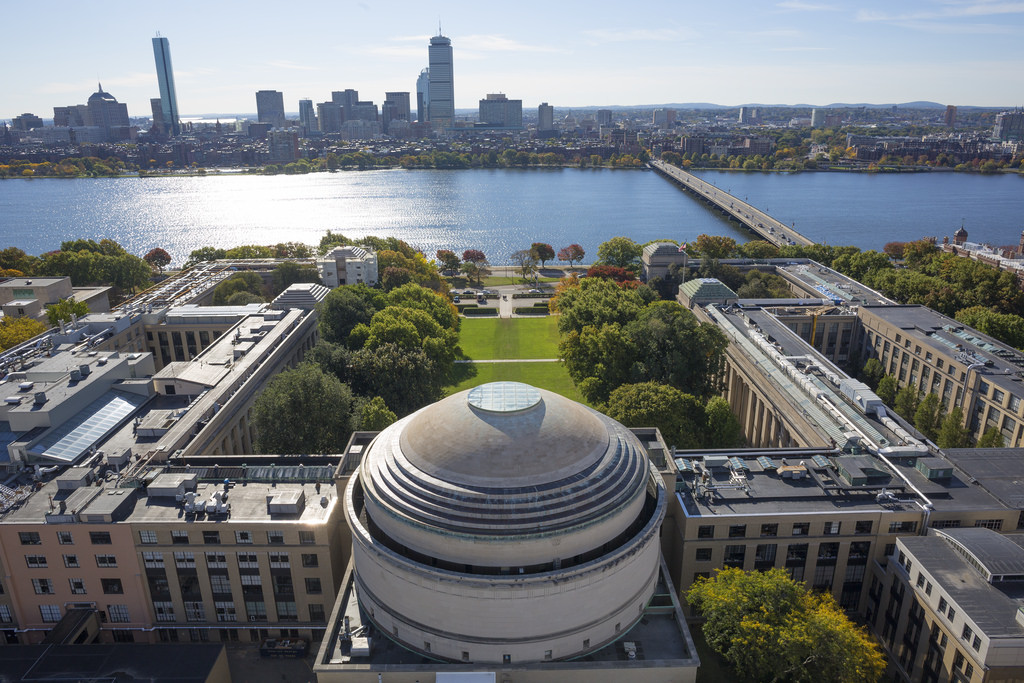
Massachusetts Institute of Technology
- World ranking
- #1
- Programmes
- 150
- Location
- Cambridge, MA, United States


Study destination
The United States has 112 universities on StudyMapped offering 40,317 programmes and 364 scholarships. Compare tuition fees, entry requirements and intakes below, then shortlist the programmes that suit you.
No country hosts more international students than the United States. In 2024/25 there were 1,177,766 of them, about 6% of everyone in US higher education. With around 4,000 accredited colleges and universities and no single body running them, the choice is huge: you will find everything from two-year community colleges to large research universities, with a wide spread of subjects and prices.
The College Board puts average published tuition and fees for 2026-27 at $32,730 a year for out-of-state students at public four-year universities (the rate international students usually pay) and $46,350 a year at private non-profit universities. Living costs come on top, and they depend heavily on the city you choose.
International students cannot get US government student aid, so planning your funding early matters. About half of international students rely mainly on personal and family money, while for around one in five the main source is their US college or university. It is well worth checking each university's scholarships for international students before you apply.
As a new student, you can enter the United States up to 30 days before your programme starts. A $250 "visa integrity fee" was created by law in 2025, but it was not yet being collected as of October 2026, so check your embassy's website before paying anything extra.
Optional Practical Training (OPT) lets you work in your field for up to 12 months after each degree level. If you graduate in an eligible science, technology, engineering or maths (STEM) subject, you can apply for a further 24 months, giving you up to three years in total.
In July 2026 the Department of Homeland Security published a rule that would replace "duration of status" with a fixed period of stay of up to four years for F-1 students. However, on 14 September 2026, the day before it was due to take effect, a federal court postponed it nationwide. The government has appealed. Until the case is settled the existing rules apply, so you may stay as long as you are enrolled and keep your student status. Your university's international student office will know the latest position.
Here is what universities in the United States typically charge in tuition each year. Fees vary from one university and course to the next, but most fall within the range shown.
| Degree | Typical fee a year | Usual range |
|---|---|---|
| Bachelor's | USD 65,500 | USD 38,000 – 71,500 |
| Master's | USD 35,500 | USD 25,000 – 56,000 |
| PhD | USD 40,500 | USD 27,000 – 59,000 |
These figures cover tuition only. Living costs are extra, and a scholarship can bring the total down.
The subject areas with the most programmes. Pick a degree level to see the courses.
3,085 programmes
2,327 programmes
2,219 programmes
2,198 programmes
1,989 programmes
1,738 programmes
1,610 programmes
1,576 programmes
1,550 programmes
1,511 programmes
1,440 programmes
1,058 programmes
StudyMapped lists 112 universities in the United States with 40,317 programmes: 12,956 bachelor's degrees, 12,905 master's degrees and 7,695 PhD programmes.
Bachelor's degrees typically cost USD 65,500 a year (most between USD 38,000 and USD 71,500); Master's degrees typically cost USD 35,500 a year (most between USD 25,000 and USD 56,000); PhD degrees typically cost USD 40,500 a year (most between USD 27,000 and USD 59,000). Fees vary by university and course, so check the programme you are interested in. Living costs are extra.
Most programmes start in Autumn (fall). Many also take students in Spring and Summer.
Academic and vocational study usually uses an F or M student visa. You must first be accepted by an eligible school, which provides the documentation for your visa process. Check the US Department of State guide and your local embassy's appointment instructions.
Yes. StudyMapped lists 364 scholarships for students in the United States, with who can apply, award amounts, deadlines and links to the official application pages.
By number of programmes, the largest subject areas are Engineering, Education & Teaching, Business & Management and Languages & Literature.
Sources: Study in the States (DHS), US Department of State: Student Visa, ICE: I-901 SEVIS fee, USCIS: OPT, ICE: student employment, EducationUSA, Open Doors 2025, College Board: Trends in College Pricing, Presidents' Alliance: duration of status case. Last checked 13 November 2026.

Book a free consultation with our expert counsellors and take the first step towards your dream university.
Copyrights © 2026 StudyMapped. All rights reserved.

Enter your credentials to continue.
Join us and start your study abroad journey.