

University in United States
Cambridge, MA, United States
University profile
The Massachusetts Institute of Technology (MIT) is an independent, coeducational, privately endowed university in Cambridge, Massachusetts. Its mission is to make a better world through education, research and innovation, and its motto is Mens et manus ("mind and hand"). The Institute describes itself as both profoundly American and profoundly global, drawing talent from around the world.
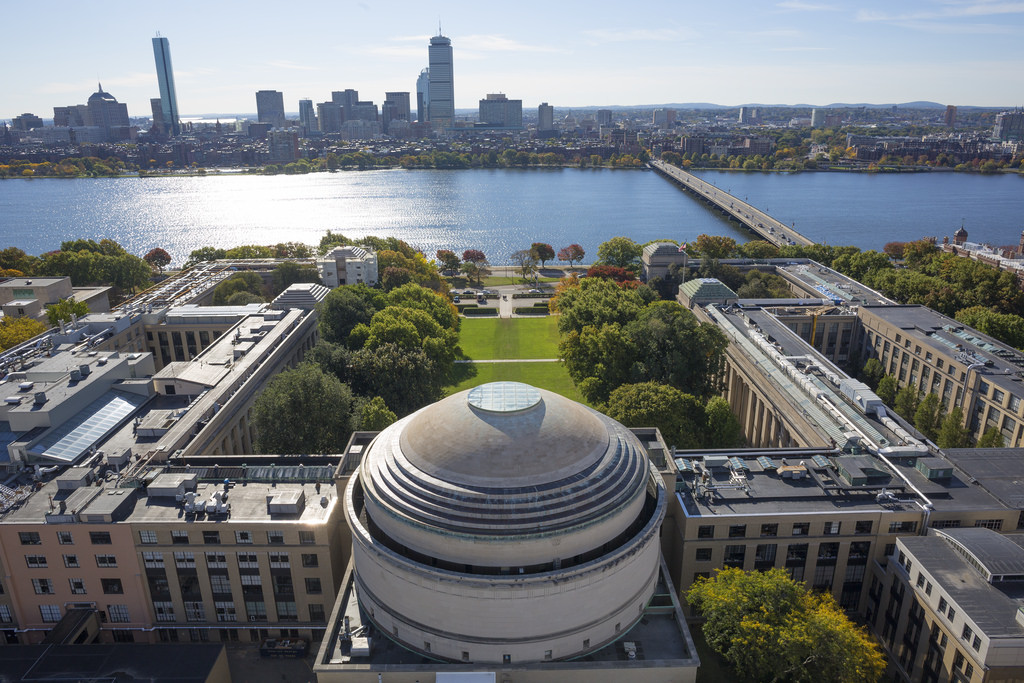
The campus covers 168 acres in Cambridge between Central and Kendall Squares, across the Charles River from Boston's Back Bay. It includes 20 student residence halls (11 for undergraduates and nine for graduate students and families), 26 acres of playing fields, more than 40 gardens and green spaces and more than 60 publicly sited works of art. Buildings range from neoclassical to modernist, brutalist and deconstructivist, with landmarks by Alvar Aalto, Frank Gehry, Fumihiko Maki, I. M. Pei and Eero Saarinen. Facilities include wet labs, clean rooms, makerspaces, a wind tunnel, a research nuclear reactor, a glass lab and a nanotechnology and advanced imaging centre.
Teaching is organised in more than 30 departments across five schools and one college:
In fall 2025 MIT enrolled 11,816 students: 4,561 undergraduates and 7,255 graduate students. Students come from all 50 states, the District of Columbia, four territories and 137 foreign countries. There are 56 undergraduate majors and 62 minors. Signature experiential programmes include the Undergraduate Research Opportunities Program (UROP), UPOP, MISTI, IAP, D-Lab, NEET and Sandbox; nearly 65% of undergraduates take part in UROP each year.
Student life includes more than 60 music, theatre, visual arts, writing and dance groups, 12 museums and galleries on campus, varsity and recreational athletics (mascot Tim the Beaver; colours cardinal red and silver gray) and a large clubs and activities programme. On-campus graduate housing accommodates more than 3,000 students. The Institute's student-to-faculty and instructional staff ratio for undergraduates is 3:1.
International applicants are treated in the same way as domestic applicants in admissions and, for undergraduates, in financial aid. MIT is accredited by the New England Commission of Higher Education, and many programmes hold specialised accreditation from bodies including ABET, AACSB, the American Chemical Society, the National Architectural Accrediting Board and the Planning Accreditation Board.
MIT is need-blind and full-need for all undergraduates, domestic and international: it meets 100% of demonstrated financial need and awards aid on need alone, not merit. International students are eligible for the same need-based aid as domestic students. Cost of attendance for 2025-2026 is $89,340 before aid, comprising tuition $64,310, student life fee $420, housing $13,614, food $7,650, books and supplies $910 and personal expenses $2,436 (travel is additional). Tuition is the same for all undergraduates.
To apply, submit the CSS Profile and parental tax returns or income documentation through College Board IDOC (domestic students also file the FAFSA) by November 30 for Early Action or February 15 for Regular Action. See MIT Student Financial Services and MIT Admissions: Afford.
Graduate tuition for 2025-2026 is $64,310 for nine months plus $22,220 for summer tuition for students enrolled in courses; specific programmes may differ. Financial support is provided largely by departments through fellowships, teaching and research assistantships, and loans; fully funded, partially funded and self-funded programmes exist, and applicants are considered for appointments after acceptance.
MIT Graduate Funding (fellowships and assistantships) →
Browse the scholarships listed for Massachusetts Institute of Technology and check each award’s eligibility.
View scholarships for Massachusetts Institute of Technology →There are no required high school classes; applicants must show competence in the fields they will continue to study at MIT. Applicants submit the MIT first-year application form, a Secondary School Report with transcript, two teacher letters of recommendation (one math or science, one humanities, social science or language is recommended), and SAT or ACT scores. MIT is test-required: it does not publish cutoff or recommended SAT or ACT scores and accepts the paper and digital SAT; the ACT writing and science sections and the SAT optional essay are not required. Optional creative portfolios can be submitted through SlideRoom. The application fee is $75 (or a fee waiver).
Applicants may apply once per entry year, and students denied in Early Action cannot apply Regular Action.
Credit for Advanced Placement, International Baccalaureate, A-level, Baccalaureat and similar exams is decided by the academic department that teaches the subject, after enrolment; some departments have set score policies.
Transfer applicants must have completed at least two terms of full-time study with high academic standing at an accredited college, and generally no more than five terms because of residency requirements. MIT does not award second bachelor's degrees. SAT or ACT scores are also required from transfer applicants.
Anyone without US citizenship or permanent residency is considered international, regardless of where they live or study. International students apply by the same dates as domestic applicants. Grades are not converted to the American system; the transcript should include three years of grades and results of external examinations such as the IB, A-levels, French Baccalaureate or CBSE, with predicted grades if final grades are not yet available. Non-native English speakers who have used English for fewer than five years, or do not speak it at home or in school, are strongly recommended to submit an English proficiency test. Accepted tests and minimum (recommended) scores: TOEFL 90 (100) for tests taken before 21 January 2026, or 5 (5.5) on the new 1-6 scale from that date; IELTS 7 (7.5); PTE Academic 65 (70); Cambridge C1 Advanced or C2 Proficiency 185 (190); Duolingo English Test 120 (125).
Graduate admissions are decentralised across six schools and 48 departmental programmes, labs and centres; each department sets its own deadlines, requirements and application. GRE policy is set by each department; there is no minimum GRE score and scores are reviewed holistically (MIT institution code 3514). International graduate applicants follow the same process as domestic applicants plus an English Language Proficiency test requirement (IELTS Academic, TOEFL iBT, Duolingo English Test, or Cambridge C1 Advanced or C2 Proficiency), subject to automatic exemptions and department waivers; minimum scores are set by department.
MIT has a single main campus in Cambridge, Massachusetts (77 Massachusetts Avenue), between Central and Kendall Squares on the north bank of the Charles River, opposite Boston's Back Bay. It occupies 168 acres.
Study programmes offered at Massachusetts Institute of Technology.
Experiences shared by students of Massachusetts Institute of Technology.
Studied here? Share your experience to help other applicants.

Book a free consultation with our expert counsellors and take the first step towards your dream university.
Copyrights © 2026 StudyMapped. All rights reserved.

Enter your credentials to continue.
Join us and start your study abroad journey.


