

University in United States
Baltimore, MD, United States
University profile
Johns Hopkins University is a private research university in Baltimore, Maryland, founded in 1876 as the nation's first research university. Its first president, Daniel Coit Gilman, set out its purpose as the encouragement of research and the advancement of individual scholars, on the principle that teaching and research depend on each other. The university has been the leading recipient of federal research funding every year since 1979.
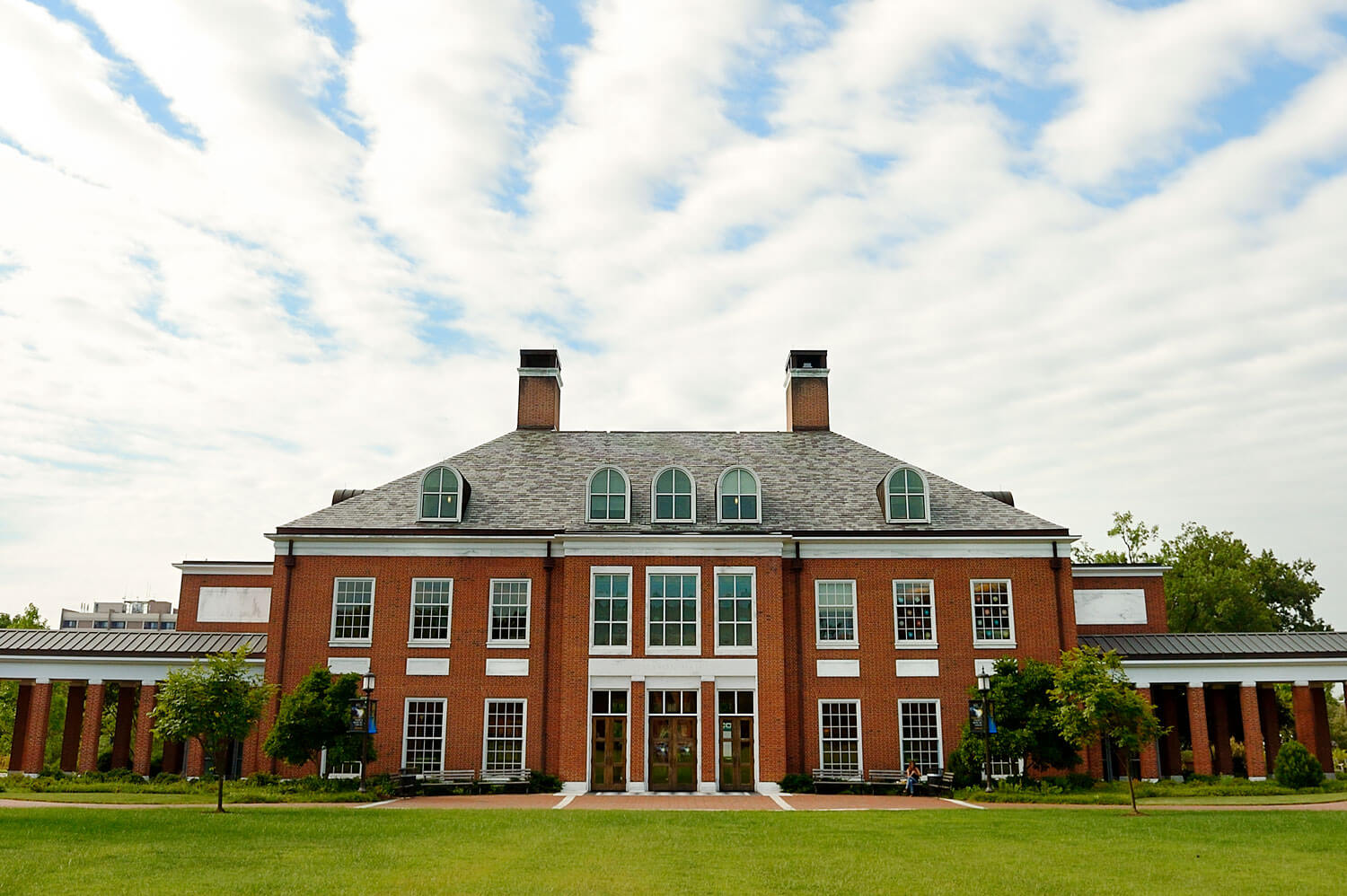
Johns Hopkins enrolls more than 24,000 full-time and part-time students in ten academic divisions on four campuses in Baltimore, one in Washington, D.C., and facilities across the Baltimore-Washington region as well as in China and Italy. Undergraduates study at the Homewood campus in Baltimore, with its red-brick buildings and grassy quads; about 5,600 undergraduates are enrolled there, and a free shuttle links the campuses.
Undergraduates choose from 100+ majors and minors in the Krieger School of Arts and Sciences and the Whiting School of Engineering, with a 9:1 student-to-faculty ratio and an average class size of 19. About 80% of undergraduates have at least one research experience and 85% at least one internship. Students can take select graduate-level courses at the School of Medicine, School of Nursing, Bloomberg School of Public Health, Carey Business School and School of Education, and the Peabody Institute offers a Double Degree Program.
All undergraduates live on the Homewood campus for their first two years, with five residence hall options for first-year students (Alumni Memorial Residences I, II and III, Wolman Hall and McCoy Hall) and seven dining locations; 93% of first-year students live on campus. Juniors and seniors live off campus, usually within a three-block radius. There are 350+ registered student organizations, 50+ community service groups, 40+ sports clubs and intramurals and 24 varsity teams, and the new Bloomberg Student Center opened in August 2025.
More than 1,000 undergraduates are international, from 80+ countries; international applicants use the same application as domestic students and receive support from the Office of International Services for visas and immigration. Admission, tuition and aid for each graduate school are handled by that school.
Hopkins meets 100% of demonstrated need for admitted undergraduates with no loans, so students graduate with a $0 student loan expectation. Families making up to $200,000 pay no tuition, and families making up to $100,000 have a $0 parent cost; families with incomes up to $250,000 generally qualify for significant aid. Income-tiered aid applies to families with typical assets, generally less than three times annual income. The estimated 2026-27 total cost of attendance is $95,000, including tuition, fees, housing, meal plan, books, supplies, travel and personal expenses. Typical annual scholarship by income band: up to $100,000, $91,000; $100,000-$125,000, $75,000; $125,000-$150,000, $68,000; $150,000-$200,000, $65,000; $200,000-$250,000, $45,000; $250,000-$300,000, $33,000; $300,000-$350,000, $28,000; $350,000+, $21,000.
Need-based and merit scholarships are available to international applicants, though limited. International students who may need aid at any point must apply as first-year applicants, indicate it on the admissions application, and submit the CSS Profile (code 5332; or the free Johns Hopkins International Student Financial Aid Application) and Certification of Finances by the aid deadline. Hopkins meets 100% of demonstrated need for international citizens without loans. A small number of merit scholarships go to international citizens each year, with no separate application. Aid is not offered to international transfer students.
Domestic students submit the FAFSA (school code E00473) and CSS Profile (code 5332) by the aid deadline: November 15, 2026 (ED I), January 15, 2027 (ED II and Regular Decision), March 15, 2027 (transfer). Aid must be reapplied for each year. See Tuition & Aid.
Hopkins Need-Based Scholarships →
Hopkins Aid for International Undergraduates →
Browse the scholarships listed for Johns Hopkins University and check each award’s eligibility.
View scholarships for Johns Hopkins University →Applicants are currently in high school, or have graduated high school or earned a GED with fewer than 12 semester-based credits from another institution (college credit earned in high school does not count). Applicants who already hold a bachelor's degree are not eligible for undergraduate admission. Apply through the Common Application or Coalition on Scoir. Admission is holistic: the application includes the high school transcript, activities list, academic honors, personal statement, parent or guardian information, the Hopkins supplement with its supplemental essay (350-word limit), a secondary school report with counselor recommendation, two teacher evaluations from different academic subjects, and a mid-year report due in mid-February.
Biomedical Engineering applicants indicate it as first-choice major; there is no separate application, and students admitted to the university but not to BME may choose another intended major in the Whiting School of Engineering or Krieger School of Arts and Sciences. Applicants to the Peabody Institute apply through peabody.jhu.edu.
Early Decision is binding and requires a signed Early Decision Agreement. Johns Hopkins is a QuestBridge College Partner. The application fee is $70, or a fee waiver.
Hopkins requires first-year applicants to submit SAT (Math and Evidence-Based Reading and Writing) or ACT (Math, Reading and English) scores. Self-reported scores are accepted, with official reports required on enrollment; the university superscores. Score recipient codes are SAT 5332, ACT 1704 and TOEFL 5332. Early Decision applicants are encouraged to test by October and Regular Decision applicants by December of senior year. AP exams and the optional ACT Science and Writing sections are not required.
Transfer students enter the sophomore and junior classes in the fall only. Applicants must have graduated high school and completed more than 12 semester-based credits elsewhere, must not hold a bachelor's degree, and apply through the Common Application for Transfer. Deadline March 1, 2027 (financial aid March 15, 2027); decision May 14, 2027; reply June 1, 2027. Standardized test scores are not required for transfer applicants.
There is no separate application for international applicants. Applicants who are not U.S. citizens, permanent residents, eligible noncitizens or holders of DACA or undocumented status are international, including citizens of other countries attending secondary school in the U.S. They submit official academic records for the equivalent of 9th, 10th and 11th grades plus any certificates, diplomas or examination results marking completion of secondary education (O-level, A-level, IB), with verified English translations where needed, and the Certification of Finances form. TOEFL, IELTS, Duolingo English Test or Cambridge English scores are recommended for applicants whose primary language is not English or who have not attended an English-language school for the last three years; competitive scores are typically TOEFL iBT total of 5 (preferred sub-scores 5.5 Reading, 5.5 Listening, 5 Writing, 5 Speaking), IELTS 7.0 on each band, Duolingo 120 or higher, Cambridge C1 Advanced or C2 Proficiency with 185 or higher. Enrollment may be deferred up to two years, case by case. Contact [email protected].
Graduate and professional programs are administered by each school, which sets its own application, test and GPA requirements; applicants contact the admissions office of the relevant school.
Homewood residence halls include traditional and suite-style options, single rooms and gender-inclusive housing; the campus has seven dining locations, and the Brody Learning Commons offers group study rooms and video conferencing.
Study programmes offered at Johns Hopkins University.
Experiences shared by students of Johns Hopkins University.
Studied here? Share your experience to help other applicants.

Book a free consultation with our expert counsellors and take the first step towards your dream university.
Copyrights © 2026 StudyMapped. All rights reserved.

Enter your credentials to continue.
Join us and start your study abroad journey.


