
University in France
La Rochelle, Nouvelle-Aquitaine, France
University profile
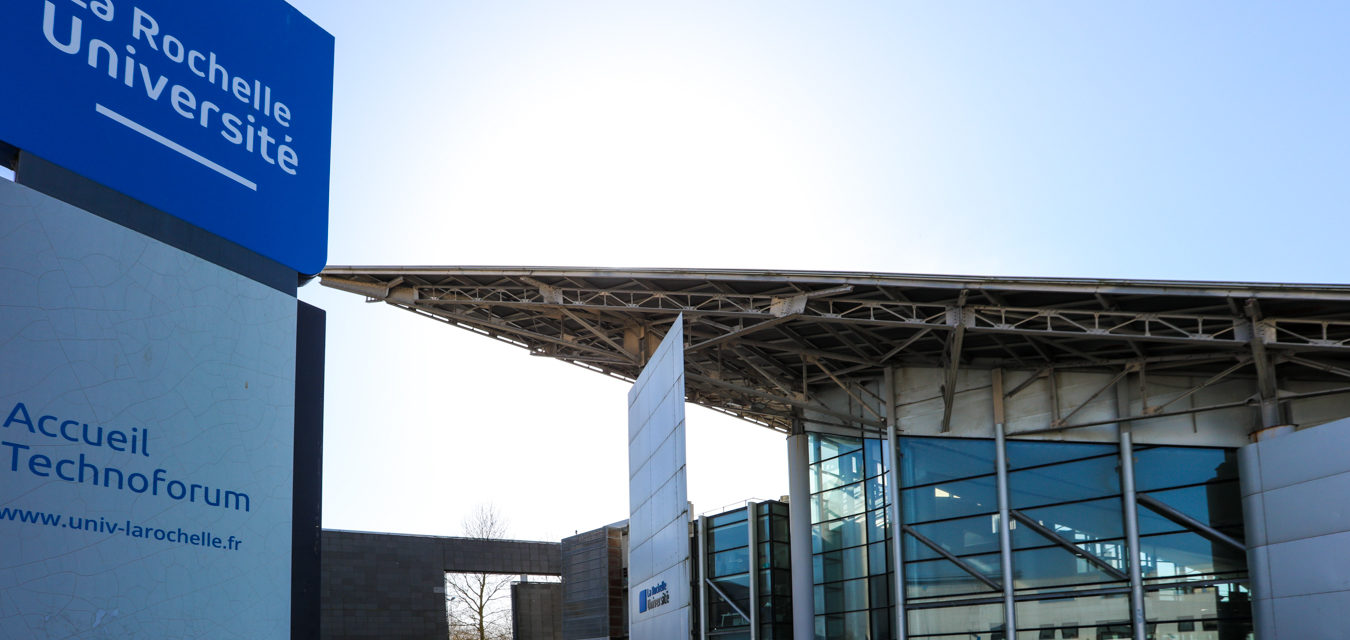
La Rochelle Université is a multidisciplinary public university in La Rochelle, on the Atlantic coast of Nouvelle-Aquitaine, France. It describes itself as a human-scale institution whose campus sits in the heart of the city. It was created by decree on 20 January 1993 and has operated under ordinary university status since the 1998 academic year.
Teaching is organised around four disciplinary areas: Droit, Économie et Gestion (including the IAE), Sciences, Technologies et Santé, Arts, Lettres, Langues, and Sciences Humaines et Sociales. Structurally the university has three components: the Institut Littoral Urbain Durable Intelligent (LUDI), which brings together all research units, the master's programmes (except those of the law faculty) and the doctoral school; the Pôle Licences Collegium, which groups the disciplinary departments and the general licences and part of the professional licences; and the Institut Universitaire de Technologie (IUT), which awards the Bachelors Universitaires de Technologie (B.U.T.) and part of the licences professionnelles.
The 2026 key figures record 8,125 students enrolled in initial and continuing education, of whom 748 are on work-study (alternance) programmes, with 484 teachers and teacher-researchers (239 of them teacher-researchers), 583 BIATSS and contract research staff, and 879 part-time lecturers. The university runs 64 national diplomas: 5 B.U.T., 13 general licences (including 3 double licences), 7 licences professionnelles, 37 master's pathways (20 in alternance), one engineering diploma, one preparatory class for the grandes écoles (CPGE économique et commerciale, voie générale), a DAEU and a Diplôme universitaire d'études françaises (DUEF). Ten minor subjects can be added to a licence, including two EU-CONEXUS minors.
Research is specialised on sustainable development in coastal zones, the «Littoral Urbain Durable Intelligent» theme. La Rochelle Université coordinates EU-CONEXUS, a European university alliance of nine coastal institutions, and was a laureate of the PIA4 call «Excellence sous toutes ses formes» (the ExcelLR project).
Student life includes 25 Smart Rooms (innovative learning spaces), two sports halls (6,632 m² in total) and two synthetic pitches, 45 sports activities with 125 supervised slots a week, a university library open about 63 hours a week, a student health service (doctors, nurses, psychologists, a psychiatrist and social workers), an annual student festival («Les étudiants à l'affiche») and art workshops. Student housing is run by CROUS, and the university also points students to Lokaviz, ARHPEJ and the Studapart platform. International students make up 11.2% of enrolment from 106 nationalities, with 179 partner institutions worldwide; French-as-a-foreign-language courses, DELF/DALF preparation and a DUEF are offered.
Registration fees are set nationally by the Ministry of Higher Education. For 2026-2027: licence, licence professionnelle, B.U.T. and CPGE, 178 euros; master, 255 euros; doctorate and HDR, 398 euros; students holding a CROUS grant are exempt. La Rochelle Université applies the differentiated fees for non-EU students (arrêté of 19 April 2019) since 2022-2023: 2,902 euros in the first cycle (licence, B.U.T., LP) and 3,950 euros in the second cycle (master). A decision chart on the university's page shows who is concerned. The DU Français Langue Étrangère costs 1,600 euros per semester.
The Contribution de vie étudiante et de campus (CVEC) is 105 euros and is paid to CROUS before registration (grant holders are exempt); it is separate from registration fees.
For first-time arrivals enrolled in a master 2 in a Nouvelle-Aquitaine institution, for a study stay of at least 25 consecutive weeks. Maximum amount 6,000 euros. The bilingual application goes to the Direction Relations Internationales Europe & Francophonie with a recommendation letter, a forecast budget and a letter from the host programme director. Deadline for 2026-2027: 27 February 2026.
Run by the French Ministry for Europe and Foreign Affairs for foreign students in master and doctoral programmes with an excellent academic record. Candidates email [email protected] with CV, diplomas and ranking, professional project, transcripts for the last three years, passport copy, language certificate and the programme outline (doctoral applicants add a thesis project, funding plan and cotutelle agreement). The university pre-selects, then files with Campus France. Deadline for 2027-2028: 10 December 2026.
Official scholarships page · Fees for non-EU students
Housing allowances (CAF) are available to students with a valid residence permit; holders of a first-year long-stay visa must first obtain the OFII sticker. The university also partners with the Studapart housing platform for stays of 1 to 24 months.
Bourse pour étudiantes et étudiants étrangers de master 2 (hors Europe) – Nouvelle-Aquitaine →
Browse the scholarships listed for La Rochelle Université and check each award’s eligibility.
View scholarships for La Rochelle Université →Applicants who will hold, or already hold, a French or European baccalauréat, or a foreign secondary diploma from outside the EEA with French/EEA nationality, apply through Parcoursup (the 2026 calendar ran from 19 January to 1 April 2026 inclusive). After an offer is accepted and the baccalauréat obtained, the candidate registers online; administrative registration for offers accepted up to 11 July 2026 had to be completed by 17 July 2026 at noon. Foreign nationals living in a country with a Campus France office must apply through the Campus France platform of their country and cannot use other routes; foreign applicants resident in France without a French or European baccalauréat use the preliminary admission file («dossier vert»).
Applications for entry into licence 2 or 3 are made through eCandidat (for applicants holding a French higher-education diploma, an EEA diploma, or a non-EEA diploma without a Campus France office in their country). Registration windows for 2026-2027 were 1-17 July 2026 and 20 August-4 September 2026. Transfers from another French university use an admission form available 1 April-30 June 2026, with the agreement of both universities.
Applicants holding a licence or equivalent apply through the national platform Mon Master; admission to selective masters is by file review or file review followed by interview, within capacity limits voted by the board of directors. A licence completion certificate is required for registration. Applicants with a foreign second-cycle diploma from a country with a Campus France office must apply through Campus France. Registration for those admitted in the main phase had to be completed by 17 July 2026 at noon.
French level required for licence entry (rentrée 2025 table): C1 for Law, Management, Literature, History, Geography, Life Sciences and the CPGE; B2 for LEA, Civil Engineering, Computer Science, Mathematics, Physics-Chemistry, Earth Sciences, Health Sciences and several licences professionnelles. For master pathways, French levels range from B2 to C1 (C2 for the MEEF teaching masters) with English at B2 (C1 for MEEF second degree). Language testing available on campus includes TOEIC Listening & Reading, TOEFL ITP, DELE, Linguaskill, TOPIK, HSK and DELF/DALF.
Doctoral studies are run by a single multidisciplinary doctoral school covering the research units of the university; it supports each doctoral student from recruitment to the defence, and doctoral training modules of 15 hours must be validated before defence. Doctoral registration fee is 398 euros.
Non-EU students apply for a student visa at the French embassy of their home country; after arrival the long-stay visa (VLS-TS) must be validated online, otherwise lawful stay ends after 90 days. Renewals and first residence-permit applications are made online. Student housing through CROUS is limited and not automatic; enquiries are recommended from the January before the start of the year.
The university has a single city campus in La Rochelle (main address: 23 avenue Albert Einstein, 17031 La Rochelle), organised in site areas with their own plans:
Facilities: 85,121 m² of gross usable floor space, 25 Smart Rooms, a university library (more than 108,000 printed books and about 77,000 periodicals, 115 computer stations), 1,450 free-access computers and 332 Wi-Fi access points, two sports halls and two synthetic pitches, a science-and-society venue open to the public, a Maison pour la Science, and an innovation hub with three co-innovation platforms (biotechnology/health, materials, digital). CROUS residences and university restaurants are shown on the campus plan, and a university health service operates on campus.
Study programmes offered at La Rochelle Université.
Experiences shared by students of La Rochelle Université.
Studied here? Share your experience to help other applicants.

Book a free consultation with our expert counsellors and take the first step towards your dream university.
Copyrights © 2026 StudyMapped. All rights reserved.

Enter your credentials to continue.
Join us and start your study abroad journey.


