
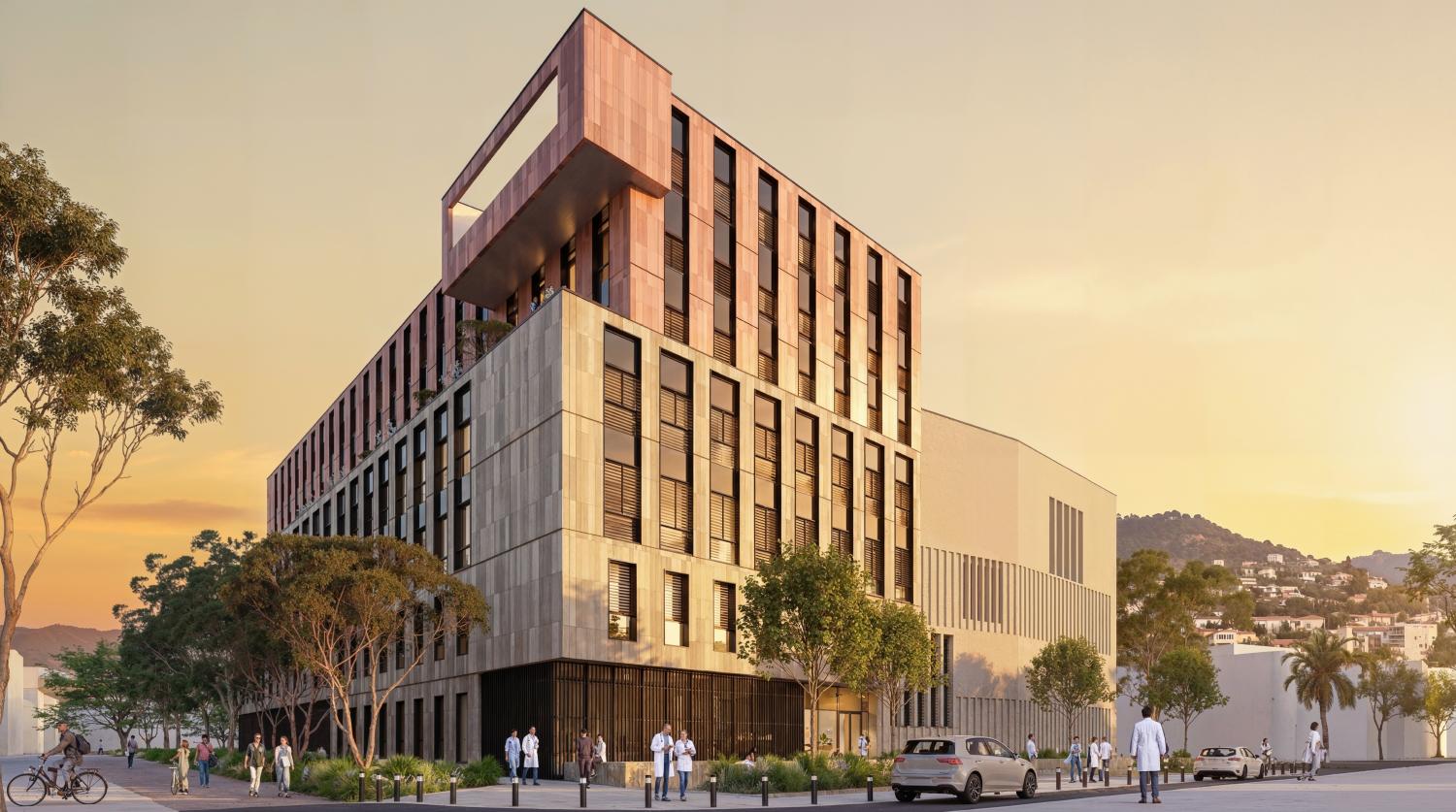

University in France
Nice, Provence-Alpes-Côte d'Azur, France
University profile
Université Côte d'Azur (UniCA) is a public research university on the French Riviera, created on 1 January 2020 with the status of a Grand Établissement (experimental public institution). It replaced both the Université Nice Sophia Antipolis and the earlier ComUE Université Côte d'Azur. It holds the national Initiative d'Excellence (IdEx) label, awarded in 2016 and confirmed in 2021, which places it among nine French IdEx universities described as research-intensive with strong international reach. It is a founding member of the Ulysseus European university alliance and hosts one of France's four 3IA artificial intelligence institutes.
The university has more than 32,000 students, over 3,500 staff, more than 50 research laboratories and 860 international partners, and reports some 560 programmes and more than 300 degrees. Teaching is organised through internal components: eight Écoles Universitaires de Recherche (EUR SPECTRUM, LEX SOCIETY, CREATES, HEALTHY, LIFE, ELMI, ODYSEE and DS4H), the Faculties of Medicine, Dental Surgery (Chirurgie dentaire Odontologie) and Law and Political Science (Droit et Science Politique), and schools and institutes including the IAE (business school), the IUT Nice Côte d'Azur, Polytech Nice Sophia (engineering), INSPE (teacher education), the Institut de la Paix et du Développement, IMREDD, the IFMK (physiotherapy training institute) and Institut NeuroMod. Associated partners include Villa Arson, the CIRM national centre for musical creation and ERACM.
The university is spread over a network of campuses in Nice, Sophia Antipolis (Biot), Cannes, Menton and Grasse. Valrose, in the centre of Nice, is the seat of the university and houses sciences and engineering on a ten-hectare park. Other Nice campuses are Carlone (arts, letters and humanities), Trotabas (law and political science), Saint Jean d'Angély (economics and management, dentistry, IAE), Pasteur (medicine), Sciences du sport (STAPS) and Liégeard (INSPE). SophiaTech in Sophia Antipolis focuses on information and communication technologies.
Student life is organised across the campuses, with 16 libraries, more than 60 sports activities (about 70 on the sports page) run through UNICA Sport, cultural and associative programmes, health and social services with a social worker on each campus, and ten language resource centres (CRL) offering French, English, German, Arabic, Chinese, Spanish, Italian, Portuguese and Russian. The regional student services body CROUS Nice operates 13 residences in the department (10 in Nice, 2 in Sophia Antipolis, 1 in Cannes), from 9 m² university rooms to studios of 20 or 30 m²; the university also partners with the Studapart housing platform.
About 20% of students are international, from nearly 100 nationalities, and the university lists more than 60 international programmes. An International Incoming Support team at Valrose (Petit Valrose, office 12) assists incoming students, and a Welcome Center supports doctoral students and researchers. The university holds the Bienvenue en France label, the HRS4R human-resources-for-researchers label and the Qualiopi certification for continuing education and apprenticeship, and it is accredited by the HCERES.
Public registration fees are set nationally by ministerial order. For French and EU/EEA, Swiss, Monegasque, Andorran and Quebec students, and refugees and subsidiary-protection beneficiaries: Licence, Licence professionnelle, BUT, DAEU and similar 178 EUR; Master 255 EUR; engineering 630 EUR; doctorate and HDR 398 EUR; speech therapy certificate 565 EUR.
Non-EU students subject to differentiated fees (DIDEEC): Licence, Licence professionnelle, BUT and similar 2,902 EUR; Master 3,950 EUR; engineering preparatory cycle (2 years) 2,902 EUR and engineering cycle (3 years) 3,950 EUR; doctorate and HDR 398 EUR (same as national fees, no differentiated fees). Fees can be paid online by card in one, three (above 150 EUR) or five instalments (above 500 EUR), or at the registrar's office by card or cheque.
Holders of French government higher-education grants, including social-criteria grants and French Government Scholarships (BGF) awarded by the Ministry for Europe and Foreign Affairs, are fully exempt from registration and library fees, and from the CVEC. Wards of the Nation and students under inter-institution cooperation agreements with reciprocal treatment are also exempt. Students not subject to differentiated fees include nationals of EU/EEA states, doctoral students, refugees, long-term residents, those fiscally domiciled in France for over two years and CPGE students. Other students subject to differentiated fees may apply to an exemption commission for a partial exemption bringing their fees down to the national level; the file is submitted through the campus social worker. Students already exempt in 2024-2025 keep a partial exemption under a council decision of 14 March 2025, if their studies continue without interruption. Exemption requests on financial hardship are not open to first-time students in France, those paying differentiated fees, or MSc and DU students.
The Contribution de Vie Étudiante et de Campus is separate from registration fees and is 105 EUR for 2026-2027. The certificate is required before registration; scholarship holders, refugees, subsidiary-protection beneficiaries and asylum seekers are exempt.
The university's social service offers one-off emergency financial aid, guidance to food aid and a solidarity clothing store. Appointments are booked through Doctolib or at [email protected].
The AMI-MESRI international mobility aid, managed by the university, is 400 EUR per month for CROUS social-criteria scholarship holders on a study or placement abroad of at least two months, for 2 to 9 monthly payments over the whole course; it is partly cumulable with Erasmus+ but not with the Region Sud mobility grant. Erasmus+ and Region Sud grants are also described on the international pages.
International students are directed to the CROUS and the Campus France scholarship catalogue. Non-EU students can apply for a French government grant after two years of study in France; housing aid (APL) is open from the first year. Official pages: Registration fees, Financing your studies.
Bourse Talents Champion (IdEx UniCA JEDI) →
Prix de la Fondation Université Côte d'Azur 2026 (Talents & Inclusion / Talents & Solidarité) →
Browse the scholarships listed for Université Côte d'Azur and check each award’s eligibility.
View scholarships for Université Côte d'Azur →The application route depends on the level, on nationality (French, European or non-European) and on country of residence. European applicants are EU, EEA, Swiss, Monegasque or Andorran nationals. Using the wrong platform leads to automatic rejection. Documents in a foreign language needed for registration (baccalauréat or equivalent, transcripts, diplomas) must be translated into French by a sworn translator. An INE/INES student number is needed for enrolment.
French and European applicants apply through Parcoursup. Non-European applicants resident in and nationals of listed countries apply through the Etudes en France (Campus France) platform; the list includes Ghana, Nigeria, Cameroon, Senegal, Algeria, Morocco, India, China, Brazil, the United States and many others. Applicants from other countries contact the French embassy in their country.
Applications go through eCandidat UniCA. Non-European applicants resident in a country covered by Etudes en France apply through that platform; applicants resident in Europe or in other countries use eCandidat.
Master 1 applications go through the national platform Mon Master; applicants from Etudes en France countries use Etudes en France instead. Master 2 applicants from outside UniCA, or UniCA Master 1 students changing mention, apply through eCandidat; UniCA Master 1 students continuing in the same mention do not apply again. MSc (Master of Sciences) programmes use eCandidat for everyone, and non-European applicants in Etudes en France countries may also use that platform for visa facilitation.
Initial training under student status uses the joint recruitment platform of the 15 Polytech network schools, with a single application valid for all schools. Apprenticeship applications to UniCA's engineering school go through eCandidat.
Doctoral applications are made through ADUM, with the Maison des Études Doctorales (MED), Parc Valrose, DRVI building L, 28 avenue Valrose, 06108 Nice Cedex 2, [email protected].
Teaching is in French and in English depending on the programme. A French level of B2 is generally required for the Licence and C1 for the Master. Applicants from countries where French is the sole official language do not need a certificate; for countries where French is one of several official languages, secondary study in French is checked before an exemption is granted. The TCF is organised through the CUEFLE, and French courses and summer courses (Université Internationale d'Été de Nice, June and July) are available.
After a favourable decision, applicants register administratively online. The CVEC certificate must be obtained before registration. Questions about prerequisites and scholarships go to the campus International Relations Service (SRI).
The university describes a network of 12 to 14 campuses across the Riviera, with 16 libraries.
Campus services include sport (with a Bonus Sport card worth +0.25 points on the semester average), health and social services, and a university restaurant network.
Study programmes offered at Université Côte d'Azur.
Experiences shared by students of Université Côte d'Azur.
Studied here? Share your experience to help other applicants.

Book a free consultation with our expert counsellors and take the first step towards your dream university.
Copyrights © 2026 StudyMapped. All rights reserved.

Enter your credentials to continue.
Join us and start your study abroad journey.


