
University in United Kingdom
London, England, United Kingdom
University profile
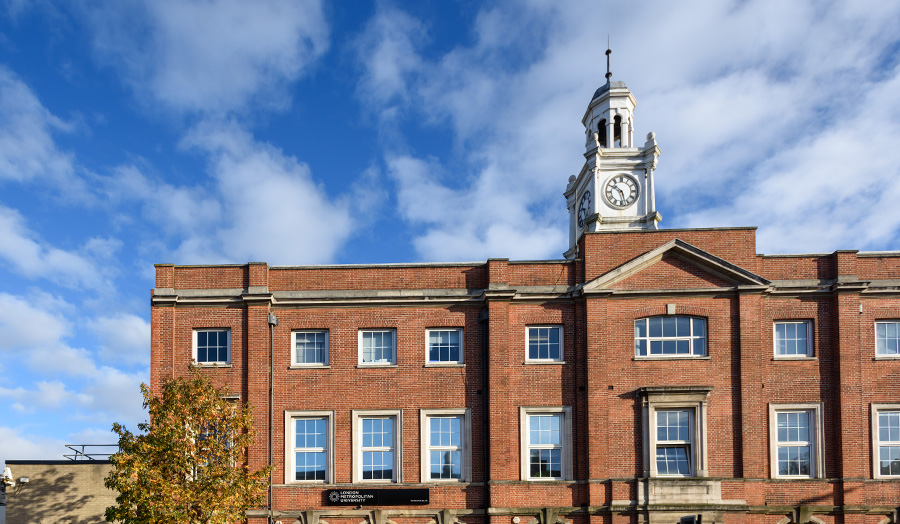
London Metropolitan University (London Met) is a university in London formed on 1 August 2002 by the merger of London Guildhall University and the University of North London, the first merger between two universities in the UK. Its roots go back to the Metropolitan Evening Classes for Young Men of 1848 and the Northern Polytechnic Institute of 1896. It had 14,039 UK-based higher education students in 2023–24, of whom 71% were mature students and 79% studied full-time, and its Holloway campus has a long reputation for widening access to education.
Teaching takes place on three campuses: Holloway on Holloway Road in Islington, north London; Aldgate in the East End near Whitechapel; and Shoreditch on Kingsland Road, which began teaching in September 2025. Courses start in September and January, ranging from foundation-year and extended degrees and one-year top-ups to bachelor's, master's, PGCE and research degrees.
The academic structure is organised into five schools:
All undergraduate courses include some form of work-related learning, such as a placement, client project or on-campus work experience. Specialist resources include the Science Centre at Holloway, opened in 2006 with a Super Lab of 280 workstations, the Materials and Products Collection in the Wash Houses at Aldgate, the Special Collections and University Archive, and the Centre for Equity and Inclusion, launched in 2020.
Student life is supported by the Students' Union, with more than 50 societies, Verve Magazine and Verve Radio, and sports teams competing in BUCS and the London Universities Sport Leagues. Students have free access to fitness classes and both gyms. The University does not own or manage halls of residence; its accommodation team helps students find private halls, shared housing, homestay and short-stay options. Students from more than 140 nationalities study at London Met, and international applicants can enter through on-campus International Study Centre pathways run with Malvern HE Partnerships.
London Met is a private company limited by guarantee (company number 974438) whose members are its Board of Governors, and an exempt charity under the Charities Act 2011. It gained degree-awarding powers through its predecessor institutions under the Further and Higher Education Act 1992.
Full-time UK undergraduate fees are £9,535 a year from 2025/26, and part-time fees are £2,380 per 30-credit module. These rates apply to new and continuing students. International and postgraduate fees are set per course. Fee queries go to [email protected].
UK students may also use government Tuition Fee and Maintenance Loans, Postgraduate and Doctoral Loans, Disabled Students' Allowances, the Adult Dependants' Grant, Childcare Grant, Parents' Learning Allowance, the NHS Learning Support Fund and teacher training bursaries. See scholarships, bursaries and grants and funding your studies.
International Bright Futures Scholarship →
Global British Citizens Scholarship →
EU Bright Futures Scholarship →
South Asia Bright Futures Scholarship →
Browse the scholarships listed for London Metropolitan University and check each award’s eligibility.
View scholarships for London Metropolitan University →Undergraduate courses start in September and January. UK students starting a full-time degree in September apply through UCAS (institution code L68), except during Clearing, when they can apply directly. The deadline for most UCAS applications is in mid to late January, and applications after it are accepted while places remain. UCAS Extra runs from the end of February to early July. Full-time applicants applying after the end of June apply through Clearing. Part-time applicants and those starting in January apply directly from the course page. International applicants may apply directly or through UCAS for September entry.
Most courses require a Level 3 qualification, for example two or three GCE A level or Vocational A level passes, five Scottish Qualifications Certificate passes including two at Higher (or four Highers), a QAA-recognised Access course, an Edexcel-validated art and design foundation course, the International Baccalaureate Diploma, 60% in the European Baccalaureate, the Irish Leaving Certificate with grade C or above in five subjects, or an Edexcel QCF Diploma or Certificate. Applicants normally also need GCSE English Language and, where required, Maths at grade C/4 or above. Specific grades and subjects vary by course. Mature applicants aged 21 or over may be admitted on the basis of relevant experience. Art, architecture and design courses may require a portfolio and interview.
Country-specific entry requirements set out equivalent qualifications. The on-campus International Study Centre, delivered with Malvern HE Partnerships, offers an International Foundation Programme (Business, Computer Science, Health), International Year One (Business, Computer Science) and a Pre-Master's Programme. Applicants from Bangladesh, Ghana, India, Kenya, Nepal, Nigeria, Pakistan, Somalia and Sri Lanka must attend a compliance interview. Part-time study on a Student visa is available only for postgraduate courses at RQF Level 7 or above.
Most undergraduate and postgraduate degrees require IELTS 6.0 overall with 5.5 in each component; PTE Academic 59 in each component (taken in person); TOEFL iBT 72 overall (Listening 17, Reading 18, Writing 17, Speaking 20); Cambridge C1 Advanced or C2 Proficiency at grade C; KITE 450 overall with 425 in each component; or Oxford ELLT 6 overall with 5 in each component. Some courses have higher or specialised requirements. IGCSE English Second Language at C/4 and set IB English grades are also accepted. PhDs and professional doctorates require IELTS 6.5 overall with 6.0 in each component or PTE Academic 70 in each component. A Pre-sessional Academic English course with Oxford International is available.
Postgraduate applicants should normally hold a good undergraduate degree, an equivalent qualification or relevant work experience; requirements vary by course. Most applications are made directly to the University online, while some courses such as the Social Work MSc use UCAS. PGCE courses have their own application route. Research degree applicants should first identify a supervisor and prepare a research proposal.
For students needing a Student visa, January 2027 entry application deadlines fall on 23 November or 14 December 2026, depending on whether the applicant's country is on the UK differential evidence list. The latest CAS issue dates are 7 or 23 December 2026, and late enrolment for CAS closes on 8 February 2027. For September 2027 entry, application deadlines are 23 July or 13 August 2027, and late enrolment for CAS closes on 4 October 2027.
Sport facilities include gyms, a full-sized basketball court with scoreboard, a dance studio and a fitness studio. Students have free access to unlimited fitness classes and both gyms. The Islington campus also has a courtyard, two roof gardens, a pond and rooftop beehives. The University does not own or manage residences and partners with Amber Student for accommodation booking from 2026/27.
Study programmes offered at London Metropolitan University.
Experiences shared by students of London Metropolitan University.
Studied here? Share your experience to help other applicants.

Book a free consultation with our expert counsellors and take the first step towards your dream university.
Copyrights © 2026 StudyMapped. All rights reserved.

Enter your credentials to continue.
Join us and start your study abroad journey.


