

University in France
Paris, Île-de-France, France
University profile
L'Institut Agro is a French public higher-education and research institution (a grand établissement) in agriculture, food, the environment and landscape. Created on 1 January 2020 by the ministries of Agriculture and of Higher Education and Research, it has grouped three schools since 2022: L'Institut Agro Dijon, L'Institut Agro Montpellier and L'Institut Agro Rennes-Angers (the former AgroSup Dijon, Montpellier SupAgro and Agrocampus Ouest). Its head office is at 42 rue Scheffer, Paris.
It has about 6,000 students (3,000 engineering students and 450 doctoral students), 1,400 staff including 400 teachers and teacher-researchers, 60,000 alumni, 6 campuses, 3 experimental farms and 35 research units, and also supports 800 technical agricultural education establishments. Its reference degrees are the engineering degree (8 curricula, 52 specialisation pathways) and the one-year bachelor agro (Bac+3, grade of licence); it also offers 8 licences professionnelles, 40 master pathways in 19 mentions, doctorates in 14 doctoral schools and distance learning.
Schools. Dijon (about 1,310 students) trains civil and civil-servant engineers in food and agronomy. Montpellier teaches on the La Gaillarde, Lavalette and Florac campuses, with the Pôle Vigne et Vin and the Pôle Tropiques et Méditerranée. Rennes-Angers (about 1,800 students) runs engineering degrees in agronomy, food, horticulture and landscape on two campuses.
Strengths. The Shanghai subject ranking 2025 places the institution in the world top 100 in Ecology and in Food Science and Technology; the THE Impact Rankings 2026 rank it 9th of 1,646 institutions for the Sustainable Development Goals; QS 2026 ranks it 18th worldwide in Agriculture and Forestry. Research is conducted with INRAE, Cirad, IRD and CNRS. It is a member of Agreenium, the CGE, the CDEFI and the Euroleague for Life Sciences (ELLS).
Student life and international students. Dijon has a residence of about 200 studio rooms, 20+ associations and 50+ sports; Rennes-Angers has 20 associations, 40 clubs and 271 residence places; Montpellier funds welcome, health, sport and social aid through the CVEC. There are more than 156 academic mobility partnerships; Montpellier counts 22% international students and Rennes-Angers about 10%, and the schools hold the Campus France 'Bienvenue en France' label. Engineering degrees are CTI-accredited and the Montpellier degree carries the EUR-ACE label.
Public registration fees are set by ministerial order and depend on the diploma. For 2026-2027 at Rennes-Angers and Dijon: engineering degree 1,995 EUR (EU/EEA and Swiss students; 4,847 EUR for non-EU/EEA and UK students at Rennes-Angers), bachelor agro 178 EUR, master 255 EUR (EU) or 3,950 EUR (non-EU), doctorate 398 EUR. Montpellier lists 1,990 EUR per year for engineering students (2025-2026) and 254 EUR (EU) or 3,950 EUR (non-EU) per year for master pathways; the Mastère spécialisé costs 7,604 EUR, the OIV MSc in Wine Management 13,900 EUR for 18 months, and the Vinifera EuroMaster 9,000 EUR per year. Scholarship holders and apprentices under an employment contract are exempt from registration fees at Rennes-Angers.
The Contribution de vie étudiante et de campus (CVEC) of 105 EUR for 2026-2027 is a separate compulsory contribution for most initial-training students, paid to the CROUS before enrolment; refugees, beneficiaries of subsidiary or temporary protection, asylum seekers and French-government scholarship holders are exempt.
The institution's own scholarship scheme is the L'Institut Agro Fondation grants: partial support for the fees of master or engineering students, awarded to about 10 students a year on academic criteria after one year of study and on the school's proposal. Rennes-Angers does not offer study scholarships; international students are directed to Campus France and French embassies. Funding sources named by the schools include the Campus France scholarship catalogue, the France Excellence Eiffel scholarship (master 1 to 3 years and doctorate 18 months; very selective and tuition fees not covered), the MOPGA initiative for young researchers, the Ministry for Europe and Foreign Affairs scholarships, Erasmus+ for exchange students, and housing aid from the CAF. French students may claim CROUS scholarships on social criteria and the merit aid.
Montpellier advises international students to hold a financial reserve of about 850 EUR a month for living costs, and Rennes-Angers cites an average monthly student budget of 650 EUR excluding fees.
Browse the scholarships listed for L'Institut Agro and check each award’s eligibility.
View scholarships for L'Institut Agro →The engineering degree is entered by concours. Post-baccalaureate candidates holding a general baccalaureate apply through Parcoursup, or through the Geipi Polytech concours for the Dijon integrated preparatory cycle; Rennes-Angers admits to L1 through Parcoursup (55 places, of which 10 for a Sciences Po Rennes double degree, in food engineering) after file review and interview. After Bac+2, candidates enter at L3/year 1 through the Agro-Véto concours (BCPST or TB preparatory classes, licence, BTSA/BTS, BUT) or the apprenticeship concours; Dijon also takes the PC preparatory-class concours for food engineering. International concours fees are 100 EUR at Rennes-Angers and 50 EUR at Dijon.
International students holding a diploma after 3 years of higher education or 180 ECTS in a related scientific field enter the first year of the engineering degree (level L3) through the concours BE (file selection, then a motivation interview and an English test); at Rennes-Angers the concours DE gives M1 entry to holders of a scientific master's or engineering diploma. A minimum of French B2 and English B1 is required at Rennes-Angers. Candidates residing in 'Études en France' countries apply through the Campus France procedure and also create an application on eCandidat (applications at Dijon until 27 February 2027; Eiffel scholarship applicants by 15 November 2026). Non-EEA students need a long-stay student visa for studies longer than three months; EEA and Swiss students need neither visa nor residence permit.
The bachelor agro (one year, 60 ECTS, grade of licence) and the licences professionnelles are entered at the level of a Bac+2: BTSA or BTS in a related field, BUT, or 120 ECTS from a licence; the bachelor agro will also be open after the baccalaureate through Parcoursup from 2027. Selection is on file (and interview for some programmes) through eCandidat. International applicants for the Montpellier licences professionnelles need a Bac+2 diploma and, for several of them, one year of initial training in France.
Master pathways are entered in M1 through Mon Master (17 February to 16 March in the 2026 round) or, for international applicants from 'Études en France' countries, through the Campus France platform; M2 is entered through eCandidat or, for co-accredited masters, through the partner university's platform, after a validated M1 or Bac+4. International masters taught in English (for example MP2 and P2FOOD at Dijon) require English B2; French-taught masters require French B2 (TCF, TEF, DELF or equivalent).
The doctorate (3 years) requires a national master's degree or equivalent, a supervisor holding an HDR who agrees to supervise the thesis, and registration through the co-accredited doctoral school; the school is co-accredited in 14 doctoral schools.
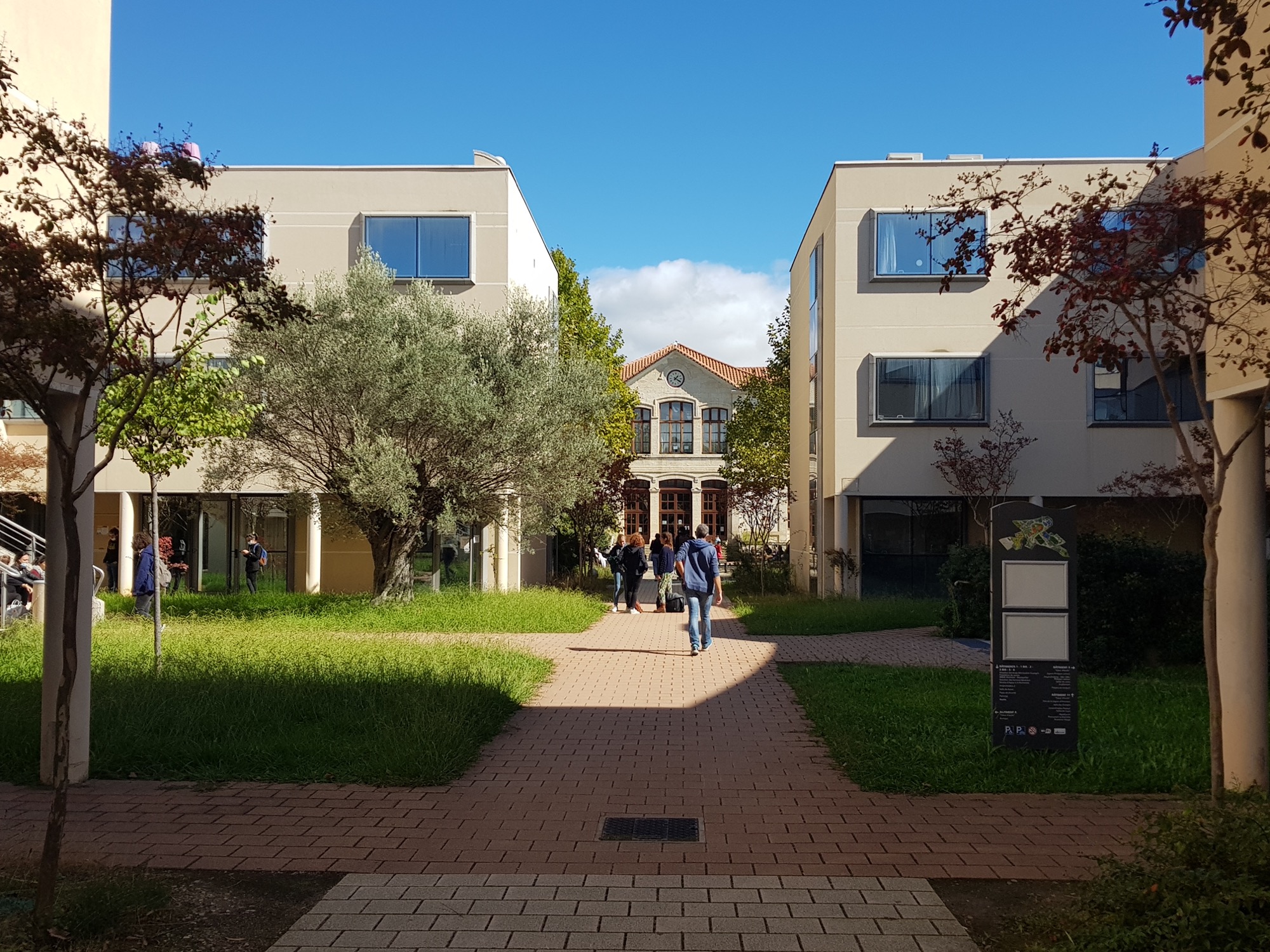
L'Institut Agro operates 6 campuses and 3 experimental farms across France:
Libraries: Montpellier has four libraries and documentation centres on three sites (La Gaillarde, Lavalette and Florac); Rennes-Angers holds 55,000 books, 11,000 end-of-study dissertations, 550 theses and 400 print periodicals.
Study programmes offered at L'Institut Agro.
Experiences shared by students of L'Institut Agro.
Studied here? Share your experience to help other applicants.

Book a free consultation with our expert counsellors and take the first step towards your dream university.
Copyrights © 2026 StudyMapped. All rights reserved.

Enter your credentials to continue.
Join us and start your study abroad journey.


