


Arts & Humanities
BA Art History
University of Stuttgart, Germany
- Degree
- Bachelor's
- Next intake
- Winter semester

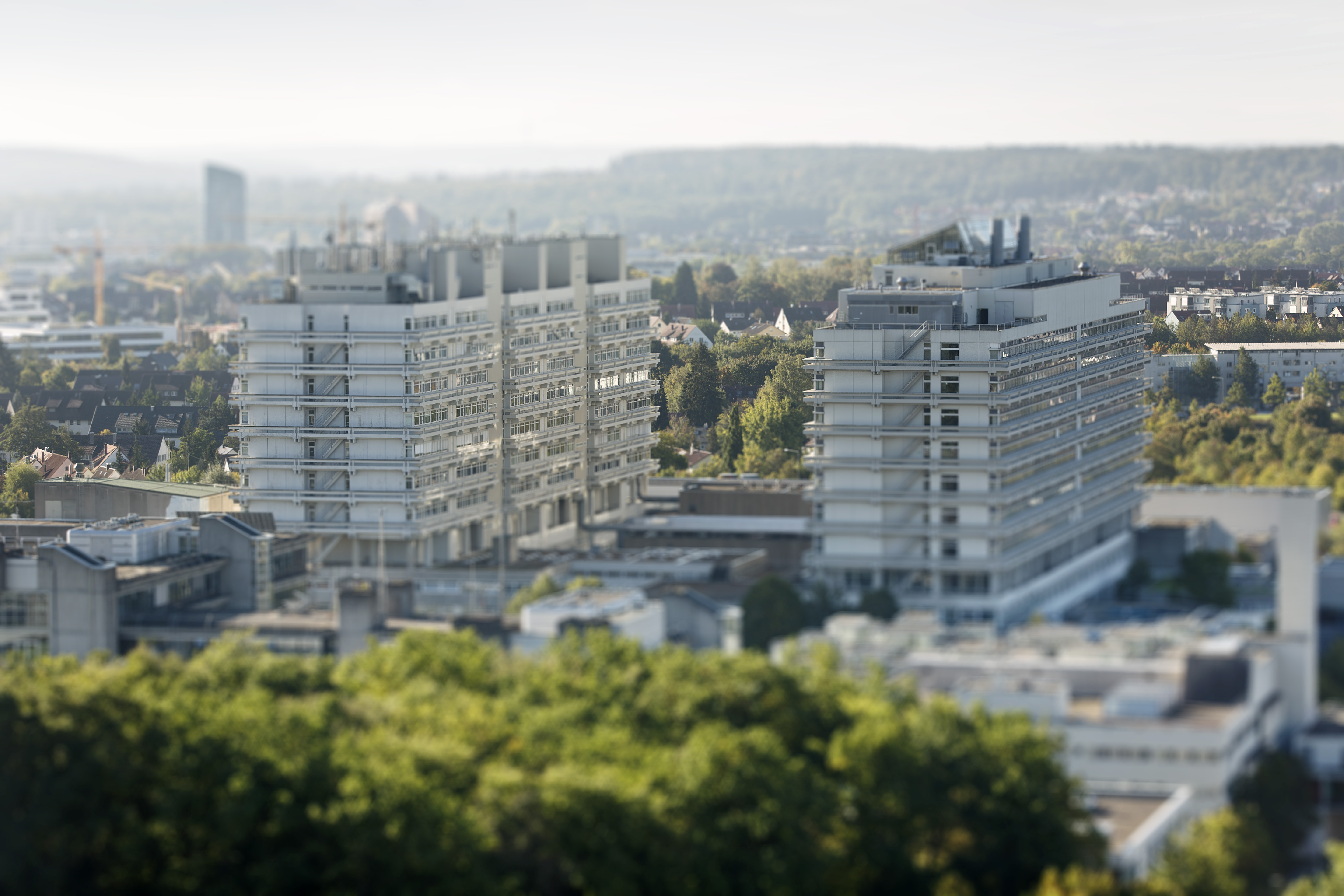

Arts & Humanities
University of Stuttgart, Germany
The Master´s Programme Infrastructure Planning (MIP) aims to provide international students, especially from the Global South, with an interdisciplinary education. The course focuses on the planning and implementation of complex projects in the fields of regional and urban planning as well as in technical infrastructure, taking into account ecological and economic requirements. Since 1983, the University of Stuttgart has been providing the practice-oriented and globally esteemed Master´s Programme Infrastructure Planning (MIP), engaging five faculties comprising 13 different institutes, along with contributions from external lecturers.
Duration: 4 semesters (2 years) | Study mode: full-time, English-taught | Intake: Winter semester | Location: Stuttgart, Baden-Württemberg, Germany
The Master’s programme MIP MIP (Infrastructure Planning): What is special about this programme? Students of the international English speaking Master’s programme MIP at the University of Stuttgart explain why they chose Stuttgart.
Graduates possess a comprehensive understanding of the complexities inherent in integrated infrastructure planning, enabling them to contribute to significant national and international projects or undertake planning responsibilities at the local level. Another professional objective is strategic development planning at various levels.
The target group of MIP consists of civil engineers, architects and urban planners who wish to gain insight into infrastructure planning in a broad, integrated context and who want to prepare themselves for working in international and complex planning. Required is a bachelor's degree in civil engineering, architecture, regional or urban planning, or related fields. Professional experience in one of this fields is appreciated. Excellent English is required. Students should be interested in an interdisciplinary approach to regional and urban planning as well as to the planning of technical infrastructure and should be willing to acquire intercultural experiences. Which areas of specialisation are there? Within the curriculum of the Master's degree programme MIP, the focus is on an integrated planning approach. In the MIP course, civil engineers, architects, and regional planners are intentionally grouped together in the same year, fostering an immersive learning environment that emphasises intercultural and interdisciplinary approaches to tackling complex planning tasks. In addition to their individual previous education from the Bachelor's degree, they can thus acquire broad knowledge in the Master's degree programme MIP and qualify for management tasks in international project groups. It is possible to specialise in specific fields, due to the flexible combination of the four elective modules (out of a catalogueue of more than 10) as well as the selection of a topic for the Master's thesis. Admission Requirements A bachelor’s degree or equivalent in civil engineering, architecture, regional or urban planning, geodesy, environmental engineering or related fields An excellent academic record The complete information on the admission process, required knowledge of English, and the criteria for the assessment of professional suitability can be found in the admission regulations. Language Requirements Proof of English language proficiency in form of internationally recognised test scores (TOEFL or IELTS). This proof is obligatory for every applicant except for English native speakers. Admission regulation – July 30, 2026 Restricted admission (NC) Application information on the MIP website Application period for the winter semester: November 15 – January 15 The winter semester starts in October. How is the programme structured? Modules offered in MIP include: General Aspects of Infrastructure Planning Statistics and GIS Environmental Aspects Regional and Urban Planning Transport Planning and Modelling Water and Power Supply Sanitary Engineering Case Study All students have to complete the nine mandatory modules, but the selection of the four elective modules (out of a catalogueue of more than 10) allows for individual specialisation. Also, students are free to choose the Master’s thesis topic from the whole catalogueue of fields tought in MIP to specialise in a topic relevant to their individual career plans. They can work on a topic from their home country, from the international context, or they can choose a project in Germany. Details can be found on the website of the degree programme . MIP does not include compulsary internships. + - Study schedule Programme Structure (PDF) Module Handbook The module handbook and the study programme curriculum describe the individual modules with the associated courses, content and examinations. Curriculum and module handbook In the C@MPUS portal, you can view the structure of the study programme.
Intake: Winter semester
Duration: 4 semesters (2 years)
Apply through the official page: https://www.uni-stuttgart.de/en/study/application/online/
Arts & Humanities
University of Stuttgart, Germany
Arts & Humanities
University of Stuttgart, Germany
Arts & Humanities
University of Stuttgart, Germany
Arts & Humanities
University of Stuttgart, Germany
Arts & Humanities
University of Stuttgart, Germany
Arts & Humanities
University of Stuttgart, Germany
Arts & Humanities
University of Stuttgart, Germany
Arts & Humanities
University of Stuttgart, Germany

Book a free consultation with our expert counsellors and take the first step towards your dream university.
Copyrights © 2026 StudyMapped. All rights reserved.

Enter your credentials to continue.
Join us and start your study abroad journey.