
University in France
Créteil, Île-de-France, France
University profile
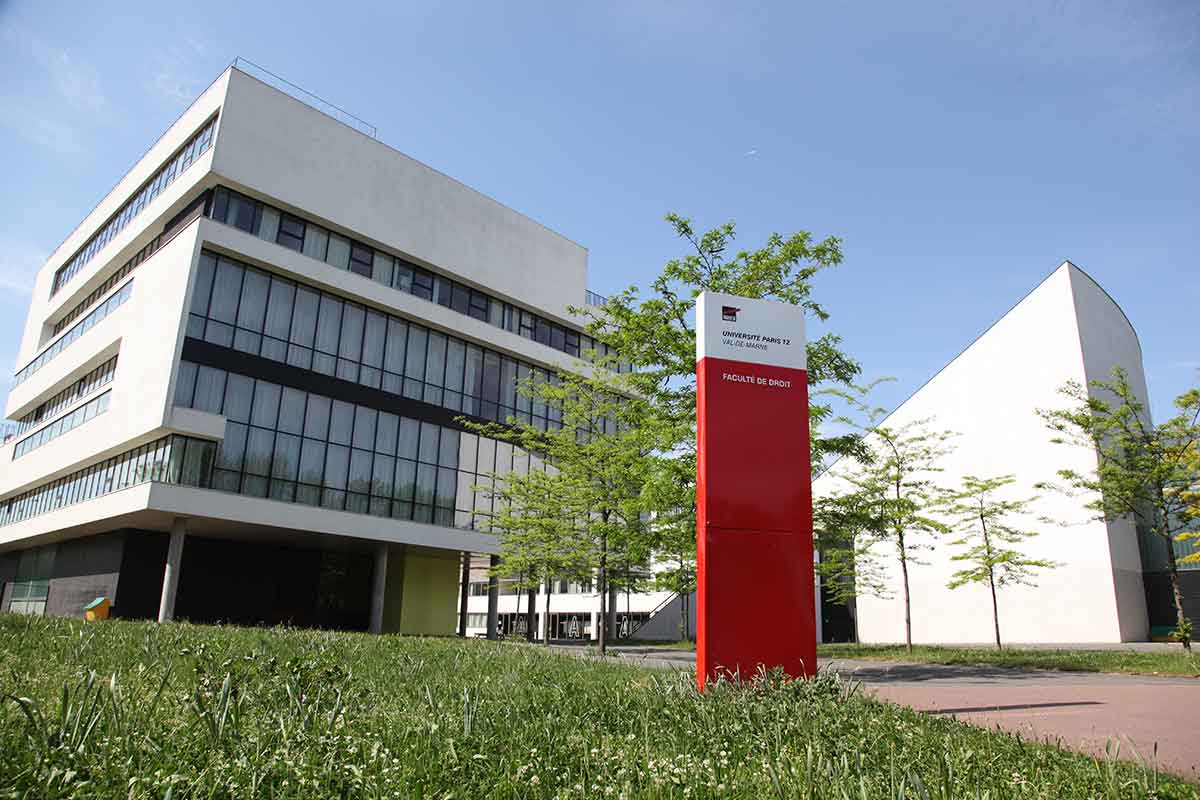
The Université Paris-Est Créteil Val-de-Marne (UPEC) is a multidisciplinary public university in the east of the Paris region, active in all fields of knowledge since 1970. It brings together 14 faculties, schools and institutes, one observatory and 32 research laboratories, and trains more than 42,000 students and working adults each year across more than 500 programme pathways, from the BUT (university technology degree) to the doctorate.
The university describes itself as an engaged university rooted in its territory, with a strategic project built on three orientations: engaged, active and open to the world. Its priorities are student success from orientation to professional integration, innovation through advanced research and shared knowledge, and international reach. Teaching is offered in initial, continuing and work-study (apprenticeship) formats, with support for student entrepreneurship.
Teaching is organised in faculties and institutes: Droit; Lettres, langues et sciences humaines; Sciences économiques et de gestion; Sciences et technologie; Santé; Sciences de l'éducation, sciences sociales et STAPS; the IAE Paris-Est business school; the Institut d'Études Politiques; the École d'Urbanisme de Paris; the École publique d'ingénieurs de la santé et du numérique (EPISEN); the Inspé (teacher education); two IUT (Créteil/Vitry and Sénart-Fontainebleau); the AEI International School; the Institut de formation en ergothérapie; ESM Formation & Recherche en soins; and the Observatoire des Sciences de l'Univers Efluve.
Student life is organised by the Service Vie de campus, with a university sports service (SUAPS, about thirty activities), cultural activities, associations and student initiatives, a university health service with a Maison de la santé at the Créteil Campus Centre, social support and disability services. Eleven libraries serve the faculties and departments, and university restaurants and Crous cafeterias operate on the main campuses. Housing help is given through an accommodation office and a Studapart platform, alongside Crous university residences.
The UPEC takes international students in exchange programmes and individually; around 10% of its students come from more than 120 countries, and it holds the 'Bienvenue en France' label. It is a member of the Aurora European University alliance and a laureate of the Investissements d'Avenir (PIA4) programme Erasme. Its international partnerships include more than 400 institutions worldwide.
For 2026-2027, differentiated registration fees for students from outside the European Union, European Economic Area, Switzerland and Québec are 2,902 euros per year of Licence and 3,950 euros per year of Master. Partial exemptions exist depending on the situation and programme. Students exempt from the differentiated fees include exchange students; holders of a French government scholarship from the ministry of higher education or the ministry of foreign affairs; refugees; students in CPGE; third-cycle health students; doctoral students; holders of certain residence permits (long-term EU resident card, Algerian residence certificate, family member of an EU/EEA/Swiss citizen); distance-learning students under agreements with UPEC; and students fiscally domiciled in France for at least two years. Students holding a long-stay visa valid as residence permit (VLS-TS) must pay the differentiated fees. Doctoral registration costs 398 euros for 2026-2027 (265 euros during a césure). Official fee information.
The Contribution Vie Étudiante et de Campus (CVEC) is a separate mandatory contribution for students in initial training, paid or exempted before registration; it funds health, cultural, sports and student-association actions. For doctoral students it is 105 euros in 2026-2027. CVEC information.
Students may apply for exemption from registration fees using the university form, and for refund of fees in particular cases. Exemption request form.
Funding that may apply includes the Campus Bourses directory by Campus France; French Ministry of Europe and Foreign Affairs scholarships (France Excellence Eiffel for master and doctorate; France Excellence Major for top graduates of French lycées abroad); Erasmus+ mobility grants through the home university; local-authority aid; and Crous 94 aid, normally available after arrival once a Dossier Social Étudiant is filed. Scholarships for international students.
EUR FRAPP Annual Scholarships for International Students (BAEI) at UPEC →
Browse the scholarships listed for Université Paris-Est Créteil and check each award’s eligibility.
View scholarships for Université Paris-Est Créteil →First-year entry for applicants holding or about to hold a French or European baccalauréat goes through the national Parcoursup platform. Applicants holding a non-European national secondary leaving diploma must first make a Demande d'admission préalable (DAP). For entry in 2027-2028 the DAP opens on 1 October 2026 and applications close on 15 December 2026; the procedure is prepared about a year in advance.
Applications for Licence 2 and 3 and DEUST 2 open in February on eCandidat. BUT 2 and 3 applications go through Canel from February; professional licences taught at the IUTs use Canel, and other professional licences use eCandidat. International applicants living abroad in an Études en France country apply on the Études en France platform; applicants from other countries follow the instructions on each programme's page. Other diplomas (DU, CU, DIU, capacités) have their own procedures shown on each programme's page, under the Admission tab.
Applicants must show a level of French between B2 and C1, depending on the programme. For first-year entry under the DAP, the TCF tout public is compulsory unless the applicant holds the DELF B2 or DALF; the TEF (Paris CCI), DELF B2 and DALF are also accepted. Nationals of countries where French is the sole official language, and of countries where it is one of several official languages if all secondary study was in French, may be exempt from the TCF; students from Benin, Burkina Faso, Congo-Brazzaville, Côte d'Ivoire, Gabon, Guinea, Mali, Niger, Democratic Republic of the Congo, Senegal and Togo are exempt. For later years, TCF level 4, DELF B2, DALF, TEF level 4 and the DUEF B2 are accepted; each programme sets its own language prerequisites. The Faculty of Lettres, Langues et Sciences Humaines prepares DUEF diplomas at levels A1 to C1.
The first year (Master 1) is applied for on the national Mon Master platform. Offers are published on 2 February; applications run from 17 February to 17 March; admission proposals are shown from 3 to 16 June, with a complementary phase from 19 June to 19 July (dates given for the 2026 intake). Up to 15 applications may be made to standard master mentions and 15 more to work-study mentions. The following are outside Mon Master: formations with an international focus, continuing-education programmes, applicants of foreign nationality resident in an Études en France country (who use the Études en France platform), and students repeating the same year. Applicants must hold or be preparing a Licence or equivalent. Master 2 applications open from February on eCandidat. Programme pages give the capacity, prerequisites and file-selection criteria.
The engineering cycle is taught at EPISEN, which publishes its own admission procedure for its engineer programmes (Biomedical Engineering and Health, Information Systems, Computer Science and Health, and an apprenticeship route).
The applicant first contacts a thesis supervisor and a laboratory with a one-to-two-page thesis project, a detailed CV and copies of diplomas. After agreement from the supervisor and laboratory director, the applicant pre-registers on the ADUM platform; the doctoral committee examines the file and may hold an audition, which is required to obtain a UPEC doctoral contract. After acceptance, administrative registration is completed with the university. Registrations and re-registrations must be completed by 30 November 2026 for 2026-2027 (new CIFRE or dedicated fixed-term contract doctoral students may register until 23 April 2027). Seven doctoral schools cover humanities and social sciences, health and life sciences, mathematics, engineering and information sciences, public health, and urban studies. Cotutelle (joint supervision) with a foreign university is available.
After admission, the CVEC certificate must be obtained before administrative registration. The 'Online Welcome Desk' gives admitted international students a personalised roadmap, and the university supports residence-permit procedures. Foreign diplomas can be recognised through the ENIC-NARIC France centre.
UPEC is spread across several sites in the east of the Paris region. The campus plans list:
Eleven libraries are located in the faculties and departments (close to 600,000 books and over 1,500 journal subscriptions across the network, open 8:30 to 20:00 and for some up to 22:00). The university sports service offers around thirty activities, run by 14 teachers, and sports facilities plans are available. The Service de santé universitaire is at the Créteil Campus Centre, and restaurants and Crous cafeterias operate at Créteil, Mondor, Sénart, Fontainebleau and Damesme.
Study programmes offered at Université Paris-Est Créteil.
Experiences shared by students of Université Paris-Est Créteil.
Studied here? Share your experience to help other applicants.

Book a free consultation with our expert counsellors and take the first step towards your dream university.
Copyrights © 2026 StudyMapped. All rights reserved.

Enter your credentials to continue.
Join us and start your study abroad journey.


