

Engineering
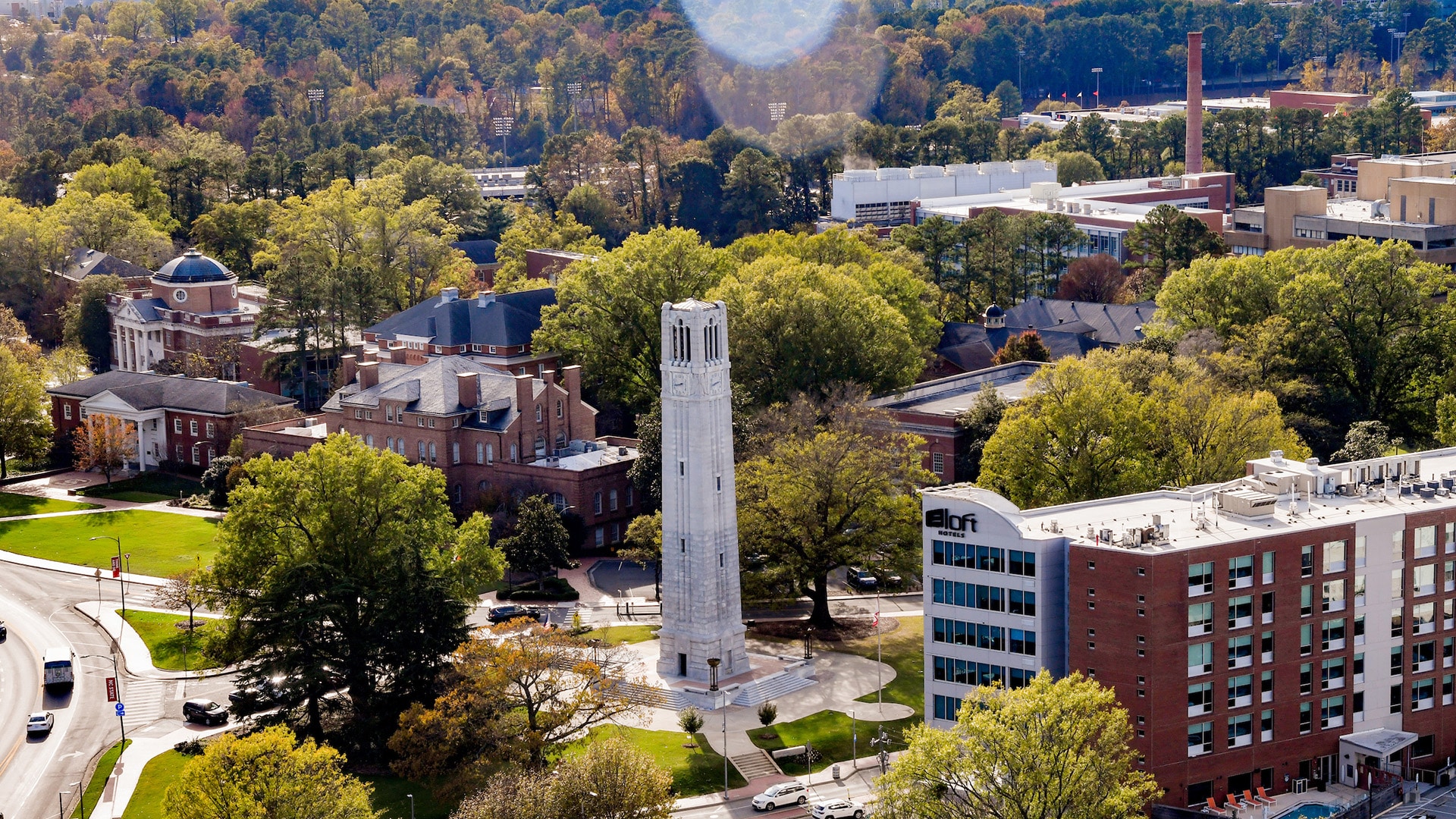
North Carolina State University, United States
This bachelor’s degree takes an applied, hands-on approach to chemistry focusing on the building blocks of the materials we come into contact with every day: polymers and dyes. Students majoring in Polymer and Color Chemistry (PCC) learn about dye chemistry, color science and textile wet processes in our Dyeing and Finishing Lab Pilot Plant and DataColor Lab.
Faculty: Wilson College of Textiles | Study mode: full-time | Location: Raleigh, NC, United States
The plan of study totals 120 credit hours. Courses listed in the plan include: PCC 101 Introduction to Polymer and Color Chemistry; PCC 104 Introduction to Polymer and Color Chemistry Lab; PCC 106 Chemistry of Colorants and Auxiliaries (Polymer Synth. Sustain. the Env.); PCC 301 Technology of Dyeing and Finishing; PCC 304 Technology of Dyeing & Finishing Laboratory; PCC 350 Introduction to Color Science and Its Applications. Concentrations/options listed: Medical Sciences; ACS Certification; Science and Operations.
A bachelor’s in PCC also regularly prepares students for admission to top advanced degrees in the medical field, from Johns Hopkins University to Harvard Medical School. Employers across the country and the world also specifically seek out our students for their unique and in-demand knowledge. Career titles listed include: Color Scientist, Dye Chemist / Textile Chemist, Research and Development (R&D) Polymer Chemist, Forensic Chemist, Plant / Development Chemist, Process Manager and/or Production Manager, Laboratory Director, Quality Control Chemist, Health Care Manager.
Admission is to the university and the major is selected on the application (first and second choice); applicants submit a high school transcript, essays and a short answer question, and SAT/ACT/CLT scores are optional for applicants with a weighted GPA of 2.8 or above (applies to the university, not specific to this major).
Tuition is charged per credit, so the total depends on the modules you register for each year. Current fees are listed in the official fee schedule.
Entry terms: Fall and Spring. Applicants admitted for fall may request Summer Session II entry (begins at the end of June). Some majors do not accept first-year or transfer applications for spring entry (Applied Math, Mathematics, Physics, Statistics, Music Technology, Fashion and Textile Design, College of Design studio-based majors, Exploratory Studies; first-year College of Engineering applications).
First-year fall entry: Early Action deadline November 1 (decision by end of December for NC residents, January 31 for others); Regular Decision deadline January 15 (decision March 31). First-year spring entry: application deadline October 1, materials October 15. Studio-based majors (Architecture, Media Arts Design and Technology, Fashion and Textile Design, Graphic & Experience Design, Industrial Design): single deadline November 1 with portfolio. Enrollment confirmation deadline is May 1 for fall admits and December 1 for spring admits. The undergraduate application opens August 1.
Transfer applicants: fall deadline February 15 (materials March 1); spring deadline October 1 (materials October 15); studio-based majors November 1. International first-year and transfer applicants follow the same deadlines.
Apply through the Common App or Coalition on Scoir; the non-refundable application fee is $85 for first-year applicants (fee waivers available). International applicants pay a non-refundable $100 USD application fee (no fee waiver for F or J visa students). NC State is test optional for applicants with a weighted GPA of 2.8 or above (SAT, ACT or CLT scores may be submitted).
Apply through the official page: https://admissions.ncsu.edu/apply/
Engineering
North Carolina State University, United States
Engineering
North Carolina State University, United States
Engineering
North Carolina State University, United States
Engineering
North Carolina State University, United States
Engineering
North Carolina State University, United States
Engineering
North Carolina State University, United States

Book a free consultation with our expert counsellors and take the first step towards your dream university.
Copyrights © 2026 StudyMapped. All rights reserved.

Enter your credentials to continue.
Join us and start your study abroad journey.


