
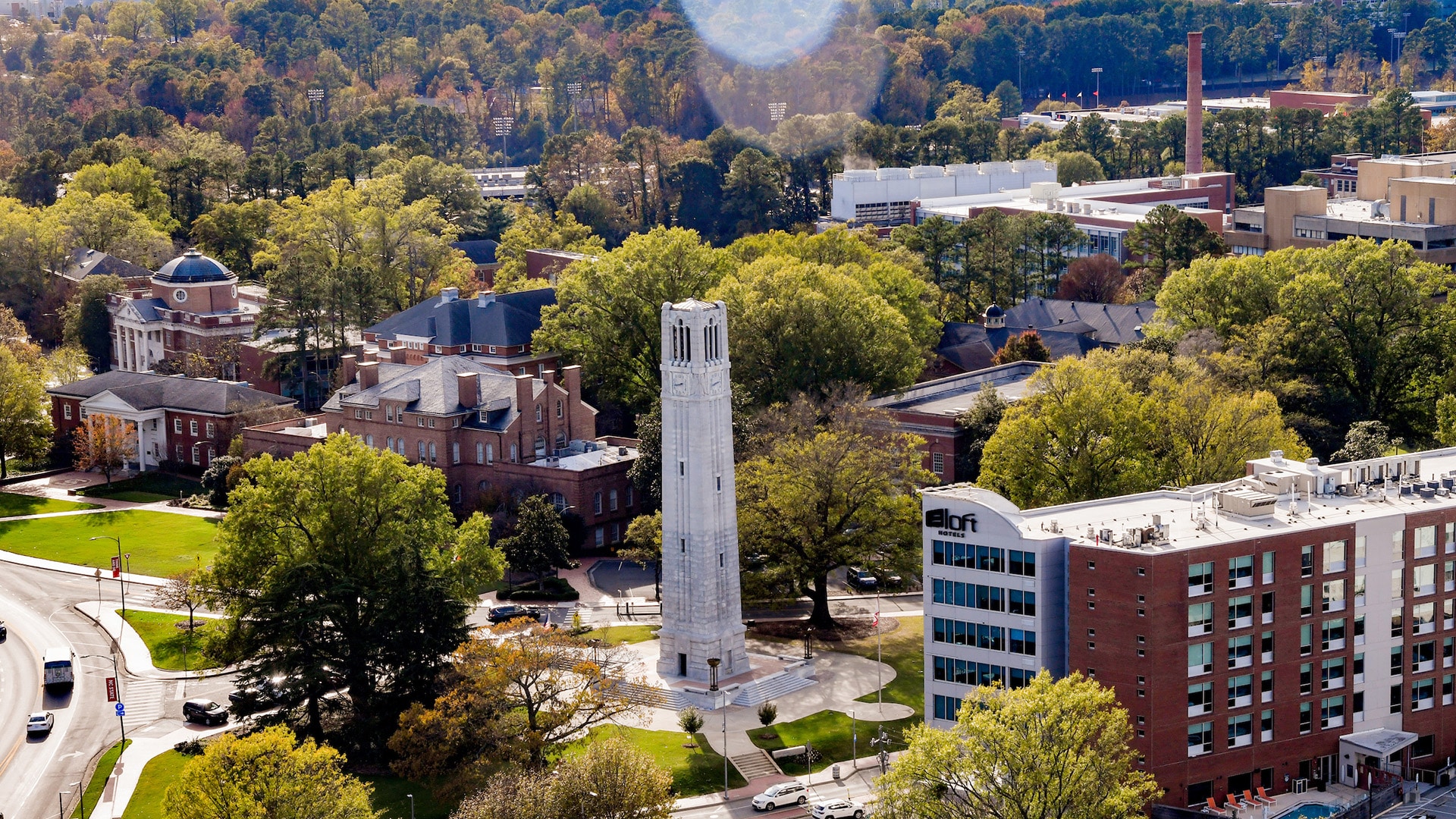

Engineering
North Carolina State University, United States
Nuclear engineers work in nuclear systems research, design, development, testing, operation, environmental protection, and marketing. The Bachelor of Science program prepares graduates for positions in industry, national laboratories, or for graduate study.
Faculty: College of Engineering | Study mode: full-time | Location: Raleigh, NC, United States
The plan of study totals 106 credit hours. Courses listed in the plan include: NE 201 Introduction to Nuclear Engineering; NE 309 Introduction to Materials for Nuclear Energy; NE 202 Radiation Sources, Interaction and Detection; NE 228 Introduction To Fusion Energy; NE 205 Thermodynamics for Nuclear Engineering; NE 301 Fundamentals of Nuclear Engineering. Concentrations/options listed: Nuclear Fuels and Materials; Radiological Engineering; Plasma Sciences and Fusion Energy.
Nuclear power reactor operation continues with ninety eight reactors operating in the nation, increasing our reliance upon nuclear energy as a substitute for energy from fossil fuels. Development of advanced fission and fusion reactors offers the potential of vast new energy sources. Career titles listed include: Energy Engineer, Engineering Professor, Nuclear Engineer, Nuclear Fuels Research Engineer, Radiation Protection Engineer.
Admission is to the university and the major is selected on the application (first and second choice); applicants submit a high school transcript, essays and a short answer question, and SAT/ACT/CLT scores are optional for applicants with a weighted GPA of 2.8 or above (applies to the university, not specific to this major).
Tuition is charged per credit, so the total depends on the modules you register for each year. Current fees are listed in the official fee schedule.
Entry terms: Fall and Spring. Applicants admitted for fall may request Summer Session II entry (begins at the end of June). Some majors do not accept first-year or transfer applications for spring entry (Applied Math, Mathematics, Physics, Statistics, Music Technology, Fashion and Textile Design, College of Design studio-based majors, Exploratory Studies; first-year College of Engineering applications).
First-year fall entry: Early Action deadline November 1 (decision by end of December for NC residents, January 31 for others); Regular Decision deadline January 15 (decision March 31). First-year spring entry: application deadline October 1, materials October 15. Studio-based majors (Architecture, Media Arts Design and Technology, Fashion and Textile Design, Graphic & Experience Design, Industrial Design): single deadline November 1 with portfolio. Enrollment confirmation deadline is May 1 for fall admits and December 1 for spring admits. The undergraduate application opens August 1.
Transfer applicants: fall deadline February 15 (materials March 1); spring deadline October 1 (materials October 15); studio-based majors November 1. International first-year and transfer applicants follow the same deadlines.
Apply through the Common App or Coalition on Scoir; the non-refundable application fee is $85 for first-year applicants (fee waivers available). International applicants pay a non-refundable $100 USD application fee (no fee waiver for F or J visa students). NC State is test optional for applicants with a weighted GPA of 2.8 or above (SAT, ACT or CLT scores may be submitted).
Apply through the official page: https://admissions.ncsu.edu/apply/
Engineering
North Carolina State University, United States
Engineering
North Carolina State University, United States
Engineering
North Carolina State University, United States
Engineering
North Carolina State University, United States
Engineering
North Carolina State University, United States
Engineering
North Carolina State University, United States

Book a free consultation with our expert counsellors and take the first step towards your dream university.
Copyrights © 2026 StudyMapped. All rights reserved.

Enter your credentials to continue.
Join us and start your study abroad journey.


