

University in United Kingdom
Manchester, England, United Kingdom
University profile
Manchester Metropolitan University (Manchester Met) is a public university in the centre of Manchester, England, with more than 44,000 students. Its roots go back to the Manchester Mechanics' Institute of 1824, and it became a university in 1992 when Manchester Polytechnic gained degree-awarding powers. It holds overall Gold in the Teaching Excellence Framework (TEF 2023–2027) and is regulated by the Office for Students.
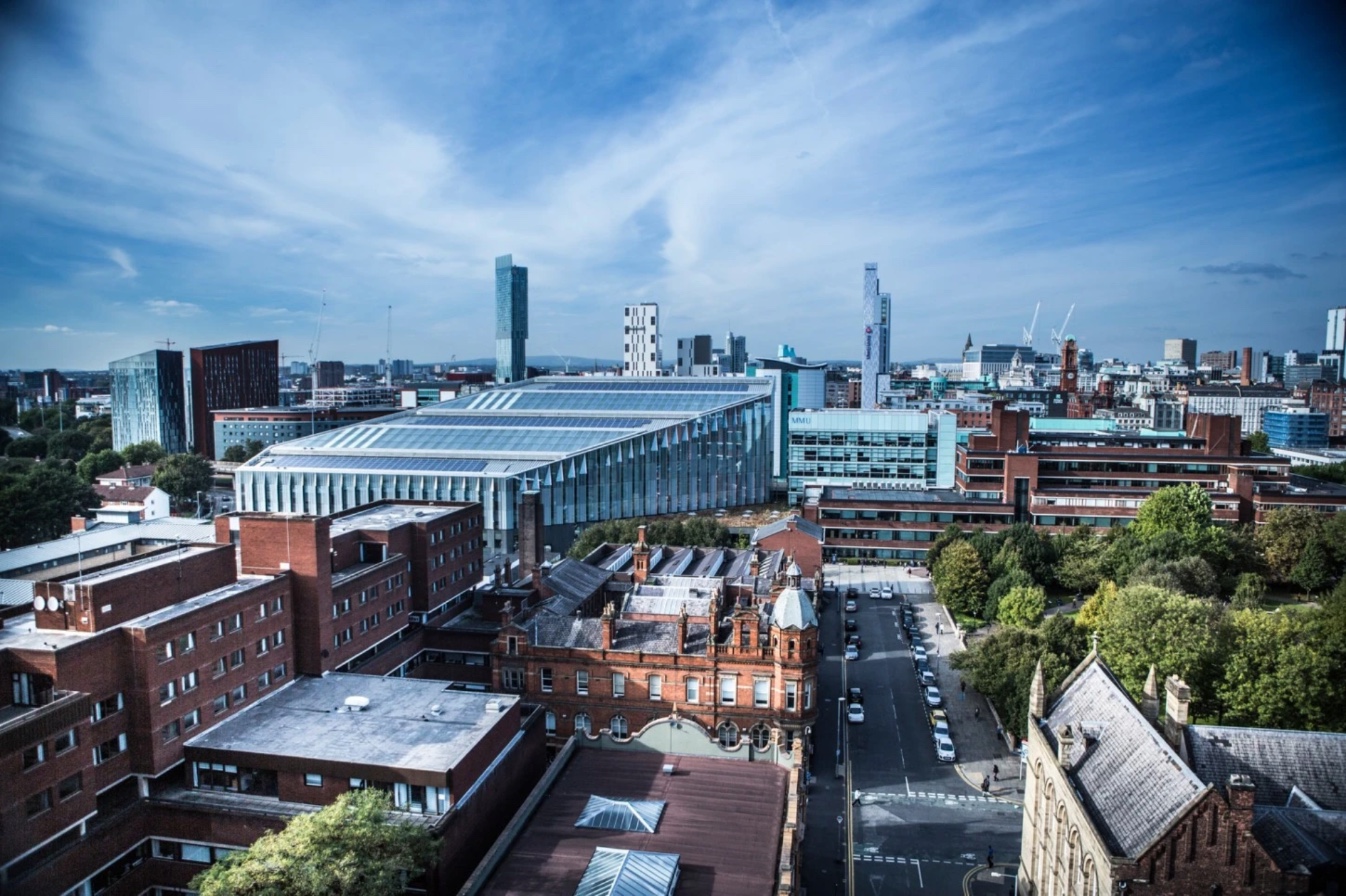
Teaching takes place on a city-centre campus around All Saints, Oxford Road and the Birley site. Over £400 million was invested in the estate between 2015 and 2025, adding buildings such as the School of Digital Arts (SODA), the Institute of Sport and the Dalton Building; a new library is due in spring 2028.
The University has four faculties:
Cross-cutting institutes include the Institute of Sport and the Institute for Children's Futures. The Business School holds triple accreditation from EQUIS, AACSB and AMBA. The University offers undergraduate study in 38 subject areas, more than 150 postgraduate qualifications and degree apprenticeships.
Student life centres on the Students' Union, with over 130 clubs and societies, more than 40 sports clubs and over 50 teams in British Universities and Colleges Sport leagues. University-run halls include Archway, the Birley halls (Dale, Dunham, Naylor, Vine and Warde), Briarfield, Cavendish, Needham Court and Oxford Court, supplemented by private partner residences; new full-time first-year undergraduates who meet the booking conditions are guaranteed a room.
International students can enter directly or through the University's own International College, which offers Foundation, International Year One and Pre-Masters pathways with guaranteed progression to more than 90 degrees for students who meet the criteria. The Language Centre runs pre-sessional English courses for students who have not yet met their English requirement.
Undergraduate tuition fees for UK students are set in line with the University's TEF rating and approved by the UK government; fees for each course appear in the online prospectus. For international (EU and non-EU) students, undergraduate fees for 2027–28 range from £20,000 to £21,500 a year and postgraduate taught fees from £21,000 to £22,500; January 2027 postgraduate taught fees also range from £21,000 to £22,500. Postgraduate research fees for international students fall into three bands depending on laboratory, studio or specialist equipment costs. International fees can be paid in full, in three instalments (October, January, March) or in six monthly instalments through Flywire.
Details: International scholarships. US students can use US federal student loans. External funding routes include Commonwealth Scholarships, Chevening Scholarships and the British Council scholarship finder.
Students may also qualify for government support such as the Disabled Students' Allowance, Childcare Grant, Parents' Learning Allowance and Adult Dependants' Grant. The University was named University of the Year for Scholarships and Bursaries 2027 by The Times and Sunday Times Good University Guide. Scholarships and bursaries
Manchester Met graduates may receive a 20% alumni loyalty discount on postgraduate course fees. From September 2026, graduates of The University of Manchester receive a 10% discount on postgraduate courses at Manchester Met. Research projects may offer faculty-awarded research scholarships, and UK students can use postgraduate loans.
International Undergraduate Scholarship (2027/28 entry) →
Manchester Met University Success Fund →
First Generation Scholarship →
Sanctuary Scholarship (2027/28 entry) →
Browse the scholarships listed for Manchester Metropolitan University and check each award’s eligibility.
View scholarships for Manchester Metropolitan University →Full-time undergraduate applications are made through UCAS (institution code M40), with up to five choices. For 2027 entry, completed applications can be submitted from 1 September 2026; the equal consideration date for most courses is 13 January 2027. UCAS Extra opens on 25 February 2027 and closes on 1 July 2027; applications received after 30 June 2027 go into Clearing, which opens on 2 July 2027. Part-time undergraduate courses are applied for directly through the University's application portal at any time before the course starts.
Typical offers are set course by course and expressed in UCAS tariff points; for example, BA (Hons) English for 2027 entry asks for 104–112 UCAS tariff points. Many degrees can also be taken with a foundation year, a four-year route (five with a placement or year abroad) for applicants who do not meet direct-entry requirements; students who pass progress to Year 1 without reapplying through UCAS.
The University considers contextual data and any circumstances applicants report at the confirmation stage and may make allowances then. Where a place cannot be offered on the chosen course, it seeks to make an alternative offer. The North West First Generation programme supports Year 12 and 13 students whose parents did not attend university.
International students apply through UCAS, through an approved education agent or partner, or via the University's International College, which offers Foundation, International Year One and Pre-Masters pathways with guaranteed progression to over 90 degrees when progression criteria are met. Country-specific entry requirements are set out by country. After accepting an offer and meeting its conditions, international students pay a £5,000 tuition fee deposit through Flywire (or provide official sponsorship evidence) to request a CAS for the Student visa.
Standard minimums for undergraduate degrees (BA, BSc, BEng, MEng): IELTS Academic 6.0 with no component below 5.5; PTE Academic 61 (no component below 59); TOEFL iBT 79 (Listening 17, Reading 18, Speaking 20, Writing 17; institution code 0240); Cambridge English 170 (no component below 160); LanguageCert Academic 65 (no component below 60); Duolingo 110 (no component below 100; not accepted for Architecture). For postgraduate taught degrees (MA, MSc): IELTS 6.5 with no component below 5.5; PTE 65; TOEFL iBT 89; Cambridge 180; LanguageCert 70; Duolingo 120. Research degrees (MRes, MPhil, PhD) require IELTS 6.5 with no section below 6.0, and integrated foundation courses IELTS 5.5 in every section. Some courses set higher levels, for example Physiotherapy (IELTS 7.0, no component below 6.5), Speech and Language Therapy (IELTS 8.0, no component below 7.5) and PGCE (IELTS 7.0, no component below 6.0). Test results are normally valid for two years, and scores from different tests or sittings cannot be combined. Pre-sessional English courses are available through the Language Centre.
Most masters courses are applied for online through the course page and the University's application portal at any time of year; most close in mid to late August, and some close early if demand is high. Courses usually start in September, with a few January or February intakes. Applicants supply transcripts and certificates, referee details, a CV where relevant and a personal statement of 450–500 words; art and design applicants usually submit a digital portfolio. PGCE, MA Social Work, professional law courses and healthcare pre-registration courses use their own application routes. International postgraduate students also pay a £5,000 deposit to request a CAS, and some offers require an ATAS certificate.
Doctoral applicants normally need a first or upper second class (2:1) honours degree or equivalent. They choose a research subject area, discuss a proposal with a potential supervisor, then submit the doctoral thesis proposal form and two references through the research degree application form. Applicants may also join an academic-led project or enrol on a professional doctorate.
Teaching takes place on the Manchester city-centre campus, grouped around All Saints park and Oxford Road, with the Birley site in Hulme.
Study programmes offered at Manchester Metropolitan University.
Experiences shared by students of Manchester Metropolitan University.
Studied here? Share your experience to help other applicants.

Book a free consultation with our expert counsellors and take the first step towards your dream university.
Copyrights © 2026 StudyMapped. All rights reserved.

Enter your credentials to continue.
Join us and start your study abroad journey.


