


Engineering
BA (Hons) Finance and Business
Buckinghamshire New University, United Kingdom
- Degree
- Bachelor's
- Next intake
- September 2027

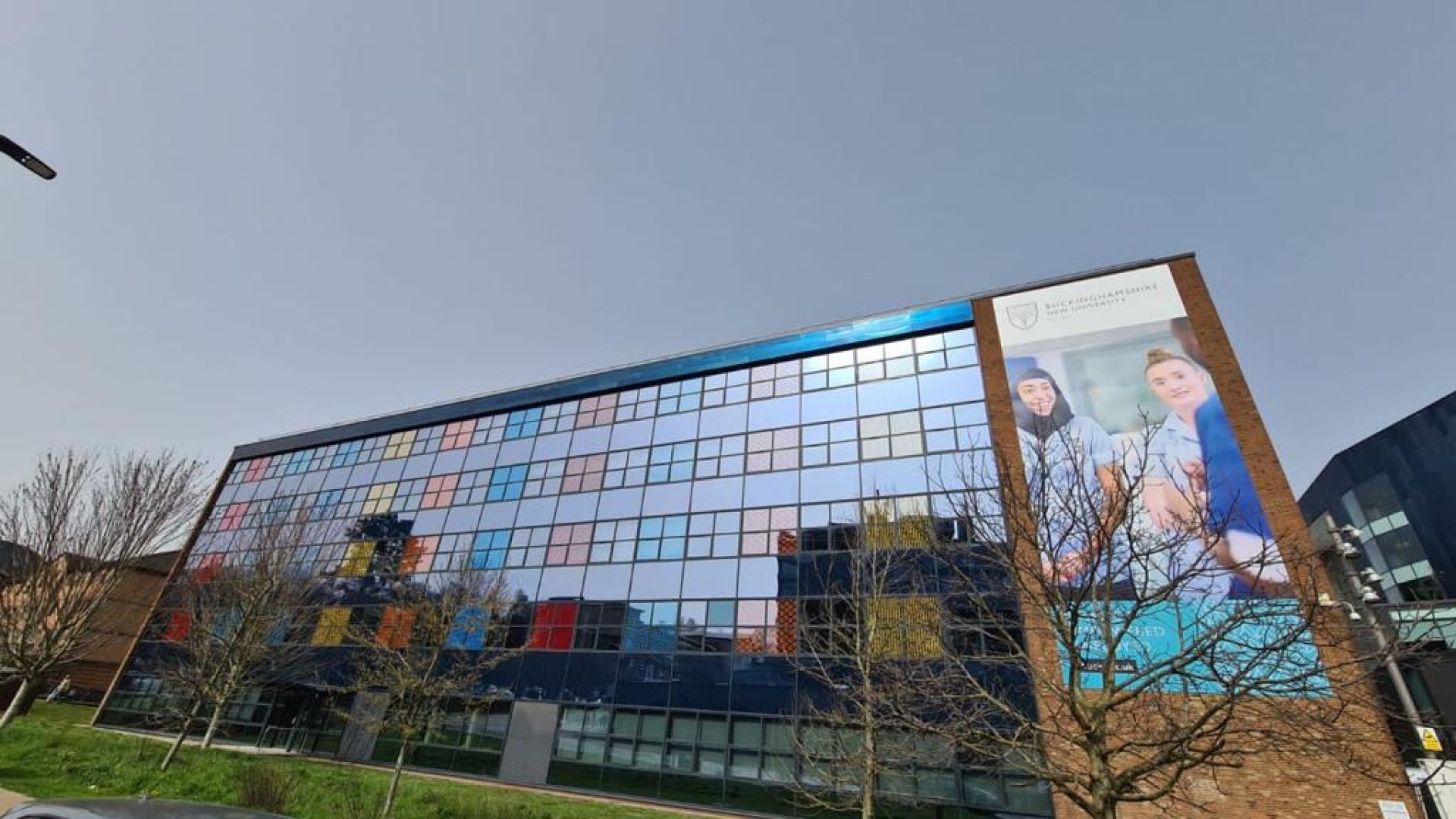

Engineering
Buckinghamshire New University, United Kingdom
The future needs people who can turn ideas into reality. Mechanical engineers are behind the technology shaping how we travel, manufacture, generate energy and live. At Bucks New University, you’ll get hands-on from day one, developing the skills to design, test and improve real systems.
Faculty: Engineering | Duration: Three or Four Years | Study mode: full-time | Intake: January and September 2027 | Location: High Wycombe, England, United Kingdom
There’s a lot more to mechanical engineering than nuts and bolts. What makes a machine move? Core modules include Science and Materials for Engineers, Mathematics for Engineers, Computer Aided Design and Simulation, Individual Engineering Project and Management, Fundamentals of Electrical & Electronic Principles, Modelling & Analysis of Electromechanical Systems, Engineering Design, Materials and Processes, Strength of Materials and Mechanics, Thermodynamics, Heat Engines and Thermofluids, Sensors, Actuators and Instrumentation, Professional Practice, Leadership and Management, Computational Fluid Dynamics, Emerging and Sustainable technologies for Engineers. Optional modules include Advanced Mechanical Principles, Dynamics and Control, Aircraft Dynamics and Control, Control Systems Engineering and Mechatronics, Renewable Energy Technologies, Advanced Manufacturing Technology and Automation, Aerospace Propulsion Systems.
Where could mechanical engineering take you? Roles include Consulting engineering firms, designing and managing projects for clients in areas such as product design, manufacturing processes and energy system optimisation, The automotive industry, helping vehicle manufacturers and suppliers design, test and refine cars, trucks and other vehicles, with a focus on performance, safety and sustainability, Aerospace engineering, designing and developing aircraft, spacecraft and satellite systems while working with teams to improve flight technology and safety, Renewable energy, contributing to the design and advancement of technologies such as wind turbines, solar panels and hydroelectric systems, Mechatronics and robotics, bringing mechanical, electronic and software systems together to create automated and intelligent machines for industries such as manufacturing, healthcare and consumer products, Manufacturing engineering, overseeing production processes and finding ways to improve efficiency, quality and cost. You could help plan and deliver the manufacture of products ranging from household appliances to industrial machinery, HVAC engineering, designing and managing heating, ventilation and air conditioning systems with a focus on energy efficiency, sustainability and comfort across residential, commercial and industrial buildings, Biomedical engineering, applying mechanical engineering principles to the development of medical devices and equipment, helping advance healthcare technology and patient care, Project management, leading engineering projects from conception to completion while balancing technical, budget and time requirements across sectors such as construction, energy and manufacturing, Research and academia, investigating areas such as materials science, robotics and energy systems, or contributing to teaching and research at universities and research institutions.
A typical offer will require a UCAS tariff score of: 112 - 128 (Full-time and Placement Year) or 32 - 56 (Foundation Year) UCAS points can be obtained through qualifications such as A levels, T levels, BTEC or an Access to Higher Education course in a relevant subject. Please list all your qualifications on the application form as you will be asked to provide copies when we receive your application. The typical offer for the full-time and placement year route is 112–128 UCAS tariff points, while the Foundation Year route requires 32–56 points. UCAS points can come from qualifications including A levels, T Levels, BTECs and Access to Higher Education courses in relevant subjects. Make sure you include all your qualifications on your application – we’ll ask for copies when we receive it. For this programme, we also accept: A Levels: ABB–BBC, including at least a grade C in Mathematics or Physics (or equivalent) T Levels: Merit in a relevant Engineering qualification BTECs: DDM–DMM in a National Diploma or Extended Diploma in Engineering or Physics, including at least a Merit in the Maths unit GCSEs: Grade 4/C or above in Maths and English (or equivalent) Already got a higher-level qualification? Students with an HNC, HND or Foundation Degree in Engineering (or equivalent) may be able to join the programme at Level 5 (year 2) or Level 6 (year 3), depending on their qualifications. For international English entry requirements, head to our international pages for the full details. UCAS code ME01.
Domestic applicants: GBP 9,790 a year (2026/27). Standard route rate. Placement-year route: Year 3 (placement year) fee £1,955 Source
International applicants: GBP 15,910 a year (2026/27). Standard route rate. Placement-year route: Year 3 (placement year) fee £1,955 Source
Intake: January and September 2027
Duration: Three or Four Years
Apply through the official page: https://www.bucks.ac.uk/study/apply-direct
Engineering
Buckinghamshire New University, United Kingdom
Engineering
Buckinghamshire New University, United Kingdom
Engineering
Buckinghamshire New University, United Kingdom
Engineering
Buckinghamshire New University, United Kingdom
Engineering
Buckinghamshire New University, United Kingdom
Engineering
Buckinghamshire New University, United Kingdom
Engineering
Buckinghamshire New University, United Kingdom
Engineering
Buckinghamshire New University, United Kingdom

Book a free consultation with our expert counsellors and take the first step towards your dream university.
Copyrights © 2026 StudyMapped. All rights reserved.

Enter your credentials to continue.
Join us and start your study abroad journey.