


Engineering
AS Computer Science and Artificial Intelligence
Arizona State University, United States
- Degree
- Diploma

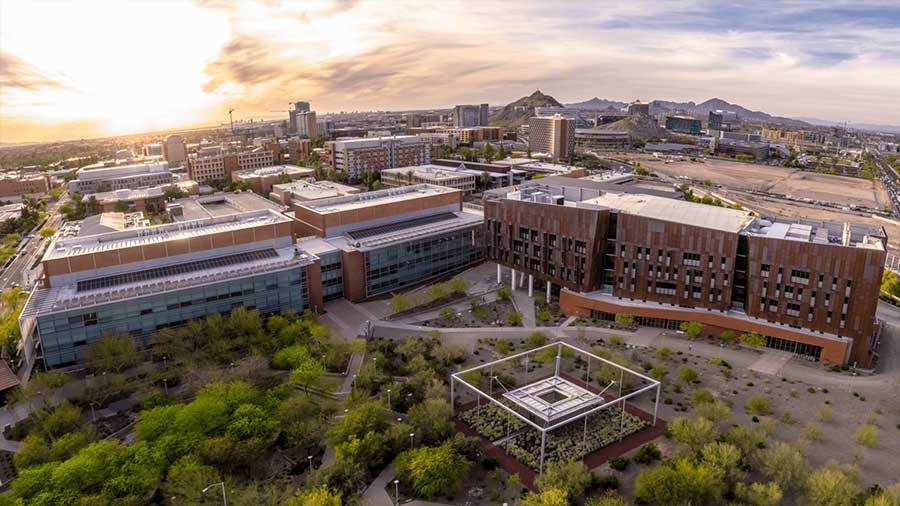

Engineering
Arizona State University, United States
The Bachelor of Science program in conservation prepares you to protect both nature and people while building a thriving, healthy future. In this program, you learn advanced tools and innovative approaches that prepare you to tackle real environmental and conservation challenges. You first build a strong foundation in ecology, biodiversity science, environmental policy and business.
Faculty: Rob Walton College of Global Futures | Department: Rob Walton School of Conservation Futures | Study mode: full-time | Location: Tempe, AZ, United States
What If Current ASU students, see how your courses can apply to another major and find out how to change your major .
Graduates are prepared for jobs working either within the conservation sector directly, including in NGOs or government positions at the local, national or global level, or as conservation professionals in other sectors and industries.
No programme-specific requirements are published. Admission is to the university: all students must meet ASU general university admission requirements (first-year, transfer, international and readmission pathways).
Domestic applicants: USD 12,177 a year (2026-27). Arizona resident tuition. Tuition only for the undergraduate on-campus (Tempe/Downtown Phoenix/Polytechnic/West Valley) rate band in the ASU tuition estimator, 2026-27: Fall 2026 plus Spring 2027 term tuition summed (full-time flat rate; part-time credit Source
International applicants: USD 22,792 a year (2026-27). International tuition. Tuition only for the undergraduate on-campus (Tempe/Downtown Phoenix/Polytechnic/West Valley) rate band in the ASU tuition estimator, 2026-27: Fall 2026 plus Spring 2027 term tuition summed (full-time flat rate; part-time credit loa Source
Entry terms: Fall and Spring semesters plus Summer; the estimator lists Fall 2026, Spring 2027 and Summer 2027 admit terms. Transfer students may start in multiple terms throughout the year.
First-year applications open on or around July 1. ASU's priority admission date is Nov. 1. The application fee is $55 for Arizona residents, $85 for domestic nonresidents, $75 for ASU Online and $90 for international nonresidents; apply with the ASU application or the Common Application (one only). ACT or SAT scores are not required for admission. FAFSA priority filing date: Jan. 15.
Transfer students apply with the ASU application or the Transfer Common Application; ASU uses rolling admission without hard deadlines for transfer applicants and decisions follow two to four weeks after all items are received. The application fee is $55 for Arizona residents, $85 for domestic nonresidents, $75 for ASU Online and $90 for international nonresidents. ACT or SAT scores are not required.
Apply through the official page: https://admission.asu.edu/apply
Engineering
Arizona State University, United States
Engineering
Arizona State University, United States
Engineering
Arizona State University, United States
Engineering
Arizona State University, United States
Engineering
Arizona State University, United States
Engineering
Arizona State University, United States
Engineering
Arizona State University, United States
Engineering
Arizona State University, United States

Book a free consultation with our expert counsellors and take the first step towards your dream university.
Copyrights © 2026 StudyMapped. All rights reserved.

Enter your credentials to continue.
Join us and start your study abroad journey.