

University in Nigeria
Sokoto, Sokoto State
University profile
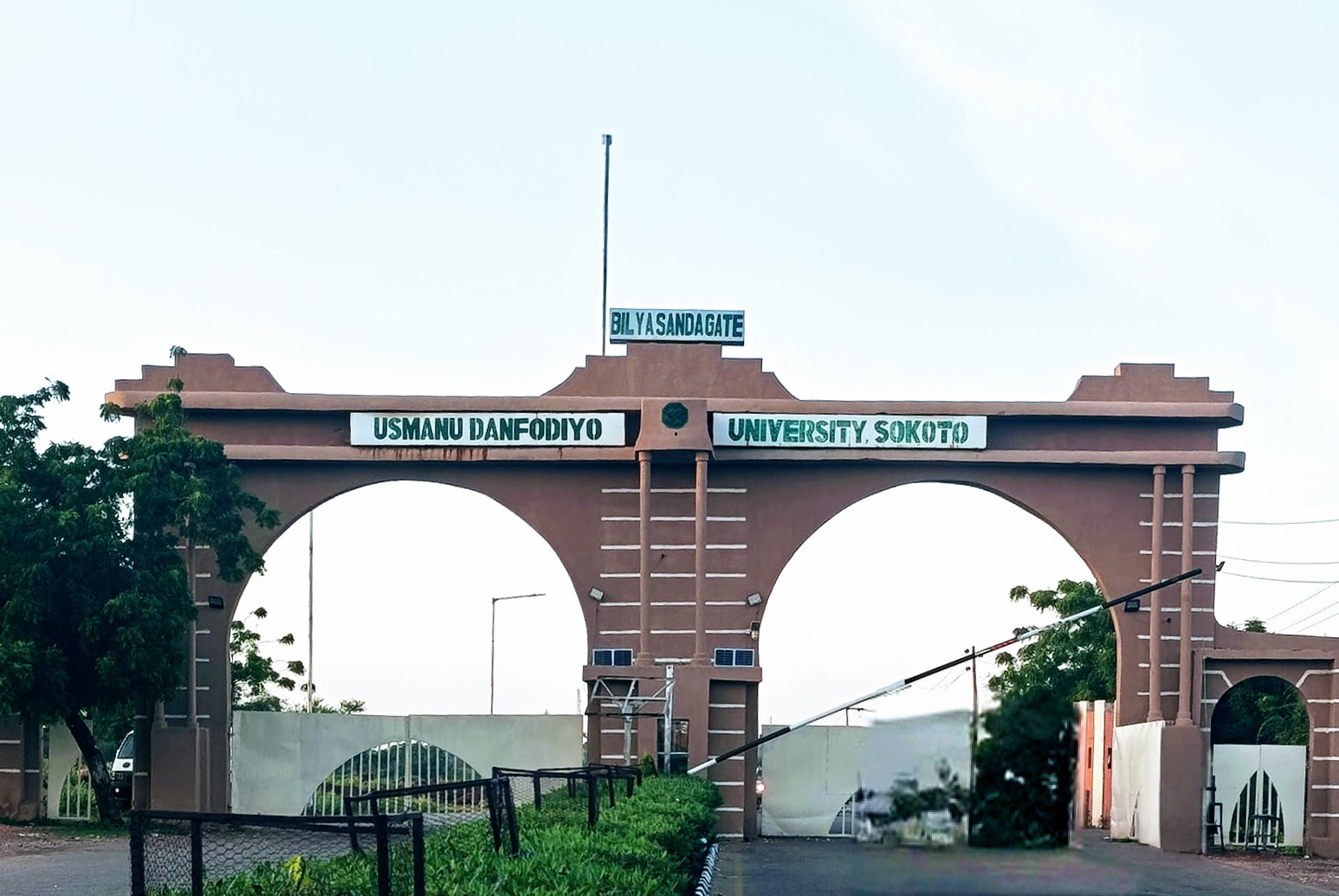
Usmanu Danfodiyo University, Sokoto (UDUS), formerly the University of Sokoto, is a federal university in Sokoto, north-western Nigeria. It was established by the Federal Government in September 1975 as one of the second-generation universities and is named after Shehu Usmanu Danfodiyo, the founder of the Sokoto Caliphate. Teaching began in October 1977 at a temporary site, now the City Campus on Sultan Abubakar Road, with 93 undergraduates, and the first convocation was held in 1980.
The university has three geographically separate campuses: the Main (Permanent) Campus in the Dundaye district of Wamakko Local Government Area, about 7 km from Sokoto city; the City Campus; and the Usmanu Danfodiyo University Teaching Hospital (UDUTH) campus. The Main Campus houses the central administration and most faculties, the City Campus houses Veterinary Medicine (clinical sciences) and the Centres for Islamic and Hausa studies, and the UDUTH campus houses the College of Health Sciences.
Academic units include the Faculties of Agriculture, Arts, Arabic and Islamic Studies, Chemical and Life Sciences, Education and Extension Services, Engineering and Environmental Design, Law, Management Sciences, Pharmaceutical Sciences, Physical and Computing Sciences, Social Sciences and Veterinary Medicine, together with the College of Health Sciences (Faculties of Basic Medical Sciences, Basic Clinical Sciences, Clinical Sciences, Allied Health Sciences and Dental Science), the School of Medical Laboratory Science, the Postgraduate School (College of Postgraduate Studies) and the School of Basic and Advanced Studies for remedial, pre-degree and IJMB work. The university runs 80 undergraduate programmes, all with full NUC accreditation as at 2022/2023, plus diploma, postgraduate diploma, master's and doctoral programmes.
Notable strengths include Islamic and Hausa studies (the Centre for Islamic Studies, founded in 1982, preserves and studies Sokoto Jihad manuscripts), veterinary and agricultural sciences, renewable energy (Sokoto Energy Research Centre, set up in 1982), and biomedical research at the TETFund-supported Centre for Advanced Medical Research and Training and the TETFund Centre of Excellence in Urology and Nephrology.
Students live in 12 halls of residence on the Main Campus, accommodating more than four thousand students, with further hostels at the City Campus, the Teaching Hospital and the Sahara hostel cluster; many students also rent in private hostels in villages around the campus. The Directorate of Health Services runs a clinic with 24-hour emergency services, and students are expected to be covered by the Tertiary Institution Social Health Insurance Programme. The student body comes from every state of the federation, and some foreign students are enrolled.
Browse the scholarships listed for Usumanu Danfodiyo University and check each award’s eligibility.
View scholarships for Usumanu Danfodiyo University →Candidates are admitted to 100 level through the Unified Tertiary Matriculation Examination (UTME) with at least five O-level credits in subjects relevant to the chosen programme, from WAEC, NECO or NABTEB. UDUS must be the candidate's first choice in JAMB, and candidates must upload their O-level results on the JAMB CAPS portal; candidates who fail to do so may not be considered for admission. Admission lists are published on the admission portal (admissions.udusok.edu.ng).
Direct Entry candidates enter at 200 level with A-level or equivalent qualifications (for example IJMB) in addition to O-level requirements. Programme requirements vary by faculty; the Faculty of Agriculture, for instance, has run a direct-entry degree route for A-level holders since 1980/81.
Transfers into UDUS are processed through the JAMB portal for inter-university transfer when it is opened for an academic session.
Admitted candidates check their status on the admission portal using their JAMB or application number, generate and pay an acceptance fee invoice, print their evidence of admission, create a student account with a valid email and phone number, upload their results and documents, and present their records at the confirmation venue.
The nine-month matriculation programme requires five credits in Biology, Chemistry, Physics, Mathematics and English Language at WAEC, NECO or NABTEB. Students take these five subjects, sit JAMB/UTME, and are assessed by continuous assessment, practical assessment and a final examination, with an aggregate pass mark of 200 out of 500. Successful students are placed into UDUS degree programmes according to scores and quota, provided they choose UDUS as first choice in JAMB, meet the required JAMB score and remedy any O-level deficiencies. An IJMB programme was added in October 2022 to give candidates A-level qualifications for direct entry.
Postgraduate applications are made online through pg.udusok.edu.ng: applicants create an account, pay the application form invoice, then supply bio-data, O-level, A-level and university academic records, three referees, passport and signature, and a research topic and abstract for PhD applicants. The Postgraduate School offers master's, PhD and postgraduate diploma programmes in most departments.
Facilities. The Abdullahi Fodio Library holds over 1,600,000 volumes of books, periodicals, theses, electronic resources and special collections, with an e-library portal and institutional repository. The Directorate of Health Services clinic offers student medical screening, treatment of common illnesses, maternal and child health, accident and emergency services (24 hours) and counselling. The university also operates an ICT centre with a Moodle learning platform and a CISCO academy.
Experiences shared by students of Usumanu Danfodiyo University.
Studied here? Share your experience to help other applicants.

Book a free consultation with our expert counsellors and take the first step towards your dream university.
Copyrights © 2026 StudyMapped. All rights reserved.

Enter your credentials to continue.
Join us and start your study abroad journey.


