

University in South Africa
KwaDlangezwa, KwaZulu-Natal, South Africa
University profile
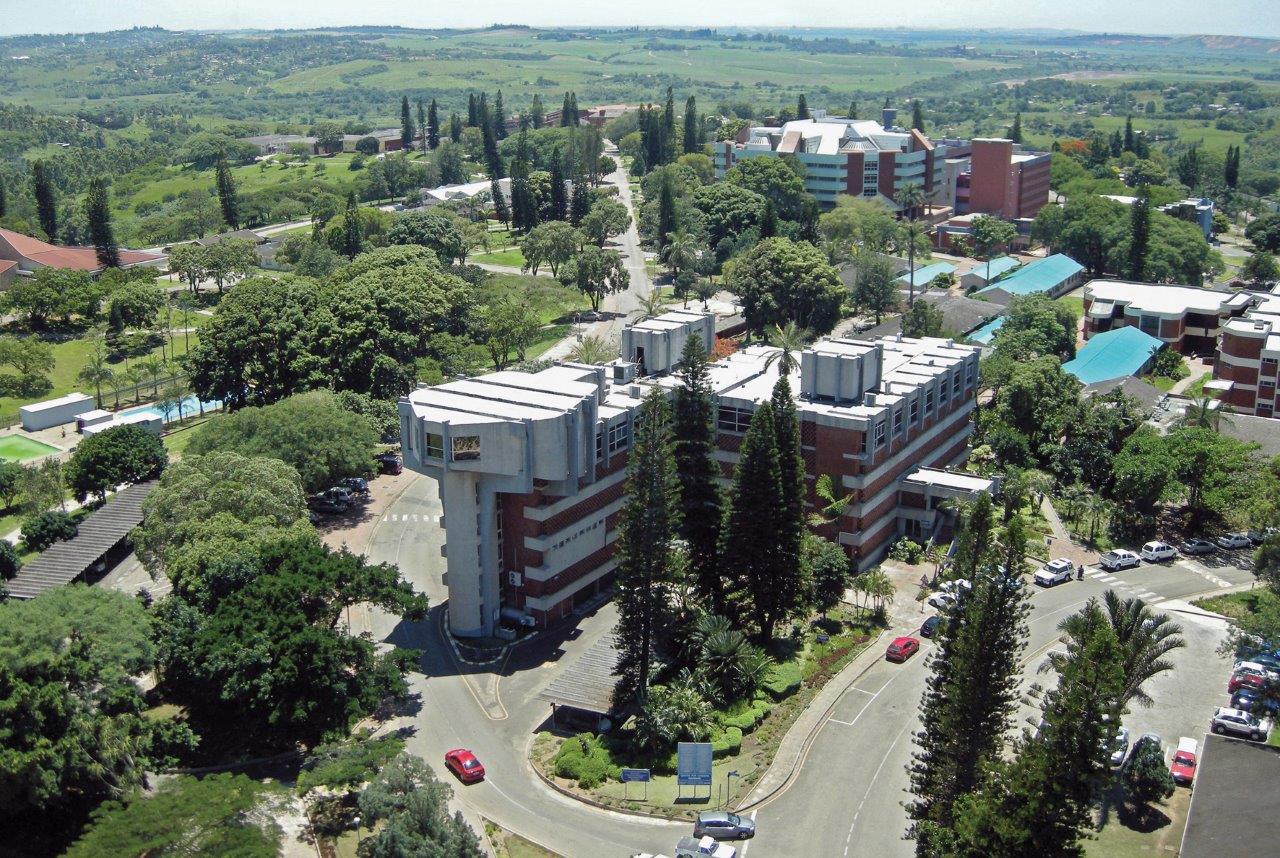
The University of Zululand (UNIZULU) is a public comprehensive university in northern KwaZulu-Natal, South Africa. Its main campus is at KwaDlangezwa in the uMhlathuze Municipality, about 1.4 km south-east of the R102 when travelling from Durban, and a second, urban campus is at Richards Bay. It is the only university north of the Uthukela (Tugela) River and describes itself as a node for African thought. Its vision is a leading comprehensive African university with rural and urban campuses, and its mission is to produce globally competitive graduates relevant to national development and to engage with society.
The university offers approximately 252 accredited degree, diploma and certificate programmes across four faculties: Humanities and Social Sciences; Commerce, Administration and Law; Education; and Science, Agriculture and Engineering. Popular programmes include Law, Education, Nursing Science, Agronomy, Hydrology, Biochemistry, Microbiology and Sport Science. Augmented and foundation courses support students entering with a weaker academic base. The Faculty of Science, Agriculture and Engineering includes departments such as Agriculture, Botany, Chemistry, Computer Science, Consumer Sciences, Engineering, Geography and Environmental Science, Hydrology, Human Movement Science, Mathematical Sciences, Nursing Science, Physics and Zoology; Engineering qualifications (BEng in Electrical and Mechanical Engineering) have been offered since 2021.
The Faculty of Humanities and Social Sciences covers departments including Anthropology and Development Studies, Communication Science, Criminal Justice, Creative Arts, English, General Linguistics and Modern Languages, Geography, History, African Languages and Culture, Information Studies, Philosophy and Applied Ethics, and Politics and International Studies. The Faculty of Commerce, Administration and Law has Business Management, Law (with a Law Clinic), Economics, Accounting and Auditing, and Public Administration. The Faculty of Education has departments of Curriculum and Instructional Studies, Educational Foundations and Management, Mathematics, Science and Technology Education, Languages and Social Sciences, and Early Childhood Education. The BCom (Accounting Science) programme is accredited so that graduates may proceed to the CTA or equivalent postgraduate programme without a bridging course.
Student life includes 24 sports codes and a range of religious, academic and social societies on both campuses, a Student Representative Council (first elected in 1980), and a Dean of Students. The KwaDlangezwa campus has a campus clinic, HIV/AIDS unit, guidance and counselling, protection services, student housing and a bureau for sport and recreation. Residence places are limited, and applications are made through the iEnabler system; students not placed in residence must find private accommodation.
International students are supported by the International Office, which runs the Sisonke Buddy Programme, study-abroad and exchange programmes and an annual International Education Week. The university reports a growing intake of students from other African countries, notably Namibia, Nigeria, Kenya, Zimbabwe, Botswana, Lesotho and Eswatini. International applicants must hold a valid South African study permit and medical cover before registering. Programmes are accredited, including the engineering qualifications accredited from 2021.
UNIZULU's Financial Aid Office and Bursaries unit assist students with sponsors, SETA bursaries (including W&RSETA, CATHSSETA, FASSET), NRF funding and other external bursaries covering tuition, accommodation, transport, learning material and meal allowances. Contacts: Head of Financial Aid 035 902 6587; SETA bursaries 035 902 6307; UNIZULU bursaries and WRSETA 035 902 6305; other bursaries and NRF 035 902 6530; financial aid enquiries [email protected], 035 902 6679.
Students in need may apply personally to the Vice-Chancellor or be referred by their faculty or the Office of the Dean of Students. Criteria: proof that the household is destitute (for example SASSA cases or a family situation such as orphanage), fair academic performance, and no other funding.
The Department of Basic Education's Funza Lushaka bursary covers Bachelor of Education students, with a rural-based District Based Funza option; SETA bursaries cover specific fields (CATHSSETA for tourism, arts and sport science; W&RSETA for wholesale and retail; FASSET for finance and accounting). NSFAS funds eligible South African students (NSFAS office 035 902 5609).
The postgraduate office assists students with national bursaries and with funding applications; see postgraduate funding.
Full list of funders: UNIZULU Bursaries and Loans.
University of Zululand Senior Merit Bursary →
Browse the scholarships listed for University of Zululand and check each award’s eligibility.
View scholarships for University of Zululand →Degree: a National Senior Certificate (NSC) with an achievement rating of 4 (50%) in four recognised 20-credit NSC subjects, a rating of 3 (40%) in Life Orientation, and a rating of 3 (40%) in English First Additional Language or 4 (50%) in English Home Language. Diploma: NSC certified by Umalusi with a rating of 3 (40-49%) or better in four recognised 20-credit subjects, 3 in Life Orientation, and 3 in English First Additional Language or 4 (50-59%) in English Home Language. Higher Certificate: an NSC certified by Umalusi; each faculty sets its own minimum entry requirements. Meeting the minimum does not guarantee admission, and each faculty adds its own subject requirements.
An old Senior Certificate (pre-2008) with matriculation exemption is accepted. Candidates without full exemption may seek conditional exemption from Universities South Africa if they are at least 23 years old and have passed four subjects with at least an E symbol. Mature-age exemption is open to applicants aged 45 and above; both exemptions must be obtained before registration. Recognition of Prior Learning (RPL) allows learning gained outside formal programmes to give access or credits; enquiries go to [email protected] or 035 902 6030/6178. Recognition of modules from other institutions is requested on form SAF01.
Foreign qualifications must be evaluated for equivalency through SAQA/USAf. Offers are conditional on obtaining a South African student visa, and no full-time student on a campus is registered without one. At registration, international students bring originals of: SAQA evaluation, foreign conditional exemption certificate, valid passport, valid study permit, proof of financial means (bank statement, bursary or funds to cover living expenses and tuition) and proof of medical insurance. Asylum seekers must comply with Section 22 permits, and refugees with Section 24 permits or hold a maroon ID. Postgraduate international students who do not study on a South African campus while conducting research may register without a student visa.
First-time undergraduate applicants apply through the Central Applications Office (CAO) in Durban, or submit forms with documents and proof of payment to the Admissions Offices at KwaDlangezwa (Admin Building, Room 32) or Richards Bay (Office A2-13). The closing date for undergraduate applications for all faculties, PGCE applications, honours and master's by coursework and returning-student applications is 30 October. After an offer, students accept it on the iEnabler system and upload a certified ID, certified NSC or final statement of results, and proof of residence (all required before registration). Applications for change of qualification do not go through CAO.
Honours applicants apply to the hosting academic department; the head of department assesses suitability and the Dean confirms. The application form (ADM01 plus departmental form PGRD2) goes to the Admissions Office with proof of payment of the application fee, and the SAQA certificate where relevant. Master's and doctoral applicants submit forms with the prescribed fee and may apply at any time; applications for research master's and doctoral studies close on 27 March, and registration must be finalised before 31 May each year at the main campus. A separate PGCE application form exists.
The optional Minimum Initial Payment for non-funded students is R3 000 for non-residential students and 50% of the residence amount for residential students; students funded for the full cost of study (including NSFAS) pay nil.
Study programmes offered at University of Zululand.
Experiences shared by students of University of Zululand.
Studied here? Share your experience to help other applicants.

Book a free consultation with our expert counsellors and take the first step towards your dream university.
Copyrights © 2026 StudyMapped. All rights reserved.

Enter your credentials to continue.
Join us and start your study abroad journey.


