

University in United Kingdom
Wolverhampton, England, United Kingdom
University profile
The University of Wolverhampton is a public university in the West Midlands whose roots lie in the 19th-century Mechanics' Institutes and the Wolverhampton School of Art, where teaching began in 1851. It became Wolverhampton Polytechnic in 1969 and gained university status in 1992. With over 30,200 students and almost 2,000 staff, it teaches on campuses in Wolverhampton, Walsall and Telford and through partner institutions in the UK and overseas, including in Nepal, India, China and Sri Lanka. Widening participation is central to its identity: it describes itself as the University of Opportunity and builds professional placements into every on-campus undergraduate degree.
Teaching is organised into three faculties, each made up of specialist schools:
The Black Country Medical School, developed in partnership with Aston University, is due to admit its first MBChB Medicine students in September 2027. Courses run from foundation and HNC/HND level through undergraduate degrees, degree apprenticeships and taught master's to PhD research, with full-time, part-time, sandwich, top-up and online options in over 70 subjects. Specialist facilities include the Springfield Campus for architecture and the built environment, home to the National Brownfield Institute, and the University of Wolverhampton Science Park, which supports innovative companies.
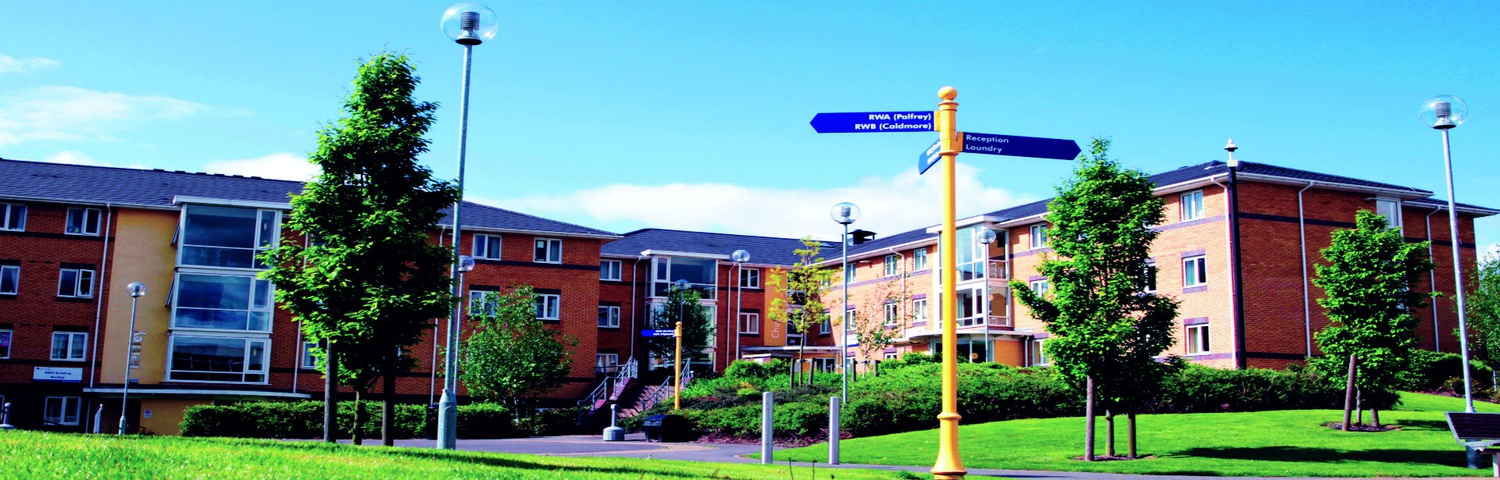
Around 1,009 rooms in university halls lie within walking distance of the Wolverhampton and Walsall campuses, with on-site teams offering 24/7 support. Walsall Campus has a large sports centre with a 12-court sports hall, a floodlit athletics track and an all-weather pitch, and is home to the British Judo Association. The independent, student-run Wolves SU has bases on campus, and a free campus bus links the three sites.
Students and alumni come from 130 countries, and international students can join in November, January and April as well as September. The university runs an on-campus International Study Centre with Malvern International, offering an International Foundation Programme, International Year One and a Pre-Master's programme. It holds a QS Five-Star rating (2026) and a Race Equality Charter Bronze award, and its accommodation service holds Gold in the Investors in Students accreditation scheme.
UK (home) full-time: £9,790 a year for undergraduate degrees, HNC/HND and foundation degrees, PGCE and pre-registration NHS healthcare courses; £11,750 a year for two-year accelerated degrees; £1,955 for a sandwich year. Part-time undergraduate study costs £4,895 for 60 credits (£2,448 per 30-credit module). Home taught postgraduate fees for 180 credits are £11,015 for classroom-based courses and £12,813 for lab-based courses, the MBA and the IMBA. MA Social Work costs £8,000 a year, and the M.Arch costs £9,790. Home research degree fees are £5,238 a year full-time and £2,619 part-time.
International: £17,600 (non-lab) or £18,700 (lab-based) for undergraduate study; £18,645 (non-lab) or £19,859 (lab-based) for postgraduate study. International distance-learning research degrees cost £11,000 a year full-time and £5,500 part-time. Fees in later years are subject to an annual inflationary increase.
Details are on the International Fees and Scholarships page. Former Wolverhampton undergraduates who are UK home students receive a 20% loyalty discount on most on-campus taught postgraduate programmes, or 10% on online courses.
Academic Excellence Undergraduate Scholarship →
WLV Wallet Bursary (UK students) →
Browse the scholarships listed for University of Wolverhampton and check each award’s eligibility.
View scholarships for University of Wolverhampton →Full-time and sandwich undergraduate degrees and diplomas are applied for through UCAS, normally between September and mid-January. Late applications are considered between mid-January and the end of June if places remain, and later applications go into Clearing, which opened on 2 July for 2026 entry. Applicants for direct entry to the second or final year also apply through UCAS, giving their preferred point of entry. Most offers use UCAS Tariff points, normally from three A levels; AS levels may count alongside A levels, but two AS levels cannot replace one full A level. Accepted Level 3 qualifications include BTEC Level 3 (Extended Diploma, Diploma plus one A level, or Subsidiary Diploma plus two A levels), OCR Cambridge Technicals, the International Baccalaureate (overall pass), T Levels (normally Merit or Distinction), Scottish Advanced Highers, the Irish Leaving Certificate (pass with at least four subjects at Higher Level) and QAA-recognised Access to HE Diplomas (normally 45 Level 3 credits and 15 Level 2 credits).
Most undergraduate courses ask for five GCSEs at grade 4/C or above, including English Language and Mathematics, and some also ask for Science. Functional Skills Level 2 in English and Mathematics is accepted. Some courses include an interview, audition, portfolio review or assessment day. Courses leading to professional registration require a DBS check and an Occupational Health assessment. Applicants to degrees with a foundation year are often invited to a Prepare for Foundation assessment day.
Applicants who meet the contextual eligibility criteria may receive an offer below the standard entry requirements.
International students can apply directly through the online application system or through the university's agents. For full-time undergraduate study, the university submits the UCAS application on the applicant's behalf and pays the fee. Applications need proof of ID, academic transcripts or certificates, evidence of English, references, a personal statement explaining why the applicant wants to study in the UK and at Wolverhampton, and any portfolio, research proposal, CV or ATAS certificate required. Applicants under 18 need parental or guardian approval. Qualification equivalences are set out by country. For example, applicants from Ghana are considered with a WASSCE/SSCE B/C profile plus a recognised foundation programme or the first year of a recognised degree; for master's study, a bachelor's degree at 2:2 or equivalent is typical. Applicants who do not meet direct entry requirements can take the International Foundation Programme, International Year One or Pre-Master's at the on-campus International Study Centre run with Malvern International.
Requirements vary by course and fall into four bands: IELTS Academic 6.0 (no component below 5.5), 6.5 (no component below 6.0), 7.0 (no component below 6.0) or 7.0 (no component below 6.5). The equivalent PTE Academic bands are 59 (no component below 59), 65 (59), 75 (59) and 75 (65), and the Duolingo bands are 110 (100), 120 (110), 130 (110) and 130 (120). Cambridge English, IGCSE English, TOEFL iBT (for tests taken before 21 January 2026), LanguageCert Academic, OET, Trinity ISE and the Oxford ELLT are also accepted at stated levels; TOEFL ITP is not accepted. Applicants from majority English-speaking countries, or with an equivalent degree from one, are exempt.
Applications for most postgraduate taught courses and all part-time courses are made directly to the university through the course finder. PGCE applications go through GOV.UK, MA Social Work through UCAS, and the LLM Legal Practice and LLM Law Conversion through LAWCABS. MPhil and PhD applications include a research statement of up to 1,500 words covering a draft title, aims and objectives, a short literature review, scope, methodology and the resources needed. Each faculty's Head of Doctoral Studies can advise on proposals before submission.
International students must pay their tuition fee deposit before requesting a CAS. A CAS is requested through e:Vision once the applicant holds an unconditional offer, has paid the deposit, has passed any pre-CAS interview and is within three months of the course start. A tuberculosis test may be required depending on country, and an ATAS certificate is required for some postgraduate research students. Applicants must be ready to show that they have held the required funds for 28 days.
A free bus service connects the campuses. Subject facilities cover healthcare, pharmacy, psychology, life sciences, sport, creative industries, engineering, business, law, education and architecture.
Study programmes offered at University of Wolverhampton.
Experiences shared by students of University of Wolverhampton.
Studied here? Share your experience to help other applicants.

Book a free consultation with our expert counsellors and take the first step towards your dream university.
Copyrights © 2026 StudyMapped. All rights reserved.

Enter your credentials to continue.
Join us and start your study abroad journey.


