


Arts & Humanities
Anthropology
University of Waterloo, Canada
- Degree
- Bachelor's
- Next intake
- First-year students are admitted for the September (fall) term only. Terms: fall (September to Decem


Arts & Humanities
University of Waterloo, Canada
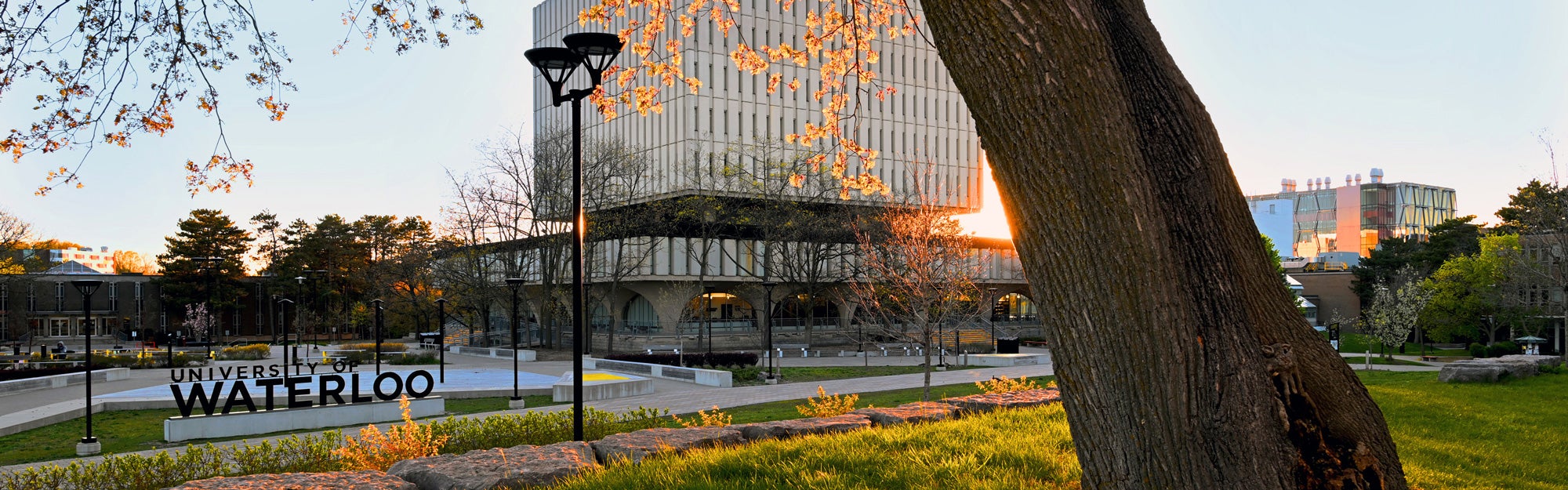
Psychology, Anthropology and Sociology (PAS) Building on Waterloo's South Campus, across from Laurel Creek. Conduct high-impact research in one of the top schools of psychology in Canada with the Master of Arts in Psychology program. This program is best suited to you if your goal is to continue your studies in psychology at the PhD level, which is expected of those who are accepted to the MA program.
Faculty: Faculty of Arts | Department: Psychology | Duration: 24 months | Study mode: full-time | Intake: Fall (September - December); application deadlines: December 1 (for admission in September of the following year); Note: All relevant documents pertaining to your application must be uploaded by December 1. See the School of Psychology - Application procedures page for detailed information. | Location: Waterloo, Ontario, Canada
Research fields: Clinical Psychology, Cognitive Neuroscience, Cognitive Psychology, Developmental Psychology, Social Psychology, Research project opportunities for this program, How Children and Adults Understand the Social World, We seek to uncover the principles, cues, and heuristics that guide how people think about the social world. Our research explores how children and adults understand other people's thoughts and emotions, as well as concepts like ownership, rights and responsibilities, and belonging. We also examine how people distinguish fantasy from reality and determine whether events are possible or impossible. Our recent work suggests that children and adults often make these judgments by inferring past events (historical reasoning) and by thinking about how things could have turned out differently (counterfactual reasoning)., Exploring cognitive and neural factors involved in boredom, play, and curiosity, Boredom has been cast as a push to action - to find something more engaging. We recently theorized that this signal arises when our cognitive and neural resources are under (or over) utilized. In other words, a basic drive (in both humans and animals) is the drive to optimally deploy our cognitive and neural resources. Our lab is now in the process of designing tasks to test this novel hypothesis, one that we think extends beyond boredom., Cross-cultural decision sciences, Artificial Intelligence (AI) psychometrics, and natural language processing, We are looking for ambitious graduate students to conduct projects within the Wise Judgment Consortium, which brings together an international team of researchers to study how culture shapes the way we make decisions. Our work is highly interdisciplinary, combining psychology, natural language processing (including Large Language Models), computational modelling, and psychometrics to understand the complex ways cultural, ecological, and situational factors influence everyday decision-making.. Study option(s): Thesis*, Master's Research Paper.
Normally an honours bachelor's degree or its equivalent in Psychology with at least an 80% overall standing, in the last two years, or equivalent. Completion of the School of Psychology Application. Candidates applying to the Cognitive Neuroscience and Cognitive Psychology graduate research fields within the program may submit results from the Graduate Record Examination (Verbal, Quantitative, and Analytic scores), though this is not a requirement. Candidates with an honours bachelor's degree or equivalent preparation may be admitted to a master's program or directly to a Doctor of Philosophy (PhD) program. Qualified candidates are admitted to either a MA or a PhD program (in which a master's degree may be obtained along the way). The program to which candidates are admitted to varies by program Area (e.g., Clinical and Social applicants are typically accepted into an MA program, while Cognition, Cognitive Neuroscience, Developmental, and Industrial Organizational students are typically accepted to a PhD program). Candidates accepted to the MA program are expected to continue to a PhD program.
Tuition is charged per credit, so the total depends on the courses you register for each year. Current fees are listed in the official fee schedule.
Terms run fall (September to December), winter (January to April) and spring (May to August). Programmes are currently accepting applications for fall 2027; intake terms vary by programme.
Graduate applications are made online through the Graduate Studies Application and the non-refundable application fee is $150 CAD per program, paid in the applicant portal. Deadlines are set by each programme (for example MDSAI part-time: fall January 15, winter July 1). Apply two to four weeks ahead of the programme deadline.
Apply through the official page: https://grad.apply.uwaterloo.ca/apply/
Arts & Humanities
University of Waterloo, Canada
Arts & Humanities
University of Waterloo, Canada
Arts & Humanities
University of Waterloo, Canada
Arts & Humanities
University of Waterloo, Canada
Arts & Humanities
University of Waterloo, Canada
Arts & Humanities
University of Waterloo, Canada
Arts & Humanities
University of Waterloo, Canada
Arts & Humanities
University of Waterloo, Canada

Book a free consultation with our expert counsellors and take the first step towards your dream university.
Copyrights © 2026 StudyMapped. All rights reserved.

Enter your credentials to continue.
Join us and start your study abroad journey.