
University in United Kingdom
St Andrews, Scotland, United Kingdom
University profile
The University of St Andrews is Scotland's first university and the third oldest in the English-speaking world. Teaching began in the town in 1410 and the University was formally constituted by papal bull in 1413. In 2024-2025 it had 10,356 students, of whom 8,381 were undergraduates, drawn from more than 120 countries. It describes itself as the most international of Scotland's universities.
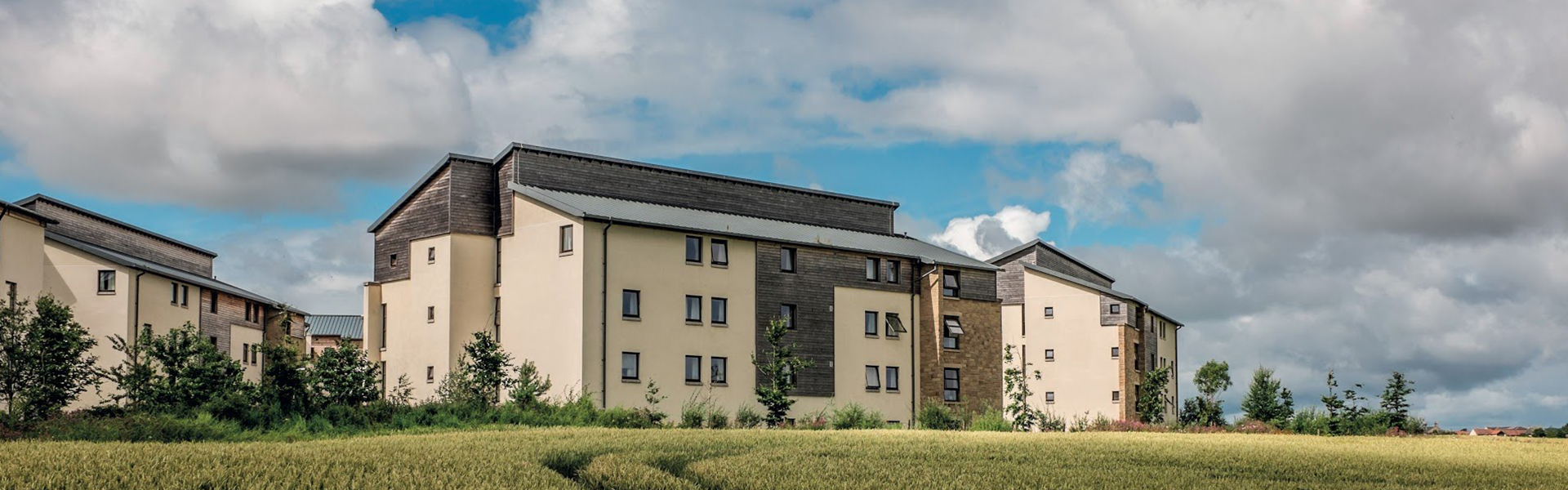
The University is woven into the small coastal town of St Andrews in Fife. Teaching and student life centre on the medieval town (St Salvator's Quad, St Mary's College, the Main Library), the North Haugh science and medical buildings, residences across the town including Fife Park and David Russell Apartments, the Gatty Marine Laboratory at East Sands, and the Eden Campus at Guardbridge, home to Walter Bower House.
Schools and departments sit within four Faculties: Arts, Divinity, Medicine and Science. The academic Schools are Art History; Biology; the Business School; Chemistry; Classics; Computer Science; Divinity; Earth and Environmental Sciences; English; Geography and Sustainable Development; History; International Relations; Mathematics and Statistics; Medicine; Modern Languages; Philosophical, Anthropological and Film Studies; Physics and Astronomy; and Psychology and Neuroscience, alongside the Graduate School, the International Education and Lifelong Learning Institute and the Music Centre. St Leonard's College is the collective name for the postgraduate community. A joint BA (International Honours) runs with William & Mary in Virginia.
Student life is shaped by distinctive traditions: academic families, in which third and fourth year students adopt first years; Raisin Weekend and the Raisin Monday foam fight in St Salvator's Quad; and the May Dip into the North Sea at sunrise on 1 May. There are more than 150 student societies, over 50 sports clubs fielding more than 100 competitive teams through Saints Sport, and a strong music culture centred on the Laidlaw Music Centre, with the Scottish Chamber Orchestra in residence. Catered and self-catered halls include St Salvator's, University Hall, McIntosh, John Burnet, St Regulus, Andrew Melville, Agnes Blackadder and Whitehorn Halls.
International students make up a large share of the community, and 25% of staff come from outside the UK. Overseas students whose school-leaving qualifications are not recognised for direct entry can join an in-house International Foundation programme leading to a degree place. The University is a charity registered in Scotland (No. SC013532), is a Title IV accredited institution able to certify US federal direct loans, and is approved to process US Veterans Affairs (GI Bill) benefits. Governance rests with the University Court, the Academic Senate and the General Council, under the Chancellor, Dame Anne Pringle, and the Principal and Vice-Chancellor, Professor Dame Sally Mapstone.
For overseas-fee entrants, awarded as a tuition fee reduction for each year of study, mainly on financial need. It was worth up to £10,000 a year for 2026 entry; the value for 2027 entry will be confirmed by December 2026. Applications for 2027 entry run from 17 August 2026 to 27 January 2027. Not available for the BA International Honours with William & Mary. International Undergraduate Scholarship
One award covering full tuition fees for each year of an undergraduate degree, for overseas-fee students starting in 2027 (excluding Medicine), selected on academic excellence. Recipients take part in the Student Ambassadors Scheme. International Excellence Scholarship
£1,900 a year for the duration of the course towards University or private accommodation, for overseas-fee entrants, based on financial need. Accommodation Award - International
Part of a scheme established in 2004 for academically able students from Scotland and the rest of the UK who would otherwise struggle with the cost of study. Awards such as the St Andrews Wardlaw, 600th Anniversary Wardlaw, Mackintosh Wardlaw (Science) and Eileen Young Wardlaw Scholarships pay up to £4,400 a year as maintenance (which can go towards University accommodation) for the length of the degree. Students apply through the St Andrews Access Award application form. St Andrews Wardlaw Scholarship
The Music Centre offers over 100 music scholarships a year with free weekly lessons, and Montfort Bursaries with lessons and £1,500 towards summer schools. Sports scholarships support elite athletes, and golfers may apply for the Arnold Palmer and The R&A Foundation scholarships.
Discretionary Funds support UK students facing unforeseen financial difficulty, and the International Discretionary Fund supports international students. Other help includes the Childcare Fund for SAAS-funded students, the Welfare Grant Fund, short-term University Loans and money advice from Student Services. Applicants with refugee status, humanitarian protection, discretionary leave or asylum seeker status are encouraged to apply for financial support scholarships. Government loans are available through SAAS (Scotland) and Student Finance England, and US federal direct loans can be certified.
After applying for a place, students apply for scholarships through 'My Scholarships and Funding' in the My Application portal; there is no need to wait for an offer. Undergraduate enquiries go to [email protected] and postgraduate enquiries to [email protected]. Scholarships and bursaries
International Undergraduate Scholarship (Entry 2027) →
International Excellence Scholarship (Entry 2027) →
Accommodation Award (International) →
BA (International Honours) Scholarship for Excellence (Entry 2027) →
Browse the scholarships listed for University of St Andrews and check each award’s eligibility.
View scholarships for University of St Andrews →UK students apply through UCAS. International students may apply through only one of three routes: UCAS, the Common Application or the St Andrews Direct Application; an application by any route counts as one of the five UK choices allowed each year. Applications need qualifications (achieved or predicted), a personal statement and an academic reference. Transfer, direct entry to second year (Faculty of Science) and part-time day and evening study are also offered.
Applicants who apply by the relevant equal consideration deadline receive a decision by May of the year in which they apply.
Grades depend on the programme. The general ranges are SQA Highers BBBB to AAAAB; A-levels ABB to A*A*A; International Baccalaureate 36 (HL 6,5,5) to 38 (HL 6,6,6 plus SL 6,6,6). BTEC National Diploma (Level 3): D, D, D* where AAA is required and D, D, D where AAB is required. Also accepted: Cambridge Pre-U, Welsh Baccalaureate with A-levels, HNC ('A' graded unit), HND ('AA' graded unit), SWAP Access (AAA), Access to HE Diploma (minimum 45 Level 3 credits at Distinction and Merit) and Foundation Apprenticeships. T Levels are not currently accepted. All applicants must also meet general entry requirements: SQA National 5 (B) or GCSE (5) in English and in one of Biology, Chemistry, Computing Science, Geography, Mathematics, Physics or Psychology.
Programmes list standard entry grades, lower minimum entry grades for widening access applicants, and gateway entry grades. A guaranteed offer is made to UK applicants who are care experienced, or who live in the 20% most deprived areas of Scotland (SIMD20) and attend a school with 30% or lower progression to higher education, provided the minimum asking rates in required subjects are met. Alternative routes for Scottish students include the FE-HE Pathways to Arts and Science and the Gateway programmes to Arts, Science and Medicine.
Most applicants are not interviewed. Interviews apply to Medicine, the Gateway and Pathway programmes, part-time study and the International Foundation programmes. Medicine applicants sit the UCAT.
Country pages set out academic and English language requirements for each country. Overseas students whose school-leaving qualification is not recognised for direct entry can take an International Foundation programme (September or January entry), including International Year Zero in Business, Science, and Social Sciences and Humanities; Medical Sciences International Pre-Med and Extended International Pre-Med; and International Year One programmes leading to second year of science degrees. Applying is free with no entrance test, and accommodation is guaranteed.
Nationals of UKVI majority English-speaking countries, and applicants with a qualifying English-medium school-leaving qualification, normally need no test. Others need a test score within two years of the programme start date. Arts and Divinity (except English) use profile 3-D: IELTS Academic 7.0 overall with 6.5 in each component; PTE Academic 79 (76 in each); TOEFL iBT (pre-2026) 91; Duolingo 140. Science uses profile 7-D: IELTS Academic 6.5 overall with 6.0 in each component; PTE Academic 70 (64 in each); TOEFL iBT (pre-2026) 81; Duolingo 130. The School of English uses profile 1-D and Medicine profile 2-M. Pre-sessional courses of 4 or 10 weeks can meet the requirement; students needing a visa must hold a Secure English Language Test (SELT).
UK applicants are expected to hold at least an upper second-class (2:1) honours degree or equivalent; country pages give equivalents (for example, a GPA of 3.5/4.0 or 65% for Ghana). Applications for MSc, MLitt, MRes, Conversion Diploma and Postgraduate Certificate programmes are made online from the course page, with a £50 application fee (waivers in some circumstances). Applications open in early August; most taught Masters start in September and close on 6 August 2026, and decisions take around three weeks once an application is complete.
MPhil, PhD, MSc(Res), MSt(Res), EngD, MFA and MRes Medicine applications can usually be made at any time, but some Schools and funders set deadlines, and many scholarships close between December and February. PhD applicants should identify a supervisor whose research matches their project. Start dates are 27 August, 27 September, 27 October, 27 January or 27 May, with September encouraged.
Overseas students typically need a visa, which requires a UKVI-approved SELT, and must show sufficient funds to complete their studies.
The University occupies sites across the town of St Andrews, Fife, with a further campus at Guardbridge.
Residences: undergraduate halls include Agnes Blackadder Hall, Andrew Melville Hall, David Russell Apartments, Fife Park, Gannochy House, John Burnet Hall, McIntosh Hall, Powell Hall, St Regulus Hall, St Salvator's Hall, University Hall and Whitehorn Hall, in catered and self-catered, standard and en suite options. Postgraduate residences include Angus House and Stanley Smith House, Deans Court, Gregory Place, The Grange (with parking, green spaces and a play area), Fife Park, Powell Hall and furnished houses in Leuchars, with studio apartments for couples. First-year undergraduates and overseas-fee postgraduate taught students can be eligible for an accommodation guarantee.
Other facilities: the libraries hold over one million print volumes; Saints Sport runs the Sports Centre, fitness services and more than 35 exercise classes a week; two primary care medical practices in the town work with the Student Health Hub, staffed by the University; and Student Services runs the Advice and Support Centre, disability, wellbeing, counselling and money advice services.
Study programmes offered at University of St Andrews.
Experiences shared by students of University of St Andrews.
Studied here? Share your experience to help other applicants.

Book a free consultation with our expert counsellors and take the first step towards your dream university.
Copyrights © 2026 StudyMapped. All rights reserved.

Enter your credentials to continue.
Join us and start your study abroad journey.


