

University in United Kingdom
Southampton, England, United Kingdom
University profile
The University of Southampton is a research-intensive public university on England's south coast and a founding member of the Russell Group. It traces its origins to the Hartley Institution, opened in 1862, and received its Royal Charter in 1952. The University describes itself as home to over 26,000 students, with students from more than 140 countries.
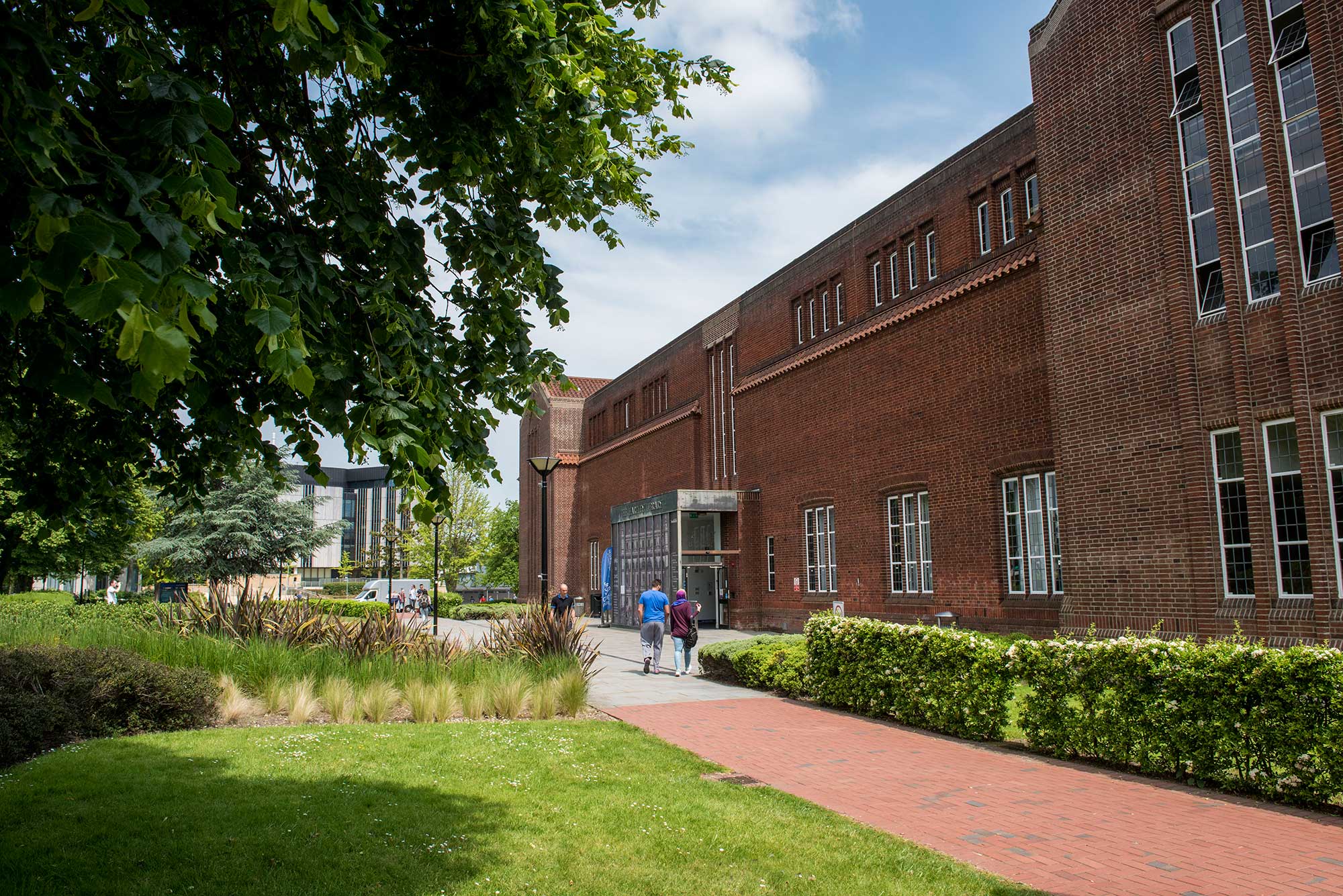
Most students study at Highfield Campus, the oldest and largest site, which holds the Hartley Library and the Students' Union. Specialist campuses in Southampton serve medicine (University Hospital Southampton), ocean and earth science (Waterfront Campus at the National Oceanography Centre), engineering and business (Boldrewood Innovation Campus), humanities (Avenue Campus) and city-centre study and arts facilities (City Centre Campus). Winchester School of Art occupies a campus in Winchester, and the University also has international campuses at Iskandar Puteri in Malaysia and in Gurugram (Delhi), India.
Teaching and research run through five faculties:
Notable facilities include the Zepler Institute Cleanroom Complex, the UK's largest university towing tank and the National Oceanographic Library. The University holds Regius Professorships in Computer Science and Ocean Sciences.
Halls such as Glen Eyre, Wessex Lane and Highfield Hall have 24/7 reception, and residents get free Unilink bus travel. New full-time students who apply by the deadline are guaranteed a room. Student life centres on the Students' Union and the Jubilee Sports Centre.
The international community numbers more than 10,000 students from over 130 countries. Support for them includes country entry equivalencies, pre-sessional English courses, International Foundation Programmes run by OnCampus Southampton, and pre-master's routes.
Full-time undergraduate tuition for home students is £10,050 a year on most courses. Overseas fees vary by course, typically from £26,800 to £34,100 a year. Medicine (BM5) is £35,900, rising to £64,900 in the clinical years. Part-time students pay up to 75% of the full-time fee. A full placement year costs 20% of the fee and a full study-abroad year 15%. Overseas fees rise each year for students starting from 1 August 2026, and EU students have paid overseas fees since September 2021. Postgraduate applicants paying overseas fees pay a £2,000 deposit before a CAS is issued. Undergraduate course fees
This bursary is for full-time home-fee undergraduate and integrated master's students who started in or after September 2025. It pays £2,000 a year for household incomes up to £23,200 and £1,000 for incomes of £23,201 to £36,200, in three instalments. Students are assessed automatically through their means-tested Student Finance application. Bursary details
Sanctuary Scholarships cover full tuition, a living bursary and accommodation support for students from forced-migration backgrounds without access to UK student finance. For 2026-27 there were four: one undergraduate and three postgraduate taught. Sports scholarships give elite athletes up to £800 plus a sports membership. The Student Support Fund and the International Student Support Fund make single discretionary payments for unexpected hardship. The University also lists external awards it accepts, including Chevening, Commonwealth, Fulbright, Marshall, China Scholarship Council, Becas Chile and COLFUTURO. Contact: Student Hub, +44 (0)23 8059 9599, [email protected]; [email protected]. University scholarships
75th Anniversary Undergraduate Excellence Scholarships →
75th Anniversary Global Postgraduate Excellence Scholarships →
75th Anniversary China Postgraduate Excellence Scholarships →
Browse the scholarships listed for University of Southampton and check each award’s eligibility.
View scholarships for University of Southampton →Applications for the first year of any full-time undergraduate course go through UCAS (institution code S27, code name SOTON), with a personal statement and a reference from someone who knows the applicant academically or professionally. Applicants who have not yet completed their qualifications or met the English requirement can still apply and may receive a conditional offer. Medicine closes earlier than other courses and requires the University Clinical Aptitude Test (UCAT) before applying. Courses such as BA Graphic Arts, BA Fine Art and BA Games, Design and Art may require a portfolio. Application deadlines follow the UCAS timeline, and individual course pages give any course-specific deadlines.
Each course page gives its typical grades. Accepted qualifications include A levels, Access to HE, BTECs, Cambridge Pre-U, Cambridge Technical, the International and European Baccalaureates, Scottish Highers and Advanced Highers, T Levels, the Welsh Baccalaureate and many international qualifications, as well as combinations of these. Some courses count an A grade in the Extended Project Qualification towards the offer. Resits are accepted in all subjects, with restrictions for Medicine. Some courses also require an admissions test, an audition, an interview or selection event, a portfolio, occupational health clearance or a Disclosure and Barring Service check. Mature applicants, usually aged 21 or over (23 for Law), are typically considered if they have been in education in the past 3 years and hold a level 3 qualification.
UK-domiciled applicants to participating courses for 2027/28 entry who meet the contextual criteria (for example, having been in care for 3 months or more) can receive an offer lower than the typical offer. The assessment uses the UCAS form and participation in the University's outreach activities. Medicine BM4, Medicine BM5 mature and graduate entry, and the Foundation Year in Engineering, Physics and Maths do not use contextual data. Medicine BM6 Widening Participation has its own eligibility criteria.
International applicants must meet the general entry requirements or a recognised equivalent, and entry equivalencies are set out by country, including Ghana, Nigeria and Kenya. Students who do not meet direct-entry requirements can take International Foundation Programmes with OnCampus Southampton. Foundation years in engineering, physics and maths, and a Malaysia Foundation Year, are also available. Students who are not British or Irish citizens may need a visa, which they can apply for once they hold an unconditional offer.
Each course sets an English band from A to I. For IELTS Academic, the overall score ranges from 6.0 (band A) to 7.0 (bands F to I), with component minimums from 5.5 to 7.0 by band. Accepted tests include IELTS Academic (including the UKVI version and One Skill Retake), TOEFL iBT, Pearson PTE Academic, LanguageCert Academic, Cambridge C1 Advanced and C2 Proficiency, Oxford ELLT and OTE, Trinity ISE, Skills for English and the Duolingo English Test. Test results must be within 2 years of the course start date. Applicants from majority English-speaking countries are not asked for test evidence but usually need GCSE English Language at grade 4/C or equivalent. Some school qualifications also meet the requirement if awarded within 3 years of the start date, for example WASSCE English at C6 or KCSE English at grade B. Pre-sessional English courses run in the summer before the first semester.
Applicants apply online through the postgraduate application portal from the course page, uploading a degree transcript (an interim transcript is accepted), a personal statement and any course-specific documents such as references, a CV, a writing sample or a portfolio. Each course page gives its own entry requirements and deadline, and some courses close early to applicants from some countries. International applicants usually pay a £2,000 tuition fee deposit after accepting an offer, unless exempt (for example, full scholarship holders, asylum seekers or students transferring from OnCampus). A CAS is issued no earlier than 6 months before the course starts.
Applicants should contact a potential supervisor before applying online, choosing 'research' as the programme type. Applications usually need two academic references, transcripts and certificates, a CV, a personal statement, English language evidence where required and a research proposal for self-designed projects. Funding deadlines are usually at least 6 months before the start date. The portal is closed from 19 October to 2 November 2026, and applications for 2027/28 entry open on 2 November 2026. Doctoral College admissions: +44 (0)23 8059 8404, [email protected].
Halls of residence include Archers Road, City Gateway, Glen Eyre, Highfield Hall, Wessex Lane and Erasmus Park, plus partner halls Capital House, Lucia Foster Welch, Orion Point and Southampton Crossings. University halls are accredited under the UUK Student Accommodation Code of Practice, and students may choose quieter-lifestyle, alcohol-free, single-gender or LGBTQ+ flats where available.
Study programmes offered at University of Southampton.
Experiences shared by students of University of Southampton.
Studied here? Share your experience to help other applicants.

Book a free consultation with our expert counsellors and take the first step towards your dream university.
Copyrights © 2026 StudyMapped. All rights reserved.

Enter your credentials to continue.
Join us and start your study abroad journey.


