
University in United States
Kingston, RI, United States
University profile
The University of Rhode Island (URI) is a public research university whose main campus is in the historic village of Kingston, Rhode Island, about 30 miles south of Providence and close to the ocean and major beaches. It describes itself as the state's Land, Sea and Urban Grant public research institution and holds the Carnegie R1 research designation. It offers undergraduate, graduate and professional programmes, with more than 90 undergraduate majors.
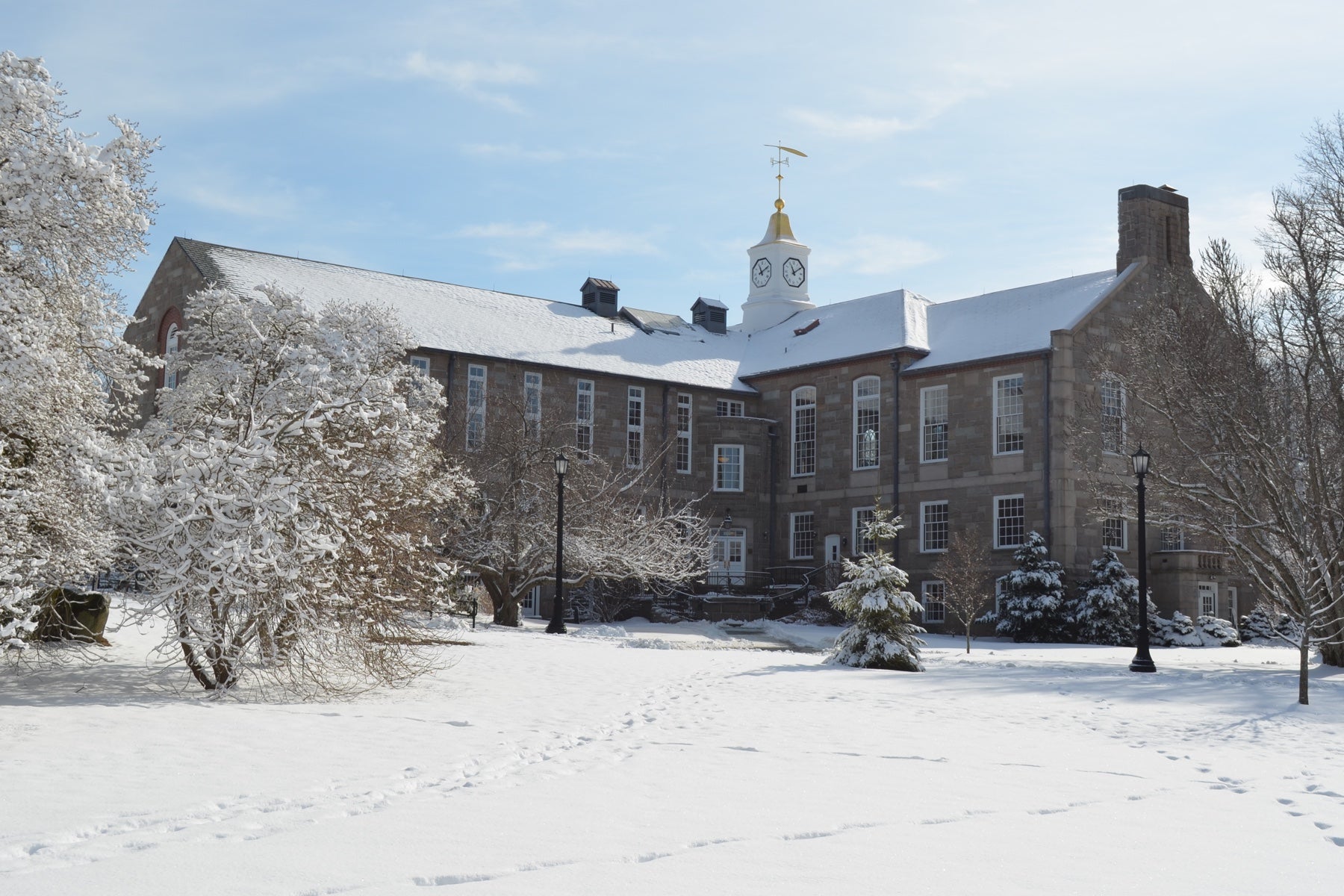
The Kingston campus covers 1,200 acres, mixing ivy-covered buildings with contemporary architecture, and its core is on the National Register of Historic Places (named in 2018). The 153-acre Narragansett Bay Campus overlooks the West Passage of Narragansett Bay and is home to the Graduate School of Oceanography and the Coastal Institute on Narragansett Bay. The Rhode Island Nursing Education Center, opened in August 2017 at 350 Eddy Street, Providence, provides 133,000 square feet of laboratory, classroom and office space. The university reports 320 buildings across four campuses.
Academic units include the College of Arts and Sciences, College of Business, College of Education, College of Engineering, College of Health Sciences, College of Nursing, College of Pharmacy, College of the Environment and Life Sciences, the Harrington School of Communications and Media and the Graduate School of Oceanography. Programmes include a six-year Doctor of Pharmacy, accelerated bachelor's-to-master's (4+1) degrees in more than 35 majors, the URI Honors Program, online degrees and certificates through URI Online, summer sessions, J-Term courses on campus or abroad, and study abroad. More than 7,000 students complete internships each year.
Students come from 76 nations, and 52% of students are Rhode Island residents. Housing and Residential Life runs the residence halls, with living and learning communities grouping first-year students by academic interest. The Fannon Institute for Student Success provides advising and academic support. The Office of International Students and Scholars handles immigration matters, visas (F-1 and J-1), SEVIS transfers and cultural adjustment support for international students and scholars.
International first-year and transfer applicants apply through the Common Application or the URI Transfer Application. All applicants are considered for merit scholarships, though no need-based financial aid is available to international students.
Merit scholarships are four-year awards, renewable each semester with continuous full-time enrolment (12 credits) and a minimum 2.8 GPA; no separate application is required. First-year applicants whose applications are complete by December 1 receive priority consideration. University and Presidential Scholarships range from $2,000 to $17,000 per year. The Schilling Scholars Program for STEM majors adds up to $20,000 annually plus a $1,000 yearly book stipend and a $3,000 global travel award. The full-ride Ryan Scholars (all majors), Verrecchia Business Scholars (business majors) and the new Cook-Cohen Scholars (from fall 2026) cover tuition, fees, housing, meals and a global J-Term experience for four years. Scholarships overview
No need-based financial aid is available to international students, although all applicants are considered for merit-based scholarships through the Common Application. Merit scholarships for international students are partial-tuition awards, renewable annually with a minimum GPA, and do not cover room, board or fees; amounts have historically ranged from $8,750 to $15,000 per year. International admission
Full in-state tuition and fees for up to four years for admitted undergraduates of Narragansett ancestry, plus a grant of up to $5,000 for full-time students. Details
Undergraduate tuition: $654 in-state, $1,556 out-of-state, $1,145 regional. Graduate tuition: $951 in-state, $1,852 out-of-state, $1,427 regional. Additional per-credit fees include a $16 technology fee and $49 student services fee, with differential charges for engineering, nursing and business. URI reports more than $130 million in undergraduate aid and scholarships awarded annually, with 89% of degree-seeking undergraduates receiving scholarship and/or grant aid. Tuition and fees
Dean's Fellowships (PhD students, nominated by faculty), tuition scholarships for master's and professional doctoral students, graduate assistantships recommended by departments, EGRA small research grants and Graduate Fellowship Incentive Programs of up to $1,300 for students holding eligible national funding. Funding opportunities
URI Merit Scholarships for International Students →
URI University and Presidential Scholarships →
URI Top Scholar Awards (Ryan, Verrecchia Business, Cook-Cohen and Schilling Scholars) →
URI Narragansett Undergraduate Scholarship →
Browse the scholarships listed for University of Rhode Island and check each award’s eligibility.
View scholarships for University of Rhode Island →Applicants complete the Common Application, with a $65 application fee or fee waiver, an official high school transcript or STARS Record, an essay and a letter of recommendation. Pharmacy applicants submit two letters; Honors, Nursing, Pharmacy and Talent Development applicants add a supplemental essay. Applicants are expected to complete 18 core academic units at college-preparatory level: 4 years of English, 3 of mathematics (including Algebra I, Algebra II and Geometry), 2 of natural science, 2 of history or social science and 2 of the same world language, with up to three remaining units in academically focused electives. Review is holistic. The 2026 admitted student middle 50% is 3.7-4.1 GPA, SAT 1170-1340 and ACT 27-32. URI is test-optional; SAT and ACT scores are superscored if submitted (SAT code 3919, ACT code 3818). A GED is accepted with a score between 165 and 174 plus further evidence of college readiness. Engineering, business, chemistry, computer science and physics applicants are encouraged to complete 4 units of mathematics; Music applicants must audition.
Deadlines: Early Decision November 1; Early Action (also priority scholarship consideration) December 1; Regular Decision (September start) February 1; Talent Development December 15; Spring (January start) December 15. Final high school transcripts are due by July 1 for admitted students.
Credit for AP, IB, A-Level and dual enrolment is evaluated by the faculty of the relevant department, and transcripts or exam results must be sent directly from the college or examination board. Students with college courses taken before high school graduation apply as first-year students.
Applicants who have attended another regionally accredited college after high school apply with the URI Transfer Application, a $65 fee or waiver, and official transcripts from all post-secondary institutions; test scores are not required. Fall priority deadline is May 1 and regular deadline July 31; spring priority deadline is December 15 and regular deadline January 1. Applicants with more than 60 credits must choose a major other than Undecided. Business, engineering, pharmacy, kinesiology, landscape architecture and music have special transfer requirements.
International students (not U.S. citizens or permanent residents) meet the same requirements as other applicants. First-year applicants use the Common Application ($65 fee); transfer applicants use the URI Transfer Application. Secondary school results and certificates from national examinations are submitted, with certified English translations where needed. SAT or ACT scores are optional but encouraged for merit scholarships. International first-year deadlines: Early Decision November 1, Early Action December 1, Fall February 1. International transfer deadlines: spring December 15 and fall July 31. Post-secondary transcripts for transfer applicants must be evaluated course-by-course by a NACES-certified agency.
English proficiency (Pharm.D. in brackets): Duolingo English Test 105 (125); TOEFL iBT 4.5 (5.0); IELTS 6.5 (7.0); Cambridge English Advanced 176-184 (185-190); PTE Academic or PTE Express 53 (68); Eiken completion of Pre-1 (Grade 1). Applicants educated in English-medium schools may be exempt case by case based on AP, IB, O-Level, A-Level, GCSE or American curriculum grades and SAT/ACT scores.
I-20: The Office of International Students and Scholars issues the Form I-20 after admission through the Sunapsis portal. Required: admission letter, proof of funding (bank statement issued within the last 30 days, a government financial guarantee or other funds) showing enough to cover the full first-year cost of attendance with funding indicated for future years, a passport copy, home country address, and a transfer-in form for students already on an F-1 visa. The Pharm.D. programme also requires two recommendations (one from a science or math instructor) and a statement of interest in pharmacy.
Applications are processed by the Office of Graduate Admission (Quinn Hall 210, [email protected]) through the Graduate School's online application, with programme-specific requirements set by each department.
The University Libraries serve the university community and the public. Housing and Residential Life operates the residence halls, and new university housing is due to open in fall 2027.
Study programmes offered at University of Rhode Island.
Experiences shared by students of University of Rhode Island.
Studied here? Share your experience to help other applicants.

Book a free consultation with our expert counsellors and take the first step towards your dream university.
Copyrights © 2026 StudyMapped. All rights reserved.

Enter your credentials to continue.
Join us and start your study abroad journey.


