
University in United Kingdom
Reading, England, United Kingdom
University profile
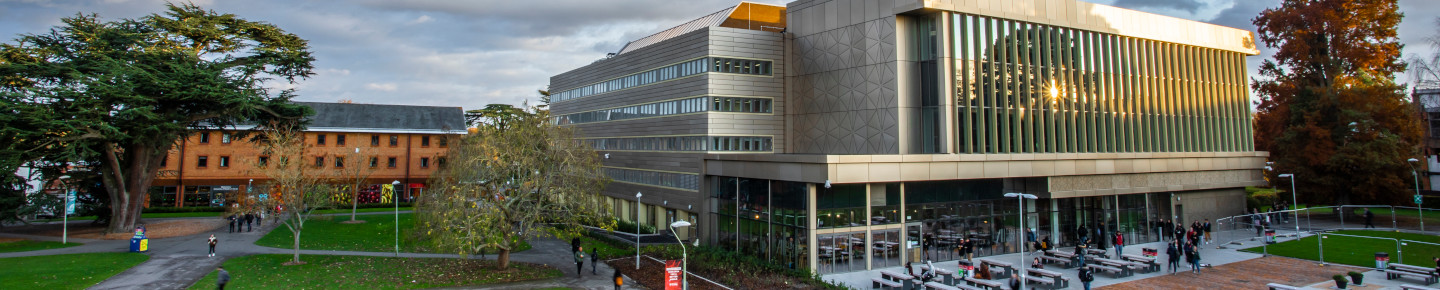
The University of Reading is a research-intensive campus university in south-east England, close to London and Heathrow airport. It received its Royal Charter in 1926 and celebrates its centenary in 2026, though its roots reach back to the town's Schools of Art (1860) and Science (1870). More than 27,000 students from 147 countries study at Reading, and the University has been awarded the Queen's Anniversary Prize on five separate occasions.
The main campus, Whiteknights, is a parkland estate with a lake, woodland and the Harris Garden, and holds 16 consecutive Green Flag Awards. The historic London Road campus houses the Institute of Education, Architecture and the Museum of English Rural Life, while Henley Business School runs executive programmes at Greenlands on the Thames near Henley-on-Thames. Overseas, the University of Reading Malaysia campus sits in EduCity, Iskandar (Johor), and Henley Business School has a campus in Johannesburg, South Africa.
Teaching and research are organised into schools that each house several departments, including:
Reading is known for climate and weather science, agriculture, food science, business and real estate. Specialist facilities include the Atmospheric Observatory (recording since 1901), the Centre for Dairy Research, the International Cocoa Quarantine Centre and the National Fruit Collection, which the University curates for DEFRA, alongside the Museum of English Rural Life and Special Collections holding the world's largest collection of resources on Samuel Beckett.
Student life centres on Whiteknights, home to Reading Students' Union, the Library, SportsPark and the Chaplaincy. Fourteen University halls lie on or close to Whiteknights, with self-catered and catered options and 40-week contracts; new full-time undergraduates holding Reading as their firm choice, and new full-time postgraduates, are guaranteed a hall place if they apply by 1 August and meet their offer conditions.
The international community numbers more than 4,500 international students from over 160 countries. The Global Academy runs the International Foundation Programme, International Foundation Year and pre-sessional English courses.
Home undergraduates: £9,790 for 2026/27 entry and £10,050 for 2027/28 entry; integrated foundation years in non-lab subjects are £5,760. Eligible UK students can take out a government tuition fee loan and maintenance loan.
International undergraduates: for 2026/27, £25,850 a year for non-laboratory courses and £30,650 for laboratory or workshop-based subjects, with £23,000 for the first year of an integrated international foundation year. For 2027/28 these are £26,850, £31,800 and £23,850. Fees rise each year in line with CPI, capped at 4%. A full placement or study-abroad year is charged at 15% of the standard fee.
Postgraduate taught (2027/28): home students pay £12,500 (Band 1, non-laboratory) or £13,600 (Band 2, laboratory) a year; international students pay £27,450 (Band 1, including International Foundation Programmes) or £32,850 (Band 2). Henley Business School and some other courses charge premium fees, and part-time study is charged at 50% of the standard fee. Reading undergraduate alumni receive 20% off master's tuition.
Hardship support is available through the Student Financial Support team ([email protected]). Details: undergraduate scholarships, international scholarships, home undergraduate fees and the Reading Bursary, international undergraduate fees and PhD funding.
Global Sustainability Leaders Scholarship →
Reading Excellence Scholarship (Undergraduate) for International Students →
Master's Excellence Scholarship (International) →
GREAT Scholarships at the University of Reading (Bangladesh and Ghana) →
Browse the scholarships listed for University of Reading and check each award’s eligibility.
View scholarships for University of Reading →All undergraduate courses, including degrees with an integrated foundation year, are applied for through UCAS using institution code R12 (there is no campus code). The UCAS deadline for most courses is in January; late applications are considered until June, after which applications go into Clearing. Some courses require an interview or a portfolio, and applicants receive a conditional or unconditional offer, which can be held as a firm or insurance choice.
Typical offers are set out per course in A level, BTEC and International Baccalaureate terms (for example ABB or IB 32 points), and General Studies is excluded. Applicants need a good general education, usually at least grade C at GCSE in English and Mathematics. Other qualifications considered include Scottish Highers and Advanced Highers, the Irish Leaving Certificate (five Higher Level subjects), the European Baccalaureate (typical offer 70% to 77%), Access to HE Diplomas, the Cambridge Pre-U, Open University credits, OCR Cambridge Technical Extended Diplomas (typically DDD to DMM) and T levels (overall Distinction for courses normally requiring ABB and above; Merit for BBB courses; grade C in the core component).
Applicants taking an Extended Project Qualification for a participating subject receive an alternative offer one A level grade lower plus a B in the EPQ (for example AAB becomes ABB + B in EPQ). Aspirational offers are sometimes made to applicants predicted a couple of grades below the entry requirements.
Contextual offers, typically two grades below the top of the published range (for example BBC instead of ABB), are made to applicants from POLAR or IMD quintiles 1 and 2, applicants who declare a disability, Reading Scholars participants, care-experienced and estranged applicants, refugees and asylum seekers, young carers and children of military families. Contextual offers are not made for programmes with a foundation year.
Reading accepts a wide range of overseas qualifications, including the Malaysian STPM, Hong Kong A levels and HKDSE, and Singapore and Brunei A levels, with guidance by country and region. Students without A level-equivalent qualifications can take the International Foundation Programme or a four-year degree with an integrated International Foundation Year, both run by the Global Academy and applied for online. IELTS requirements for the IFP range from 5.0 (no skill below 4.5) on the Science and Mathematics pathway to 6.5 (no skill below 5.5) for Speech and Language Therapy; the IFY requires 5.5 with no skill below 5.5. Students needing a Student visa for the IFP must take a Secure English Language Test (SELT).
For undergraduate courses, the standard requirement is IELTS (Academic) 6.5 with no component below 5.5, or equivalents including TOEFL iBT 88 (minimum 17 in Listening and Writing, 18 in Reading, 20 in Speaking), PTE Academic 69 (minimum 59 or 64 in each component depending on course), Cambridge C1 Advanced or C2 Proficiency 176 (no element below 162), Duolingo 125 (no sub-score below 100), TEEP 6.5, and WASSCE English grade C. Speech and Language Therapy requires IELTS 8.0 with no component below 7.5; Pharmacy and Nutrition require 6.5 with no component below 6.0. Most taught master's programmes require IELTS 6.5 with no element below 5.5 or 6.0, rising to 7.0 or higher in some subjects, and most PhD programmes require 6.5, with 7.0 for areas including Henley Business School and the School of Arts and Communication Design. Applicants below the required level can take the Pre-sessional English programme.
Master's applications are made online through the RISIS portal; PGCE and teacher training applications go through the Department for Education's Find Postgraduate Teacher Training service. Applicants upload transcripts (with certified translations if needed), an English language certificate where relevant, two referees' contact details, a statement of purpose and, for international students, a passport copy. There is no application fee. Most programmes do not formally close, but the University recommends that UK applicants apply by 1 August and international applicants needing a visa by 1 July for September entry. Some programmes require a deposit, which counts towards tuition fees.
PhD applicants normally need at least a 2:1 undergraduate degree or a master's degree in a related subject; in the arts, humanities, social sciences and business a master's is normally required. Applications should be submitted at least two months before the start date for UK applicants and four months for international applicants, with a research proposal where the applicant is defining their own project. Most doctoral students start in September.
International students receive a Confirmation of Acceptance for Studies (CAS) once they hold an unconditional offer, have accepted it and have paid any required deposit.
Halls of residence (2026/27): Windsor, Stenton, Childs, Stenton Townhouses, Greenow and McCombie, Mackinder, Wessex, Bridges, Dunsden Crescent, St Patrick's, St George's, Wantage, Benyon and Sherfield, all between 0.3 km and 1.3 km from central Whiteknights, with weekly prices from £166.32 to £364.70. Adapted rooms and a small number of self-contained flats for couples, families and mature students are available.
Study programmes offered at University of Reading.
Experiences shared by students of University of Reading.
Studied here? Share your experience to help other applicants.

Book a free consultation with our expert counsellors and take the first step towards your dream university.
Copyrights © 2026 StudyMapped. All rights reserved.

Enter your credentials to continue.
Join us and start your study abroad journey.


