

University in Canada
Fredericton, New Brunswick, Canada
University profile
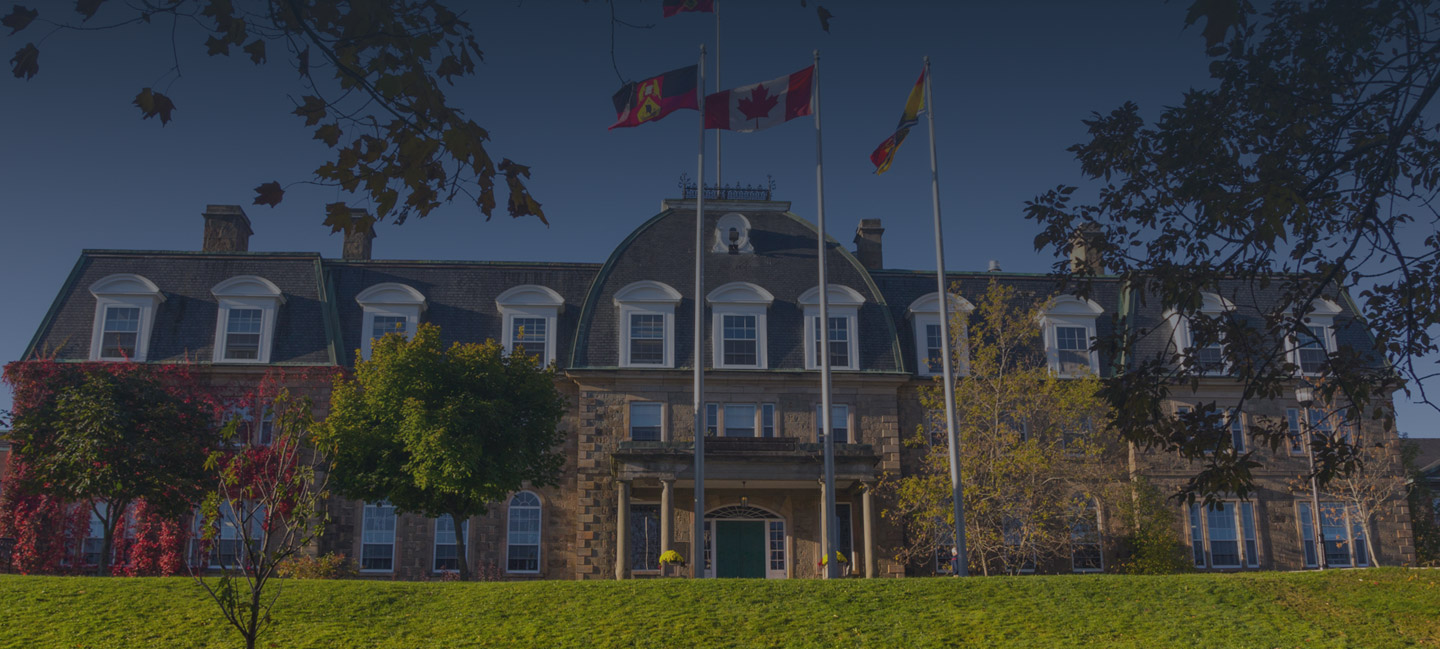
The University of New Brunswick (UNB) is a public comprehensive university and the oldest English-language university in Canada. It operates two main campuses: Fredericton, in the provincial capital on the Wolastoq (St. John River), founded in 1785, and Saint John, established in 1964. Its motto is Sapere Aude, "Dare to be wise." UNB offers undergraduate and graduate degrees in more than 60 disciplines, with 250+ programs, certificates and diplomas, and continuing education.
UNB has 14 faculties across its two campuses. These include Arts, Business (Saint John) and Management (Fredericton), Computer Science, Education, Engineering, Forestry and Environmental Management, Kinesiology, Law, Nursing and Health Sciences, Science, and the School of Leadership Studies, with graduate programs offered across more than 30 departments and faculties. UNB is home to Canada's first engineering program, forestry program and faculty of computer science, and has a student-to-faculty ratio of 15:1.
More than 10,600 students from over 100 countries study at UNB, which has over 100,000 living alumni. Student life includes varsity athletics (the Reds at Fredericton and the Seawolves at Saint John), sports clubs, clubs and societies, and fitness and recreation facilities. UNB has 16 residences: 13 on the Fredericton campus and three on the Saint John campus. They include traditional dorms, suite-style rooms and mature student and family housing, and each campus has co-ed residences with an all-female floor. Residence fees cover the room, heating and high-speed internet, and residents are required to have a meal plan except those living in Elizabeth Parr-Johnston.
International applicants apply through the UNB application account and are supported by the International Recruitment Centre. Students from outside Canada may need a provincial attestation letter (PAL) with their study permit application, and only one PAL is issued by New Brunswick per student. UNB also offers an English Language Programme and entrance programs for students who do not meet direct-entry requirements.
UNB is on the traditional territory of the Wolastoqey people, and the Mi'kmaq-Wolastoqey Centre, opened in 1981, offers programs enriched with First Nations content and pedagogy. UNB is connected to more than 3,900 employers, and all students have access to experiential learning opportunities, including co-ops and clinical placements.
UNB awarded $12.6M to undergraduates in 2025-26. One application each year is considered for the majority of undergraduate scholarships, and the top award is $100,000. Every high school student entering with a scholarship average of 80% or more is guaranteed a scholarship, provided a scholarship application is submitted. Awards are made primarily on grades; some add criteria such as financial need, extracurricular activities or the high school attended, reflecting donors' goals. Applicants are notified by email. The undergraduate scholarship application deadline is 1 March. Separate streams exist for high school, continuing, education, transfer, graduate and law students. UNB Scholarships
Graduate students have access to over 160 donor-funded graduate awards through a single application. New students apply by 26 January or 16 March; current students apply between 1 January and 1 June. Departments administer further awards, and Tri-Council awards (CIHR, NSERC, SSHRC) are supported with information sessions. Graduate scholarships
Canadian students apply for federal and provincial student loans through their home province, with the Repayment Assistance Plan available. Self-identified Indigenous students are eligible for certain awards, and student employment and budgeting support are available. Financial aid
Browse the scholarships listed for University of New Brunswick and check each award’s eligibility.
View scholarships for University of New Brunswick →Requirements are set by the applicant's province or region of schooling, with a minimum admission average and subject prerequisites by program. Meeting the minimum does not guarantee admission. Courses at a higher or advanced level, including IB or AP, are accepted and may earn bonus points toward the scholarship average.
New Brunswick (Arts example): English 122 or Français 10411 (minimum 60%), four Group 1 electives and one elective from Group 1, 2 or 3, with a minimum admission average of 65%. Alberta, British Columbia and Manitoba have equivalent structures (for example Alberta English Language Arts 30-1 at 60% with a 65% minimum average for Arts and Applied Arts); requirements for programs such as Engineering, Science and Computer Science include program-specific mathematics and science courses and are set per region.
IGCSE/GCE: Ordinary levels plus at least three qualifying AS/Advanced level subjects. Arts requires English plus four Group 1 electives and one further elective with an overall average of C or higher; Business, Computer Science, Engineering and Science programs require Advanced-level Mathematics and an overall average of B or higher; Nursing and Health programs require Chemistry, Biology or Physics and a grade of B in each subject. IB Diploma: at least three subjects at Higher Level, with program-specific requirements, for example an overall average of 3 or higher for most Arts programs. Applicants awaiting final A-level or similar results are considered on school-issued results.
Direct entry to most undergraduate programs: TOEFL iBT 85 (pre-2026) or 4.5 overall with at least 4.5 in speaking and writing (January 2026 onward); IELTS Academic 6.5; CAEL 60; Pearson PTE Academic 59; Cambridge B2 First, C1 Advanced or C2 Proficiency 176; Duolingo 115. Nursing, Education and Arts (Fredericton) and Nursing and Health Sciences (Saint John) require IELTS Academic 7.0 or equivalent (TOEFL iBT 100 pre-2026 or 5 from January 2026, Duolingo 130, PTE 68, Cambridge C1 190, CAEL 80, or UNB ELP assessment 85 with no sub-score below 85).
Exemptions apply to applicants with at least one year of Canadian high school (four years for Nursing and Health Sciences) with 70% in Grade 12 English, or one year at an English-speaking high school in a listed country (including Ghana, Nigeria, Kenya, Uganda, Zambia, Zimbabwe, Tanzania, South Africa, the United Kingdom and the United States), or who hold qualifications such as GCE A Level English Literature with grade C.
Applicants who do not meet direct-entry requirements may be considered for conditional admission to an entrance program. Transfer applicants submit course outlines for credit assessment; those with post-secondary study outside Canada and the United States submit a WES ICAP course-by-course evaluation. Applicants over 21 are considered mature students and submit a resume of education and work experience since high school.
Apply through a UNB application account. The international application fee is $125 CAD and is non-refundable. Official or notarized transcripts for all schools attended and any test results (SAT, ACT, Cambridge O and A levels, CXC and others) are sent to the Office of the Registrar; non-English transcripts need a certified translation. All prior post-secondary attendance must be disclosed. Applicants requiring a study permit may need a provincial attestation letter, and only one may be obtained from New Brunswick. Master's and PhD students enrolling at public institutions are exempt from the PAL requirement from 1 January 2026.
Requirements are set by each program, and all applicants provide transcripts and three references; many programs also require a CV, statement of interest, writing sample, GRE or GMAT or a supervisor in advance. International applicants are encouraged to apply at least six months ahead and must provide English test scores if English is not their first language. Application fee: $65 domestic, $125 international. Processing usually takes four to six weeks.
General undergraduate deadlines: 31 March (Fall term) and 15 November (Winter term); applications may be accepted after the deadline while seats remain. Education (Fredericton): 1 December; Concurrent Education (Saint John): 31 January; Nursing and Health Sciences: 15 February (Advanced Standing Nursing, Moncton: 15 November); Social Work: 31 January. Offers must be accepted and the admission deposit paid by 15 May. The domestic undergraduate application fee is $65 (waived for Canadian high school students). Applications are made through the UNB application account at apply.unb.ca.
Both campuses offer residences with meal plans, dining halls and cafeterias with international and vegetarian options, and campus tours.
Study programmes offered at University of New Brunswick.
Experiences shared by students of University of New Brunswick.
Studied here? Share your experience to help other applicants.

Book a free consultation with our expert counsellors and take the first step towards your dream university.
Copyrights © 2026 StudyMapped. All rights reserved.

Enter your credentials to continue.
Join us and start your study abroad journey.


