

University in United Kingdom
London, England, United Kingdom
University profile
The University of London is a federal university founded by Royal Charter in 1836 to widen access to higher education. Established as a secular alternative to Oxford and Cambridge, it was the first university to remove religious qualification as an entry requirement and, in 1878, the first UK university to open full degrees to women. Today it describes itself as the UK's leading provider of digital and blended distance education internationally, with around 40,000 students studying its programmes in 190 countries.
The University is also the convenor of a federation of 17 independent higher education institutions, each retaining its own identity and governance: Birkbeck; Brunel; City St George's; the Courtauld Institute of Art; Goldsmiths; King's College London; London Business School; the London School of Economics and Political Science; the London School of Hygiene and Tropical Medicine; Queen Mary; the Royal Academy of Music; Royal Holloway; SOAS; the Institute of Cancer Research; the Royal Central School of Speech and Drama; the Royal Veterinary College; and University College London. Together the federation represents some 250,000 learners and 50,000 staff.
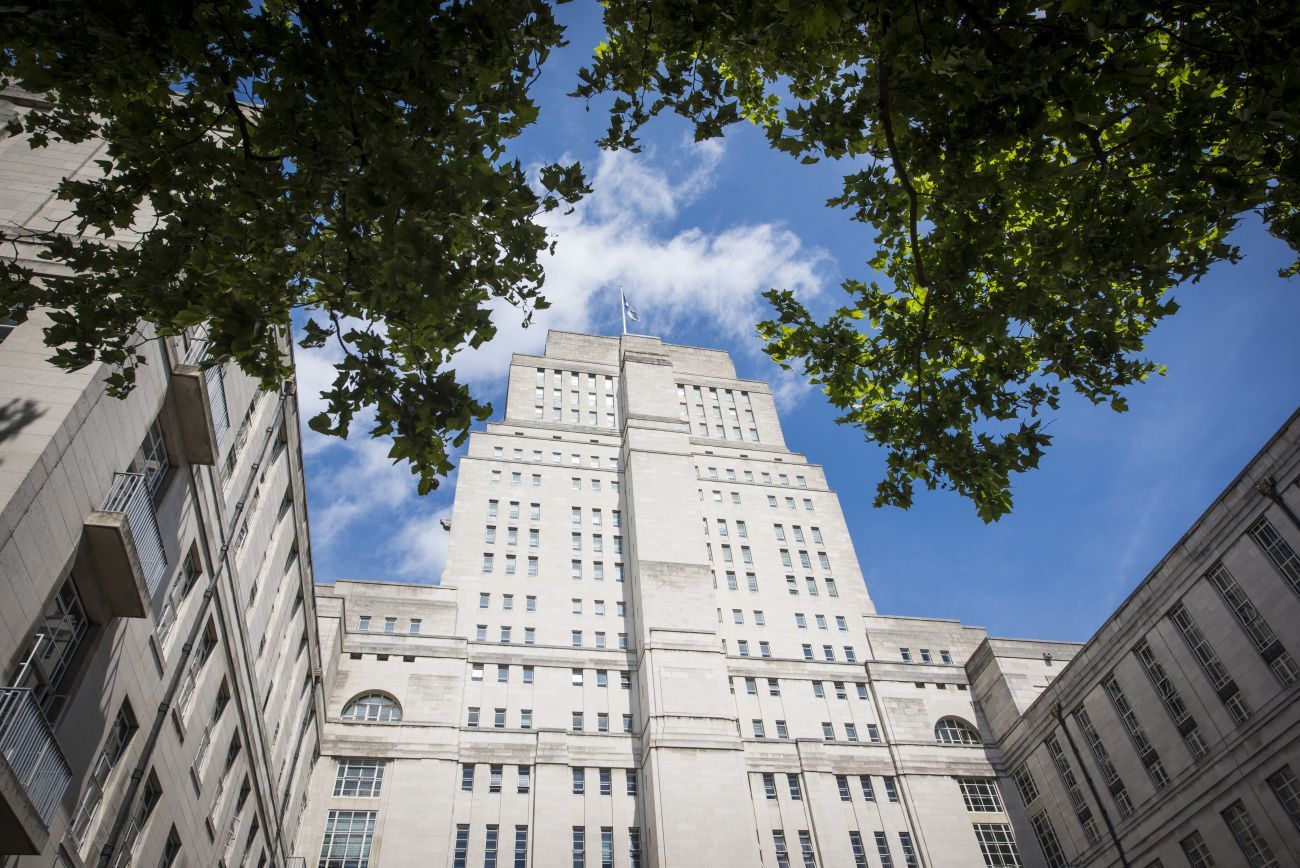
Its central academic bodies are based at Senate House in Bloomsbury, the art deco building designed by Charles Holden that serves as the federation's administrative and ceremonial centre. They include:
Students from across London live in the Intercollegiate Halls, open to full-time students at any publicly funded university in London, mostly in Bloomsbury with further accommodation at Marble Arch and Stratford. The University also runs the University of London Careers Service, Housing Services for private-sector accommodation and the University of London Press.
Distance learning applicants are admitted from all over the world, with country-specific qualification equivalents set for each programme. In Paris, undergraduates apply through UCAS and graduate with a University of London degree. The University is an exempt charity and statutory corporation in England and Wales (RC000661); HRH The Princess Royal has been Chancellor since 1981.
A scholarship application can only be considered once the applicant holds an offer for the programme. The University's own and partner scholarships include:
Fee discounts of 10-40% include the Alumni Bursary (10% for distance learning graduates), the Federation Member Alumni Bursary, LLM bursaries (30-40%), the RTC Staff Bursary (20%), the UK/EU MBA Bursary (20%), the Corporate Group Discount (30% for LSHTM programmes), the Royal Veterinary College Bursary (20%), the Malaysian Bar Council Members Bursary (10-20%), and 10% bursaries for UNHCR, NRC, DRC and PHAP staff and Unionlearn members. Bursaries are selected in the online programme application form and confirmed after an offer.
Undergraduates with the highest aggregate first-year marks on certain programmes have their second-year University of London fees covered; no application is needed.
UK undergraduates may be eligible for a part-time tuition fee loan, and UK postgraduates for Postgraduate and Doctoral Loans. At the Institute in Paris, 2026 tuition fees are £9,790 a year for Home students and £13,800 for International students; eligible students from England, Scotland and Northern Ireland can apply to the Student Loans Company.
Jean-Francois Durieux Scholarship (MA Refugee Protection and Forced Migration Studies) →
Varadi Scholarships (distance and flexible learning degrees) →
Browse the scholarships listed for University of London and check each award’s eligibility.
View scholarships for University of London →Applications are made online through the Apply Now button on each programme page. Applicants upload proof of identity, academic documents and proof of English proficiency, which may follow after submission; documents not in the Roman alphabet need an official translation. Some programmes carry a non-refundable application fee. The admissions team aims to give a decision within five working days, or up to 10 working days at peak times. Outcomes are an offer, a conditional offer, a request for more information, referral, or requirements not met. Offer holders register through the link in their offer email and pay registration and module fees to access study materials. Some programmes, including some Certificates of Higher Education and the International Foundation Programme, require registration at a Recognised Teaching Centre.
International Foundation Programmes generally require applicants to be at least 16 by the registration deadline and to hold at least four separate GCSE/GCE O Level subjects at grades A*-C / 9-4 or the international equivalent. Standard degrees and Diplomas of Higher Education require the General Entrance Requirements plus any programme-specific subjects such as Mathematics; Graduate Entry routes require an acceptable degree; Certificates of Higher Education require a set number of GCSEs at A*-C / 9-4 or equivalent. Applicants aged 21 or over may be considered for many undergraduate programmes without fully meeting the standard requirements. Non-standard applications are reviewed by the Admissions Panel. Where a programme requires mathematics, applicants may take a Mathematics Aptitude Test (Intermediate, Upper Intermediate or Advanced) or LSE Maths Essentials. Qualifications from all countries are accepted, with country equivalents set on each programme page.
Undergraduate applications go through UCAS (institution code name ULIP, institution code P26). Typical offers for the BA French Studies with History are ABB at A level with at least a B in French, or 32 points in the IB Diploma with at least 6 in Higher Level French. Postgraduate applications go directly to the Institute or to Queen Mary University of London.
For undergraduate programmes, applicants whose first language is not English need either school or university qualifications taught in English, or a test taken within the past three years: IELTS (Academic, General or Indicator Online) 6.0 overall with 5.5 in each sub-test; Duolingo 105; PTE Academic 54 overall with 54 in Reading and Writing; TOEFL iBT 87 (21 in Reading and Writing, 19 in Speaking and Listening) under the previous system, or 4.5 overall (4.5 in Writing, 4.0 in others) under the current system; or APTIS B2, Password English 6.0 (5.5 in sub-tests), Cambridge Advanced English or the City & Guilds Mastery award. An employer's reference confirming professional use of English may also be considered. Postgraduate requirements vary by programme.
Postgraduate applicants typically need an acceptable degree and any programme-specific requirements. The School of Advanced Study offers MA, MRes, LLM, MPhil and PhD programmes on campus in London, and distance learning master's and PhD programmes, with its own application process.
Students need regular access to a personal laptop or desktop computer (Windows 10/11 64-bit or macOS 11 or later) with webcam, microphone, broadband and administrator rights for secure online examinations, which do not run on smartphones, tablets, Chromebooks or Linux.
Senate House, Malet Street, London WC1E 7HU, is the University's headquarters and the administrative and ceremonial centre of the federation. It houses the School of Advanced Study, which teaches on-campus MA, MRes, LLM, MPhil and PhD programmes in the humanities, and Senate House Library, the central library for the University and the School, with over 2 million books, 50 special collections and 1,800 archival collections in the arts, humanities and social sciences.
9-11 rue de Constantine, 75340 Paris, on the Esplanade des Invalides. Three-year BA programmes in French Studies (with Business, History or International Relations) and International Politics (with or without French), the MA Urban History and Culture with Queen Mary University of London, and MPhil/PhD study with the School of Advanced Study. The Institute Library gives access to Senate House and Queen Mary library resources.
Distance and online programmes are studied independently through the Virtual Learning Environment or with the support of Recognised Teaching Centres worldwide.
Eight halls, mostly in Bloomsbury, with accommodation also at Marble Arch and Stratford:
Study programmes offered at University of London.
Experiences shared by students of University of London.
Studied here? Share your experience to help other applicants.

Book a free consultation with our expert counsellors and take the first step towards your dream university.
Copyrights © 2026 StudyMapped. All rights reserved.

Enter your credentials to continue.
Join us and start your study abroad journey.


