
University in United Kingdom
Liverpool, England, United Kingdom
University profile
The University of Liverpool is a research-intensive university in the city of Liverpool, England. Founded in 1881 as University College, Liverpool and granted its Royal Charter in 1903, it describes itself as the original redbrick university, a name taken from its Victoria Building, designed by Alfred Waterhouse and opened in 1892. It is a founding member of the Russell Group (1994) and has more than 30,000 students on over 400 undergraduate and postgraduate courses.
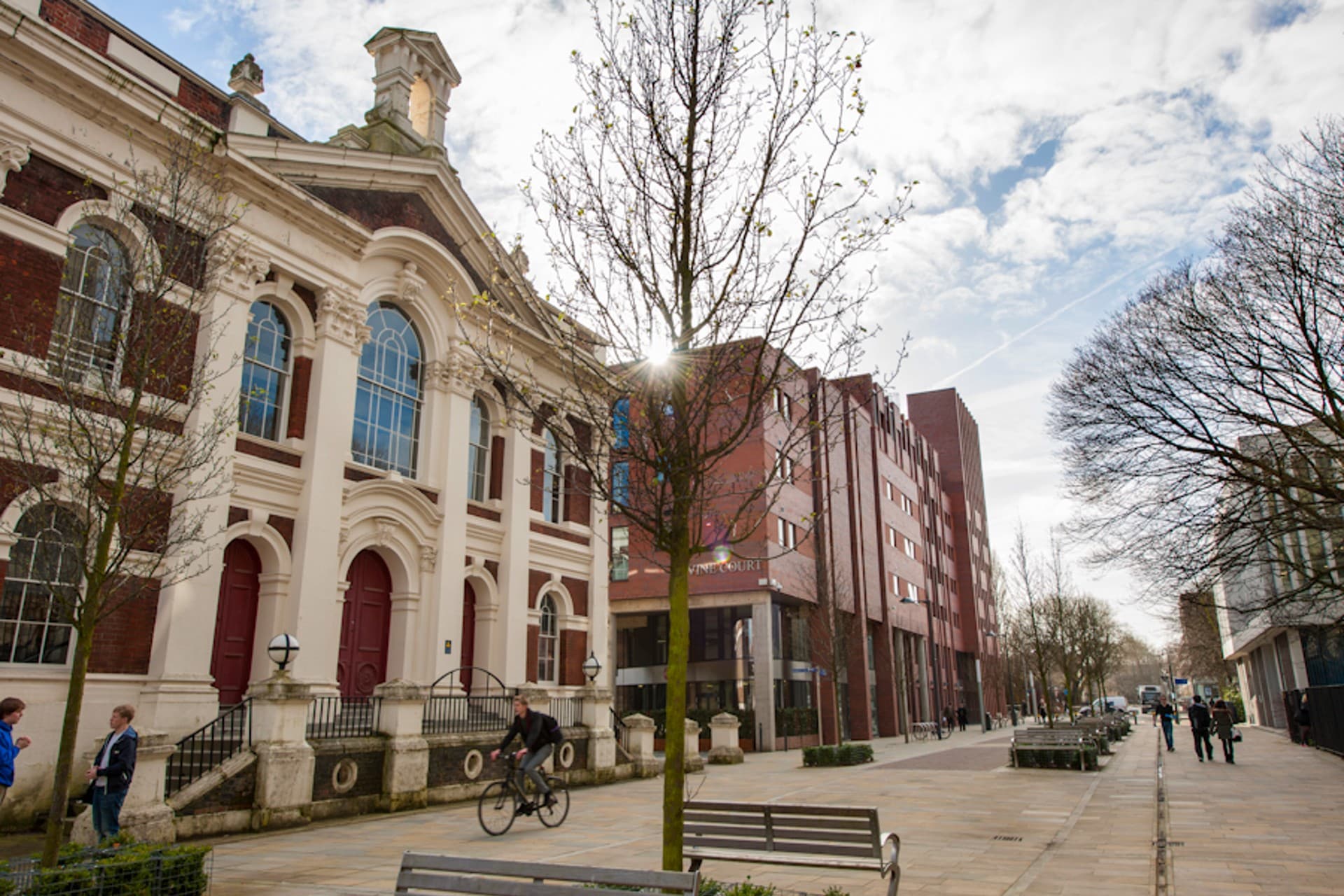
The main Knowledge Quarter campus sits in Liverpool city centre, with more than 30 Grade II listed buildings arranged in north, central and south zones that broadly follow the faculties. The Leahurst campus at Neston, Cheshire, 12 miles south of the city, houses the School of Veterinary Science and its teaching hospitals. The University also co-founded Xi'an Jiaotong-Liverpool University (XJTLU) in Suzhou, China (2006), and opened a campus in Bengaluru, India, in 2026.
Teaching and research are organised into three faculties with 35 departments and schools:
Notable facilities include the Materials Innovation Factory (opened 2018 with Unilever), the Digital Innovation Facility, the Virtual Engineering Centre, the Pandemic Institute (2021), the Victoria Gallery & Museum and the Garstang Museum of Archaeology. Liverpool University Press, founded in 1899, is a subsidiary of the University. Nine Nobel Prize winners are associated with the University, among them Ronald Ross, Charles Sherrington and James Chadwick.
Student life centres on the Liverpool Guild of Students, the Harold Cohen and Sydney Jones libraries, and Active Liverpool, whose Sport and Fitness Centre has the city centre's only full-size swimming pool, a gym, a climbing and bouldering wall, and over 50 student sports through Sport Liverpool. The University has over 4,500 student rooms at Greenbank Student Village and city campus residences, and first-year undergraduates who apply by the stated deadline are guaranteed a room.
About 8,000 international students from 135 countries study at Liverpool. The University of Liverpool International College on campus runs Foundation Certificate and Pre-Master's routes. Teaching was rated Gold in the Teaching Excellence Framework (2023), and 91% of research was rated world-leading or internationally excellent in REF 2021.
Fees are set for each course. As an example, Accounting and Finance BSc (Hons) costs £10,050 a year for UK students in 2027/28 and £28,000 a year for international students. For 2026/27, postgraduate research fees are £5,238 a year full-time for UK and Republic of Ireland students. International full-time research fees are £32,200 a year in Health and Life Sciences, £25,350 in Humanities and Social Sciences, and £32,200 or £25,350 in Science and Engineering. International master's applicants usually pay a £2,000 deposit when accepting an offer, which is deducted from their tuition fees. Undergraduate and master's fees can be paid in full or in two instalments (60%/40%).
Home undergraduate students with a household income below £25,000 receive £2,000 for each year of study. Those with a household income between £25,001 and £35,000 receive £750 a year. The bursary can be taken as cash or as a fee waiver. There is no separate application: eligibility is assessed from the student finance application. These figures apply to 2026 entry. Liverpool Bursary
A £7,500 discount on first-year tuition fees for new international fee-paying undergraduates starting at the Liverpool campus in 2026/27 with AAA at A level or equivalent. It is not available for Medicine, Dental Surgery, online study or sponsored students, and it is awarded automatically. Details
Funding for postgraduate researchers includes the Duncan Norman Research Scholarship, the John Lennon Memorial Scholarship for applicants from Merseyside, and awards for students from particular countries. PGR scholarships
Eligible UK undergraduates can take government tuition fee and maintenance loans. Postgraduate students from England can apply for a master's loan of up to £12,167. Scholarships finder
Liverpool Excellence Scholarship for Postgraduates →
Liverpool Excellence Scholarship for Undergraduates →
Liverpool Advancement Scholarship →
Liverpool Achievement Scholarship for India →
Browse the scholarships listed for University of Liverpool and check each award’s eligibility.
View scholarships for University of Liverpool →Home (UK) and international applicants for full-time undergraduate study apply through UCAS. The UCAS institution code is LVRPL L41, and each course has its own UCAS code. Applications open at the beginning of September in the year before entry. The deadline is 15 October for courses leading to a professional qualification in Medicine, Dentistry or Veterinary Science, and for applicants who include Oxford or Cambridge. The usual closing date for UK applicants is 14 January, after which UCAS Extra is available. The usual closing date for international and EU applicants is 30 June. The UCAS application fee for 2026 entry is £28.95 for up to five choices. Entry can usually be deferred by one year: either indicate this on the application or ask Admissions in writing by 31 July. Direct entry to year 2 is considered when it is requested on the UCAS form by the main deadlines, but not during Clearing.
Entry requirements are set for each course. As an example, Accounting and Finance BSc (Hons) asks for AAB at A level (ABB with an A in the EPQ), 34 IB points with no score below 4 or 6,6,5 in three Higher Level subjects, Scottish Advanced Highers at AAB, or an Access to HE Diploma with 45 Level 3 credits (36 at Distinction and 9 at Merit).
Eligible UK applicants can receive an offer up to two grades below the standard offer. This applies to applicants from postcodes in Index of Multiple Deprivation deciles 1 and 2, and to care-experienced applicants. In Clearing, the reduction may be one grade. Eligibility is checked automatically from the UCAS application, so no separate form is needed.
Overseas qualifications that match the typical entry requirements are listed by country and region, and specific requirements are set on each course page. Applicants with good high-school grades who do not yet meet the requirements can take a Foundation Certificate at the University of Liverpool International College on campus. Completing it at the required level, with good attendance, allows progression to a University of Liverpool degree. Student visa sponsorship is not currently available for applicants from Afghanistan, Cameroon, Myanmar or Sudan.
Most undergraduate courses require IELTS 6.0 overall with no component below 5.5, IELTS 6.5 with no component below 5.5, or IELTS 7.0 with no component below 6.5. Dentistry, Medicine and Veterinary Science require higher scores. Most master's courses require IELTS 6.5 with no component below 5.5, IELTS 6.5 with no component below 6.0, or IELTS 7.0 with no component below 6.5. Alternatives include TOEFL iBT (not the Home Edition), Pearson PTE Academic, the Duolingo English Test, LanguageCert Academic and the Kaplan Test of English, as well as some country-specific qualifications. IELTS certificates must still be valid on the first day of the course. Nationals of majority English-speaking countries usually do not need to provide evidence, and Pre-sessional English courses are available for applicants who need them.
Applications are made through the University of Liverpool Application Portal. Applicants supply university transcripts, degree certificates and a personal statement; international applicants also supply school transcripts and English language certificates. For January 2027 entry, the deadlines are 18 December 2026 for international applicants and 15 January 2027 for UK and Republic of Ireland applicants. For September 2027 entry, the deadlines are 23 August 2027 for international applicants and 17 September 2027 for UK and Republic of Ireland applicants. Courses that need ATAS clearance have earlier deadlines. Holders of a bachelor's degree who do not meet the entry requirements can take a Pre-Master's course at the University of Liverpool International College.
Apply through the University of Liverpool Application Portal after finding a research degree or project and contacting potential supervisors. An application usually includes a research proposal, transcripts and degree certificates, a personal statement, a CV, contact details for two proposed supervisors and two referees, and, for international applicants, passport details and English language certificates.
Undergraduate applying | Master's applications | International entry requirements
Residences: Greenbank Student Village is three miles from campus and divided into the Derby, Roscoe and Derby Old Court sites, with a gym, outdoor 3G pitches, a dance studio and a 24-hour reception. City campus residences include Crown Place, Dover Court, Melville Grove, Philharmonic Court, Tudor Close and Vine Court.
Study programmes offered at University of Liverpool.
Experiences shared by students of University of Liverpool.
Studied here? Share your experience to help other applicants.

Book a free consultation with our expert counsellors and take the first step towards your dream university.
Copyrights © 2026 StudyMapped. All rights reserved.

Enter your credentials to continue.
Join us and start your study abroad journey.


