

University in United Kingdom
Leicester, England, United Kingdom
University profile
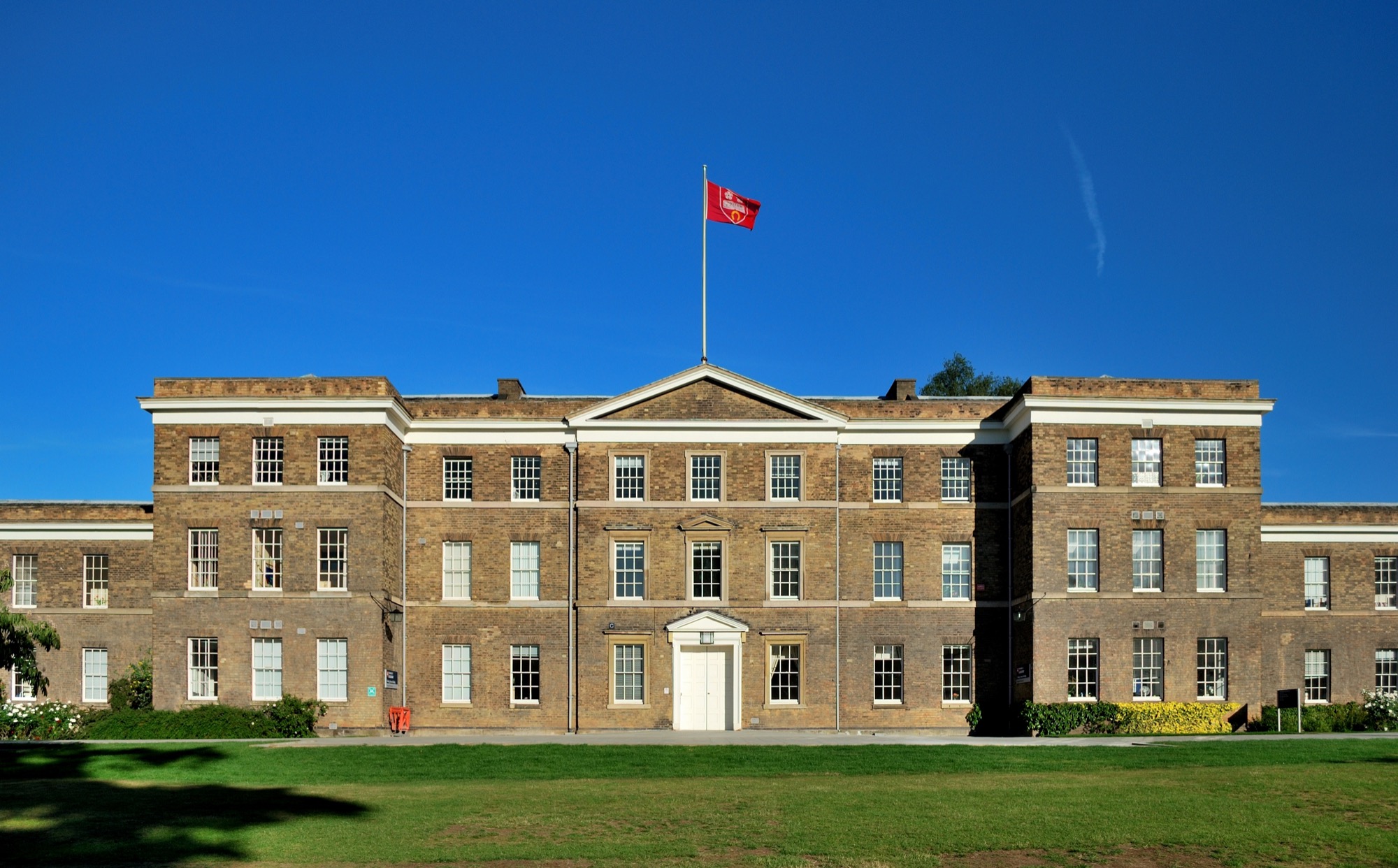
The University of Leicester is a research-intensive, comprehensive university in Leicester, in the East Midlands of England. It was founded in 1921 as a living memorial to those who served and died in the First World War, and it describes itself as the only university in Europe founded by its community for that purpose. Its motto is Ut vitam habeant (So that they may have life). The University has more than 20,000 students and 4,000 staff, and 20% of its students come from the most deprived areas in the UK.
The compact main campus lies a mile south of the city centre beside Victoria Park. The School of Business is based at Brookfield, and most first-year residences are in The Village in Oadby, linked to the main campus by a free University shuttle bus. Space Park Leicester, home to the Institute for Space, describes itself as the home of UK space and Earth observation science.
Teaching and research are organised in three colleges: the College of Life Sciences, the College of Science and Engineering and the College of Social Sciences, Arts and Humanities. Schools and departments include Leicester Medical School, Leicester Law School, the School of Business, and the Schools of Biological Sciences, Engineering, Physics and Astronomy, Healthcare, Education, Psychology and Vision Sciences, Arts, Media and Communication, Criminology, Sociology and Social Policy, History, Politics and International Relations, and Chemical, Earth and Environmental Sciences, together with Computing, Mathematical Sciences, Museum Studies and Archaeology and Ancient History. Genetic fingerprinting was discovered at Leicester by Professor Sir Alec Jeffreys in 1984.
Student life centres on the Students' Union in the Percy Gee Building, the O2 Academy on campus and more than 150 clubs and societies. University-managed housing is self-catered with bills included and comes with a Residence Life team. It is split between The Village (Gilbert Murray, Beaumont, John Foster and Stamford halls, plus converted Edwardian houses) and The City (Nixon Court and Freemen's Common), about ten minutes' walk from campus. International students are guaranteed accommodation.
The University has students from more than 150 countries and 208,741 alumni, 55,785 of them overseas. It holds a Royal Charter (granted in 1957), received Gold in the 2023 Teaching Excellence Framework, and was Daily Mail University of the Year 2025. Undergraduate applications use UCAS institution code L34.
Home undergraduates starting in 2026/27 pay £9,790 a year. The Home fee for 2027/28 is expected to be £10,050. Home foundation years in 2026/27 cost £9,790 or £5,760, depending on the subject. New full-time international undergraduates in 2026/27 pay between £22,200 and £26,550 a year, depending on the course, and the first-year fee stays the same for the length of the course. Medicine (MBChB) costs £30,150 a year in Years 1 and 2 and £48,900 a year (indicative) in Years 3 to 5. International foundation years in 2026/27 cost between £17,750 and £20,750. Postgraduate fees are set by course. Eligible home master's students can apply for a Postgraduate Loan of up to £11,222.
The University also lists partner scholarships, including Chevening (including the Chevening-Leicester Partner Scholarship), Commonwealth Masters, Fulbright, Marshall and Saïd Foundation awards. Details: undergraduate scholarships, international scholarships, postgraduate scholarships and discounts, undergraduate tuition fees.
International Postgraduate Taught Merit Scholarship →
Chancellor's International Scholarship (Undergraduate) →
Chancellor's International Postgraduate Taught Scholarship →
Global Excellence Scholarship →
Browse the scholarships listed for University of Leicester and check each award’s eligibility.
View scholarships for University of Leicester →All applications for undergraduate courses are made through UCAS, using institution name LEICR, institution code L34 and the course code for the chosen course. Entry requirements are set for each course and shown on the course page. Applicants whose predicted grades are slightly below the standard requirements are still welcome to apply, and may be offered a place on the standard requirements. Contextual data is taken into account where relevant, and offers may be made on a contextual basis. Most courses do not normally interview applicants. Successful applicants receive an offer through UCAS and an offer letter, and are usually invited to an Offer Holder Day.
Late applications, including those from outside the UK, are considered at the University's discretion.
International students can apply through UCAS (where their school is registered with UCAS), directly to the University, or through one of the University's agents. Applications need academic transcripts, a personal statement, references (at least one academic) and proof of English language ability where English is not the first language. Options include the STEM International Foundation Year and the Biological Sciences International Foundation Year. Country pages give equivalent entry qualifications. For example, students from Ghana need five WASSCE subjects with B3 in Maths and a relevant science and C6 in other subjects including English. Self-financing students who live outside the UK and Ireland pay a £3,000 deposit to secure a place.
Applicants can show English ability through prior education in an approved English-medium country, IELTS (each degree page states the minimum IELTS score), selected Indian degrees, or other accepted tests and qualifications mapped to IELTS equivalents. Any test must be less than two years old at the start of the course, and a Secure English Language Test (SELT) is not required for degree study. Students who do not yet meet the requirement can take a pre-sessional course at the English Language Teaching Unit (21 hours a week, classes of up to 16). Student visa holders must also meet the UK Government's English language requirements.
Applications for most campus-based and all distance learning master's courses are made online through the 'Apply Now' link on each course page. Applicants need transcripts, a personal statement, references (at least one academic) and English language evidence. Entry requirements vary by course. Holders of a Ghanaian bachelor's degree, for example, need at least a second class degree, and some courses require an upper second. PGCE applications go through UCAS Teacher Training, and Doctor of Clinical Psychology applications go through the Clearing House for Postgraduate Courses in Clinical Psychology. Self-financed overseas students who need a Student visa pay a deposit of at least £3,000 before a CAS is issued (£6,000 for applicants from Sub-Saharan Africa and £8,000 for applicants from Pakistan). Postgraduate admissions: +44 (0)116 252 5381, [email protected].
PhD and MPhil applicants need a UK bachelor's degree with first or upper second class honours, or an equivalent overseas qualification, normally in a relevant subject. Some subjects and studentships require a master's degree. Professional doctorates usually require a master's degree and relevant employment. Applicants without standard qualifications may be considered on the basis of research or professional experience.
Library and Learning Services, based in the David Wilson Library at the centre of the campus, include Archives and Special Collections (rare books, manuscripts, historical photographs and personal archives) and the Centre for Academic Achievement. All University accommodation is self-catered, with 24/7 support and security.
Study programmes offered at University of Leicester.
Experiences shared by students of University of Leicester.
Studied here? Share your experience to help other applicants.

Book a free consultation with our expert counsellors and take the first step towards your dream university.
Copyrights © 2026 StudyMapped. All rights reserved.

Enter your credentials to continue.
Join us and start your study abroad journey.


