
University in Germany
Koblenz, Rheinland-Pfalz, Germany
University profile
The University of Koblenz (Universität Koblenz) is a public university in northern Rhineland-Palatinate and describes itself as the youngest university in Germany, standing on a long academic tradition. It has been an independent institution since 1 January 2023, when it was separated from its former association with the Landau campus and the administrative site in Mainz. Its guiding phrase is weiter:denken ("thinking ahead"), and it sees itself as a driving force for the economy and science of the region while keeping an international profile and network.
Teaching and research are organised in four faculties (Fachbereiche): Educational Sciences (Faculty 1), Philologie / Kulturwissenschaften (Arts and Humanities, Faculty 2), Mathematics / Natural Sciences (Faculty 3) and Computer Science (Faculty 4). Four profile areas link them: Education, Computer Science, Culture and Communication (Kultur und Vermittlung), and Materials and Environment. Teacher education has a central role, with subjects for all school types, and the portfolio rests on three pillars: teacher-training degrees, undergraduate and Master's programmes (including the Zwei-Fach-Bachelor), and continuing-education programmes, some as distance learning through the Centre for Distance Studies and University Continuing Education (ZFUW).
Faculty 4 combines Core Informatics, Computational Visualistics, Software Engineering, Web and Data Science, Business Informatics and Digital Business Management under the profile theme of Data Intelligence, through six institutes (Computational Visualistics, Computer Science, Management, IS Research, Software Technology, and Web Science and Technologies). Faculty 3 has three institutes and a research focus on Materials and Environment.
Central units include the University Library, the Centre for Information and Media Technologies (ZIMT), the Interdisciplinary Research, Graduate Support and Personnel Development Centre (IFGPZ), the Centre for Teacher Education (ZFL) and the university sports organisation AHS. Campus life is shaped by short distances, a Mensa and cafeteria, a concert hall, child day care and the student union AStA; the Studierendenwerk provides canteens, halls of residence and counselling.
About 13 per cent of students come from abroad and the university cites more than 80 partner universities worldwide. Five Master's programmes are taught in English: BioGeo Sciences, E-Government, Material Science, Mathematical Modeling, Simulation and Optimization, and Web and Data Science. International degree-seeking applicants are supported by the International Relations Office. The university is a member of uni-assist and of the network Weltoffene Hochschulen gegen Fremdenfeindlichkeit, and awards Deutschlandstipendium scholarships.
Students without a Master's degree pay no tuition fees. Only students who already hold a Master's degree from a German or other European university pay tuition of 650 euros per semester for a second Master's programme. All enrolled students pay the semester contribution (Semesterbeitrag), which is not tuition: for winter semester 2026 it totals 350.30 euros for re-registration and 360.30 euros for first enrolment (including a 10 euro fee for the first UniCard). It consists of 104.00 euros for the Studierendenwerk, 19.50 euros for the AStA and 226.80 euros for the Deutschlandsemesterticket for public transport.
Since 2011 the university has taken part in the federal Deutschlandstipendium programme, which supports students with the help of private sponsors under the Stipendienprogramm-Gesetz. Information for students and for sponsors is on the university's scholarship pages: Deutschlandstipendium.
The university offers scholarships, including the Deutschlandstipendium, for international students with very good results in its five international Master's programmes; they support the first semester and are not intended to cover all living costs. During their studies students can apply for DAAD STIBET scholarships (for degree completion, exceptional commitment or equal opportunities), and Koblenz students who spend a semester, internship or thesis in a non-European country can apply for a PROMOS scholarship. Details: Fees, contributions and scholarships.
The university's scholarship page also refers students to the Stipendienstiftung Rheinland-Pfalz (including awards for civic engagement, for students with family responsibilities and an emergency fund), the Studienstiftung des deutschen Volkes, the Stiftung der Deutschen Wirtschaft, Erasmus and DAAD scholarships for study abroad, Aufstiegsstipendium for those with professional experience, and the Studienkolleg scholarship for teacher-education students. Doctoral candidates can use the Programm NaWi of the IFGPZ for female early-career researchers. BAföG applications are handled by the BAföG office responsible for Koblenz (Johannes Gutenberg University Mainz). See scholarships and financing.
Deutschlandstipendium at the University of Koblenz →
Browse the scholarships listed for University of Koblenz and check each award’s eligibility.
View scholarships for University of Koblenz →The general higher education entrance qualification (Abitur) or a recognised equivalent, a completed Meisterprüfung or comparable examination, or a completed Fachhochschule degree entitles applicants to all programmes. Vocationally qualified applicants without Abitur, holders of a subject-specific entrance qualification (fachgebundene Hochschulreife) and students with at least 90 ECTS credits from a Rhineland-Palatinate Fachhochschule Bachelor programme in a related subject can also enter certain programmes. Applicants in Rhineland-Palatinate with the early Abitur may apply for the summer semester by 15 January and must submit the certified certificate by the fourth working day of April. Applicants apply directly through the university's online application portal. Aptitude tests (Eignungsprüfung) are required for Sport and Music in the Bachelor of Education programmes and for the certificate programme Darstellendes Spiel. Restricted-admission programmes allocate places by selection criteria defined by the university.
Winter semester 2026/27: 15 June to 15 July 2026 for programmes with restricted admission and the Berufsbildende Schulen teaching degree, and 15 June to 30 September 2026 for programmes without admission restrictions. Summer semester 2027: December 2026 to 15 January 2027 for restricted-admission programmes and the Berufsbildende Schulen teaching degree, and December 2026 to 15 March 2027 for programmes without admission restrictions. Applicants with foreign degrees can have different deadlines. The semester runs 1 October to 31 March (winter) and 1 April to 30 September (summer); the winter 2026/27 lecture period is 26 October 2026 to 13 February 2027.
Applicants whose first degree or entrance qualification was gained outside Germany apply through uni-assist (portal "My assist"); from summer semester 2026 applications are accepted only via uni-assist and the process is online-only, with no notarised paper copies sent by post. The uni-assist fee is 75 euros for the first choice and 30 euros for each additional choice. After the application is forwarded, the examination committee reviews it and the Registrar's Office (Studierendensekretariat) issues the decision. The portal opens at the beginning of March for the winter term and the beginning of September for the summer term; applications through uni-assist take around eight weeks, and non-EU applicants needing a visa are urged to apply early because visa processing can take up to five months or more. Documents: school leaving certificate with subjects and grades, university entrance examination certificate where required, university certificates and transcripts, German or English language certificates, APS certificate (for applications from China, Mongolia, Vietnam and India), certified translations if not in English or German, passport copy and motivation letter. For Web and Data Science, a Bachelor thesis, project report or major scientific paper is also required. Applicants with Pakistani qualifications must submit verification by the Higher Education Commission Pakistan (since February 2026). Bachelor of Education applicants add the Beiblatt form. Applicants who have studied before in Germany add a clearance certificate (Unbedenklichkeitsbescheinigung), the latest transcript and an application for recognition.
For the German-and-English Bachelor's and Master's programmes (Computational Social Science, Computervisualistik, Digital Business Management, Informatik, Wirtschaftsinformatik), applicants with a non-German school leaving certificate need the Zentrale Oberstufenprüfung of the Goethe-Institut or an equivalent recognised diploma, or TestDaF with at least TDN 4. For the English-taught Master's programmes E-Government and Web and Data Science, level B2 is required, shown by TOEFL with at least 550 points (paper), 213 (computer) or 79-80 (internet), IELTS level 6.5 or a comparable certificate, even if earlier studies were in English. Bachelor applicants additionally need a German university entrance qualification roughly equivalent to the Abitur.
A relevant first degree is required; in the Faculty of Computer Science this must be a subject-related Bachelor degree completed with at least grade 2.5 (equivalent to CGPA 65% or grade B). Web and Data Science has additional requirements stated in its programme profile. Master of Education programmes require the matching Bachelor of Education subjects; continuing-education Master's programmes have special admission conditions.
A completed academic Master's degree or equivalent in the relevant discipline is the main requirement; special rules apply to Bachelor, HAW/FH Diplom and some teaching degrees, and the Promotionsordnung of the responsible faculty sets the full conditions. International degrees are first checked and recognised by the faculty. Applicants should contact the dean's office or a potential supervisor (usually a professor); the faculty's doctoral committee decides on acceptance as a doctoral candidate. Enrolment as a doctoral student is optional in most subjects, requires the supervisor's written acceptance and incurs only the semester contribution, no tuition.
Admitted international students enrol with proof of health insurance, proof that the semester contribution was paid and a copy of the admission notice; enrolment takes about a week once documents are complete.
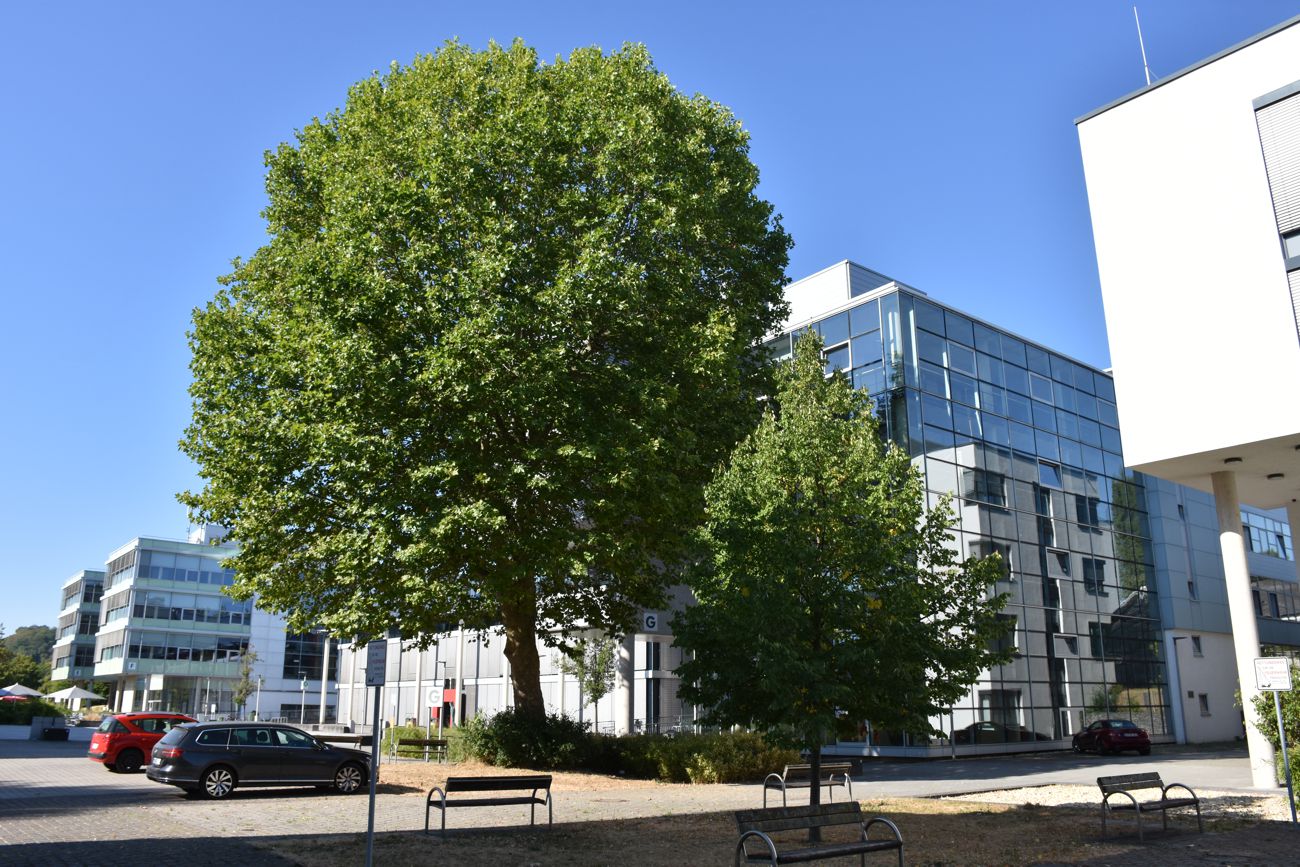
Main campus, Universitätsstraße 1, 56070 Koblenz (Metternich). Most teaching and research take place on the single campus, organised by lettered buildings:
City-centre sites near Koblenz Central Station. The university administration (Bahnhofstraße 32) and central scientific institutions (Emil-Schüller-Straße 12 and Löhrstraße 78-80) are about five minutes on foot from the station. The campus is reached by bus stops Uni/Winninger Str. and Universität from the central bus station.
Facilities. The University Library is open Monday to Friday 09:00-22:00, Saturday 11:00-22:00 and Sunday 11:00-16:00. ZIMT provides IT support, eduroam, VPN and cloud services. The Deutschlandsemesterticket is included in the semester contribution.
Study programmes offered at University of Koblenz.
Experiences shared by students of University of Koblenz.
Studied here? Share your experience to help other applicants.

Book a free consultation with our expert counsellors and take the first step towards your dream university.
Copyrights © 2026 StudyMapped. All rights reserved.

Enter your credentials to continue.
Join us and start your study abroad journey.


