
University in Germany
Greifswald, Mecklenburg-Vorpommern, Germany
University profile
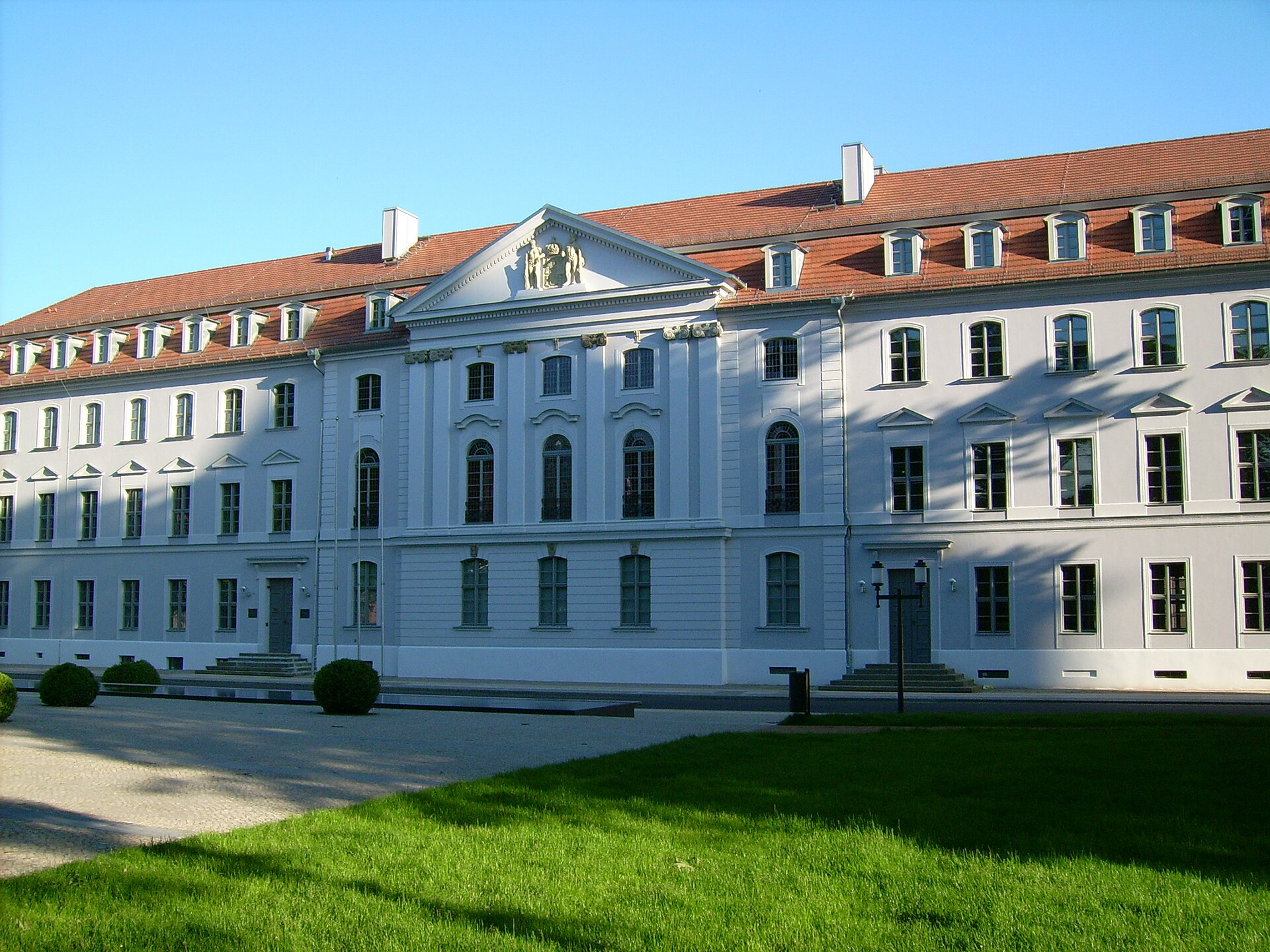
The University of Greifswald (Universität Greifswald) is a public research university in the Hanseatic town of Greifswald on the Baltic coast of Mecklenburg-Vorpommern. Founded in 1456, it is one of the oldest universities in Germany and in the Baltic Sea region. It describes itself as a research university whose guiding theme is "Challenges and solutions of a changing environment and society", and the compact town itself functions as the campus, with lecture halls, libraries and the Mensa within short distances of each other.
Teaching and research are organised in five faculties: the Faculty of Theology, the Faculty of Law and Economics (Rechts- und Staatswissenschaftliche Fakultät), the Faculty of Medicine (with University Medicine Greifswald), the Faculty of Arts and Humanities (Philosophische Fakultät) and the Faculty of Mathematics and Natural Sciences. The university offers 131 degree programmes and 13 continuing-education programmes, from Bachelor, Master, Diplom and state examination courses to doctorates. In winter semester 2025/26 there were 9,728 enrolled students, of whom 886 were international students.
The university is the centre of the Greifswald science location and works closely with four non-university research institutions in the town: the Friedrich Loeffler Institute (federal research institute for animal health), the Leibniz Institute for Plasma Science and Technology (INP), the Max Planck Institute for Plasma Physics (IPP) and the Helmholtz Institute for One Health (HIOH). It is also a founder of the Alfried Krupp Wissenschaftskolleg Greifswald. Further university facilities include the Botanical Garden and Arboretum (founded 1763), the University Archive, the Kustodie (university collections, art collection and Aula) and the Hiddensee Conference Centre, a former biological research station on the island of Hiddensee.
Student life centres on student clubs and initiatives, student theatre, choirs, an orchestra and big band, student media and University Sport with more than 80 courses. Seven halls of residence run by the Studierendenwerk Greifswald provide 740 places; the Studierendenwerk also runs the Mensa and helps students find private rooms. The Wohnsitzprämie (residence bonus) scheme applies to students who register their main residence in Greifswald.
International students and researchers come from almost 100 countries; the university has 34 university partnerships, 194 Erasmus partnerships and exchange relations with more than 200 universities. The International Office, the Welcome Centre and the International Guest House support incoming students and staff. Several Master's programmes are taught in English, among them Biodiversity, Ecology and Evolution, Earth Sciences and Global Change, Landscape Ecology and Nature Conservation, Mathematics, Physics and History and Culture of the Baltic Sea Region. The university has held system accreditation since 2015.
Study at the University of Greifswald as a Bachelor's or Master's student is charged per semester through the Semesterbeitrag (semester contribution, not tuition): student body fee 11 EUR, Studierendenwerk fee 110 EUR, re-registration fee 6 EUR, plus a one-off enrolment fee of 31 EUR at first enrolment (152 EUR in the first semester). Other administrative fees include 50 EUR for guest students. Preparatory German courses (DSH) are fee-based; uni-assist charges its own application fee.
Since autumn 2011 the university awards the Deutschlandstipendium to high-achieving and talented students: 300 EUR per month, half raised from private sponsors and 150 EUR contributed by the Federal Ministry of Education and Research, awarded initially for one year. 91 scholarships were awarded for winter semester 2024/25. Calls are published for each winter semester. Details: uni-greifswald.de/deutschlandstipendium.
The International Office regularly awards DAAD-STIBET scholarships to international students for particular commitment or to help them complete their studies; calls are published on the International Office pages (Degree-Seeking Students). The university also points to the DAAD overview of funding for international students in Germany and to student jobs.
Doctoral candidates can apply for State Postgraduate Scholarships, the Mentoring Programme for Doctoral Candidates, the Gerhard-Domagk programme for University Medicine, and travel grants for active conference participation (applications at any time, trip starting no earlier than eight weeks after submission). The university also lists the thirteen German Begabtenförderwerke (for example Studienstiftung des deutschen Volkes, Konrad-Adenauer-Stiftung, Friedrich-Ebert-Stiftung, Heinrich-Böll-Stiftung, Cusanuswerk, Evangelisches Studienwerk Villigst, Avicenna-Studienwerk) and DAAD and EURAXESS scholarship databases. Overview: Financing doctoral studies.
Federal student finance (BAföG) is available where eligible, and the Studierendenwerk offers housing, Mensa and social counselling. Refugees can attend preparatory German courses for free and lectures as guest students at no charge.
Browse the scholarships listed for University of Greifswald and check each award’s eligibility.
View scholarships for University of Greifswald →Applicants need the Allgemeine Hochschulreife (Abitur or an officially equivalent qualification) or a subject-specific higher education entrance qualification, which only permits the subjects named on the certificate. The Fachhochschulreife does not qualify for study at the university. Artistic programmes additionally require proof of artistic aptitude, and a Zugangsprüfung for working professionals offers entry without Abitur. Some programmes have a local numerus clausus (applications direct to the university); Medicine, Dentistry and Pharmacy are nationally restricted and allocated through hochschulstart.de. Non-restricted subjects admit all applicants who apply and enrol.
Applicants with foreign qualifications apply online through uni-assist (my.uni-assist.de) and the International Office checks subject requirements after uni-assist forwards the file. The foreign qualification must be recognised as a direct general or direct subject-specific entrance qualification (ANABIN and the DAAD database are the reference). If it is not, a Studienkolleg course ending with the Feststellungsprüfung is the route. Documents: application form, CV, passport copy, school leaving certificate, transcripts and degree certificates with confirmation of the grading system, German and English language proof where required, and officially certified translations into English or German. Applicants from China, India and Vietnam need the APS certificate. Medicine and Dentistry (first semester, non-EU): TestAS core test with percentile rank of at least 50 (100 points) and a school certificate of at least 2.5; Studienkolleg graduates also need a Feststellungsprüfung of at least 2.5. Letter of motivation for M.Sc. Landscape Ecology and Nature Conservation; aptitude tests for Fine Arts, Music and Sacred Music.
Winter semester: 1 May to 15 July. Summer semester: 1 November to 15 January (for example 1 November 2026 to 15 January 2027). M.Sc. Landscape Ecology for non-EU/non-EEA applicants for winter semester 2027/28: 1 October 2026 to 1 March 2027. Applicants from EU/EEA countries for the first semester of Medicine, Dentistry and Pharmacy apply through the Stiftung für Hochschulzulassung; Bachelor Biology, Human Biology, Landscape Ecology and Psychology applicants from EU/EEA first register there for a BID and BAN.
Required level depends on the subject. C2 (DSH 3, TestDaF 5 in all parts, Goethe C2) for Medicine, Dentistry, German Studies, Primary School Education and some Master of Arts programmes. C1 (DSH 2, TestDaF 4, DSD II, telc Deutsch C1 Hochschule, ÖSD C2) for Law, Pharmacy, most teaching subjects, Business Administration (B.A.), Economics, History, Biology, Psychology, Physics and many others. B2 (DSH 1, TestDaF 3, Goethe B2, telc B2) for Mathematics, Biomathematics, Business Administration and Management and Law (B.Sc.), and for several M.Sc. programmes. No German is required for the Master programmes History and Culture of the Baltic Sea Region, Biodiversity, Ecology and Evolution, Earth Sciences and Global Change, Landscape Ecology and Nature Conservation, Mathematics and Physics. Where German is required, at least B1 must be uploaded by the application deadline (15 January or 15 July), with the full level due on enrolment for several groups. Fee-based preparatory German courses (DSH) at the university start in April and October, run Monday to Friday for 28 hours a week, and need a B1 certificate with the application.
Accepted proof: IELTS, TOEFL, TOEIC, or a school-leaving certificate or degree from Australia, Cameroon, Canada (except Quebec and New Brunswick), Ghana, Ireland, Kenya, New Zealand, Nigeria, Uganda, the United Kingdom or the USA. A certificate of English as the medium of instruction is not accepted. Level B2 is required for Bachelor Politics and for most English-taught Master programmes (for example Data Science, Bioeconomy, Biodiversity Ecology and Evolution, Mathematics, Physics, Landscape Ecology and Nature Conservation), B1 for Mathematics and teaching-degree subjects and A2 for some others. Proof is due by the application deadline.
Master's study requires a first professional degree, usually a Bachelor's in a corresponding subject, plus the programme-specific requirements set in each examination regulation; for many programmes the Students' Registration Office or the examination committee confirms the requirements (a form for checking Master entry requirements is available). Some Master programmes have a numerus clausus and applicants may apply for up to three programmes.
A doctorate requires a supervising professor at the University of Greifswald in the relevant subject, admission as a doctoral candidate by the faculty and fulfilment of the admission rules in the faculty's doctoral regulations. The Graduate Academy advises doctoral candidates; five research training groups and the Graduate Academy offer structured routes. Binational doctorates (cotutelle de thèse) are supervised jointly by a Greifswald and a foreign academic and lead to one doctoral title.
Student facilities include seven halls of residence with 740 places managed by the Studierendenwerk, Mensa cafeterias, university cafés, University Sport with more than 80 courses and the university libraries.
Study programmes offered at University of Greifswald.
Experiences shared by students of University of Greifswald.
Studied here? Share your experience to help other applicants.

Book a free consultation with our expert counsellors and take the first step towards your dream university.
Copyrights © 2026 StudyMapped. All rights reserved.

Enter your credentials to continue.
Join us and start your study abroad journey.


