


Arts & Humanities
BA (Hons) Animation and Illustration
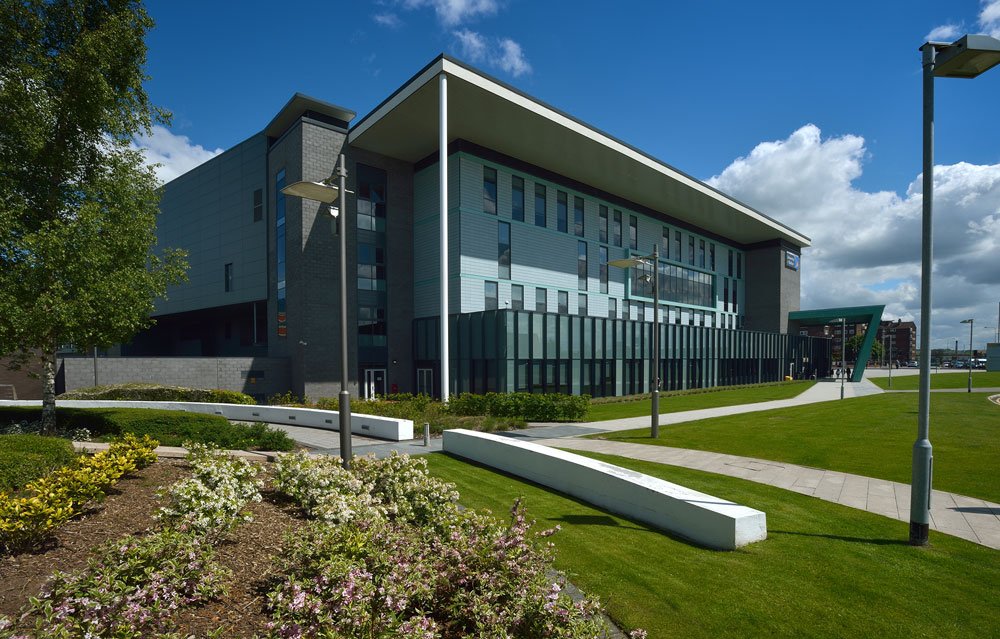
University of Greater Manchester, United Kingdom
- Degree
- Bachelor's
- Next intake
- September 2027

Arts & Humanities
University of Greater Manchester, United Kingdom
The University of Bolton's MSc in Social Neuroscience supports you to develop an advanced knowledge of how the brain responds to and makes sense of the social world. Our expert team will also help build your confidence in using neuroscientific research skills (for instance, electrophysiology and eye-tracker experiments).
Duration: 18 months Full-time; also offered: 30 months part-time | Study mode: full-time | Location: Bolton, England, United Kingdom
Modules include Psychological and Social Research: Review, Evaluation and Design; Quantitative Inquiry 1; Quantitative Inquiry 2; Advanced Social and Cognitive Neuroscience; Social Neuroscience Techniques; Social Neuroscience Laboratory Practical; Psychology Dissertation.
Graduates of our MSc Social Neuroscience degree will have a thorough grounding in the neural mechanisms underpinning human social perception, cognition and behaviour. Upon successful completion, you'll possess a range of highly transferable skills, such as oral and written communication, and the management and analysis of complex data sets. This MSc is designed to prepare you for a potential career in research.
You should have an upper second class (2.1) honours degree (or above) in Psychology, which is accredited by the British Psychology Society for Graduate Basis for Registration (GBR) of the British Psychological Society (BPS). If you have a lower second class (2:2) honours degree in Psychology, you may be accepted to the programme following a successful interview. We may also ask you to provide a portfolio of your work as part of the application process. We'll also be happy to consider your application if you're a graduate of an alternative but related degree (for instance, neuroscience or biology). We'll require you to attend an interview, and we may ask you to provide a portfolio of your work to help determine your suitability for the course. Relevant work experience can also provide an advantage. We'll consider applications where appropriate work experience can be demonstrated in lieu of, or in addition to, the published academic qualifications in line with the University’s Recognition of Prior Experiential Learning (RPEL) procedures.
Duration: 18 months Full-time; also offered: 30 months part-time
Apply through the official page: https://greatermanchester.ac.uk/join-us/how-to-apply-and-admissions
Arts & Humanities
University of Greater Manchester, United Kingdom
Arts & Humanities
University of Greater Manchester, United Kingdom
Arts & Humanities
University of Greater Manchester, United Kingdom
Arts & Humanities
University of Greater Manchester, United Kingdom
Arts & Humanities
University of Greater Manchester, United Kingdom
Arts & Humanities
University of Greater Manchester, United Kingdom
Arts & Humanities
University of Greater Manchester, United Kingdom
Arts & Humanities
University of Greater Manchester, United Kingdom

Book a free consultation with our expert counsellors and take the first step towards your dream university.
Copyrights © 2026 StudyMapped. All rights reserved.

Enter your credentials to continue.
Join us and start your study abroad journey.