
University in Germany
Göttingen, Niedersachsen, Germany
University profile
The Georg-August-Universität Göttingen, known as the Georgia Augusta, was founded in 1737 in the spirit of the Enlightenment and is a foundation university under public law (Stiftung Öffentlichen Rechts). Its motto, In publica commoda (for the good of all), appears on its foundation medal. It describes itself as an internationally renowned research university whose faculties are closely linked with the Göttingen Campus, home to Max Planck Institutes, the German Primate Center and the German Aerospace Center.
Teaching and research are organised in 12 faculties plus the University Medical Center Göttingen (UMG): Agricultural Sciences; Biology and Psychology; Chemistry; Forest Sciences and Forest Ecology; Geoscience and Geography; Mathematics and Computer Science; Physics; Law; Social Sciences; Business and Economics; Humanities; and Theology. More than 200 degree programmes are offered, including one-subject and two-subject Bachelor degrees, State Examination courses (Law, Medicine, Dentistry, Theology) and over 100 Master programmes.
Research strengths include molecular foundations of cellular networks, sustainable land use and biodiversity, cognitive processes, energetic processes in matter, structures and transformations of texts and objects, and global and local dynamics and sustainable development, with data science as a cross-cutting theme. Interdisciplinary centres include the Centre for Biodiversity and Sustainable Land Use (CBL), the Campus Institute Data Science (CIDAS), the Göttingen Campus Institute for Dynamics of Biological Networks and the Göttingen Centre for Molecular Biosciences (GZMB).
Göttingen is a university town of almost 120,000 inhabitants with about 31,000 students, so students make up around a quarter of the population. Student life includes the Central Facility for Sports and Health, three theatres and four cinemas, the Kulturticket for free or reduced event admission, and Foyer International, a free social programme for international students running since 1957. The Studierendenwerk Göttingen has approximately 4,500 places in halls of residence, enough for about 15 percent of students.
The university has around 4,500 students from 138 countries, and international students make up 16 percent of the student body. It has around 280 partner universities for exchange and more than fifty English-language Master's and PhD programmes. Doctoral candidates join one of four graduate schools (GAUSS, GGG, GSGG and GFA).
There are no tuition fees for most programmes; students pay semester fees covering administration, student body, Studierendenwerk contributions and the semester ticket and Kulturticket. For winter semester 2026/27 the semester fee is 484.18 euros, and for summer semester 2026 it is 466.40 euros. This is a semester contribution, not tuition. Long-term students who exceed the standard period by six semesters or more pay an additional 500 euros. Some programmes have their own fee schedule, for example Sustainable International Agriculture (M.Sc.) with a different fee for students on leave of absence. See Semester fees.
Awarded to gifted and committed students of all nationalities regardless of income. All enrolled students may apply except doctoral and exchange students. Funding runs from 1 October to 30 September of the following year, and applications are made online with documents uploaded through a portal. Selection considers achievements, social commitment and overcoming barriers; sponsors may offer non-material support. The next application period runs from 1 September 2026 to 30 September 2027. See Germany Scholarship.
A one-off grant of 500 euros for exceptionally gifted students from educationally disadvantaged backgrounds, first-generation students and students who had to overcome migration-related difficulties. Enrolled students may apply (doctoral students are not eligible), through an online application and uploaded documents with no motivation or recommendation letters required. See Lower Saxony scholarship.
The university offers a DAAD Award for outstanding achievements by international students and, new in 2026, scholarships for exceptional commitment of international students. Academic degree bursaries (STIBA, funded by DAAD) provide partial scholarships to international students about to complete their studies, and PROMOS supports study trips and internships abroad. Emergency grants and need-based grants from the Universitätsbund Göttingen e.V. are available for students in financial difficulty. Doctoral candidates should contact the graduate schools for funding. See Scholarships and Funding for International Students and Financing university studies.
BAföG advice and financial aid are provided through the Studierendenwerk, and AStA offers an interest-free instant loan of 100 euros. Liaison lecturers at Göttingen advise on scholarships from foundations such as the German Academic Scholarship Foundation, Konrad Adenauer, Friedrich Ebert, Heinrich Böll and others. Visa applicants must show sufficient financial resources.
Browse the scholarships listed for University of Göttingen and check each award’s eligibility.
View scholarships for University of Göttingen →Applicants need a university entrance qualification valid in Germany (Hochschulzugangsberechtigung), checked by the International Student Office against the evaluation guidelines of the Central Office for Foreign Education (anabin database). Accepted evidence includes a school-leaving certificate with transcript, university entrance examinations, the Studienkolleg assessment examination (Feststellungsprüfung), prior study periods or a final university degree. If the qualification is not sufficient for direct entry, applicants may be invited to the entrance examination for the Studienkolleg Hannover, a one-year preparatory course ending in the Feststellungsprüfung, after which they reapply for direct admission. Applications are made online through the university's own portal, not uni-assist, with documents uploaded to the portal and not sent by post or email. Up to three admission-restricted programmes can be applied for per semester. Certified translations are required for documents not in German, English or French. A fee of 65 euros for evaluating foreign entrance qualifications is charged per application semester (Master and doctoral applicants are exempt).
Non-EU/EEA applicants, first subject semester: restricted-admission programmes 1 March to 30 April (winter semester) and 1 September to 31 October (summer semester); open-admission programmes 1 March to 30 September (winter) and 1 September to 31 March (summer); Studienkolleg first semester 1 March to 30 April (winter) and 1 September to 31 October (summer). Higher subject semesters: restricted admission 1 June to 15 July (winter) and 1 December to 15 January (summer); open admission 1 June to 30 September (winter) and 1 December to 31 March (summer). EU/EEA applicants to restricted-admission programmes apply 1 June to 15 July for winter and 1 December to 15 January for summer. Medicine and dentistry applications go through Hochschulstart (until 31 May or 15 July for winter, depending on when the entrance entitlement was obtained, and until 15 January for summer).
German-taught undergraduate programmes require at least A1 German at application, and applicants for first-semester Medicine and Dentistry need DSH-2 or an equivalent. At enrolment, Bachelor students must show DSH-2 or an equivalent certificate (DSH-3 for Psychology). The DSH exam can be taken at Göttingen, and DSH certificates from other universities are recognised if their regulations are registered with the German Rectors' Conference. Only two undergraduate programmes are fully taught in English; some English-language programmes also require German, for example Sustainable Development Studies (at least C1) and World Literature (at least B2). English requirements for English-taught Master programmes are set by each programme.
Master applications go directly to the faculty that offers the programme, and procedures and deadlines differ by faculty and programme. A completed undergraduate degree, such as a Bachelor, is the basic requirement. Language requirements vary: some programmes require proof of German, others excellent English.
Doctoral study follows the structured model, and every doctoral candidate becomes a member of a graduate school (GAUSS, GGG, GSGG or GFA). Language requirements are set in the doctoral and examination regulations, and scholarship providers expect German at B2 or C1 level.
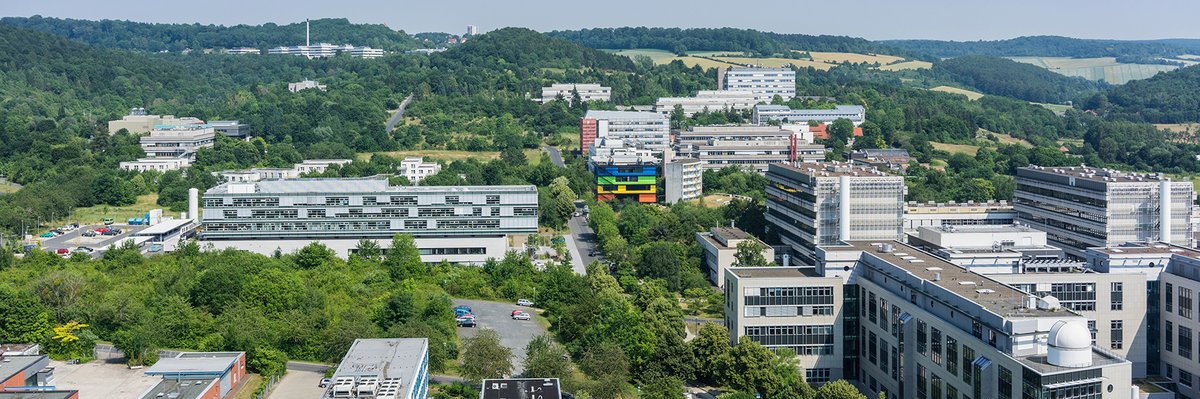
The university is based in Göttingen, Lower Saxony, with its central address at Wilhelmsplatz 1 (Aula), 37073 Göttingen. Its faculties and institutes sit within the wider Göttingen Campus, which also hosts the Max Planck Institutes, the German Primate Center and the German Aerospace Center.
Study programmes offered at University of Göttingen.
Experiences shared by students of University of Göttingen.
Studied here? Share your experience to help other applicants.

Book a free consultation with our expert counsellors and take the first step towards your dream university.
Copyrights © 2026 StudyMapped. All rights reserved.

Enter your credentials to continue.
Join us and start your study abroad journey.


