
University in United Kingdom
Carlisle, England, United Kingdom
University profile
The University of Cumbria is a public university in the North West of England, created on 1 August 2007 from the merger of St Martin's College, Cumbria Institute of the Arts and the University of Central Lancashire's Cumbria sites. It describes itself as a university for and from Cumbria and its localities, with people, place and partnership at its heart. It is a member of the Cathedrals Group of universities, and its Chancellor is the Archbishop of York, Stephen Cottrell.
Teaching takes place across seven campuses: Carlisle Fusehill Street and Carlisle Brampton Road, Lancaster, Ambleside in the Lake District National Park, Barrow-in-Furness, Workington (the Energus building) and London (East India Dock Road). The Ambleside campus sits within the Lake District, a UNESCO World Heritage Site, and is the base for forestry, conservation and outdoor studies.
Courses are organised in five academic institutes:
Distinctive strengths include teacher education (with a long record in QTS training and PGCEs), nursing, midwifery and allied health professions, policing, outdoor studies, the National School of Forestry and the Centre for Wildlife Conservation at Ambleside, and the Institute for Leadership and Sustainability (IFLAS). In partnership with Imperial College London, the university hosts the Pears Cumbria School of Medicine in Carlisle, a four-year graduate-entry medical programme leading to an Imperial degree. The university offers a growing range of degree apprenticeships with employers including the NHS, BAE Systems, Sellafield Ltd and police forces, and around 10 further education college partners deliver University of Cumbria degrees to over 3,500 students.
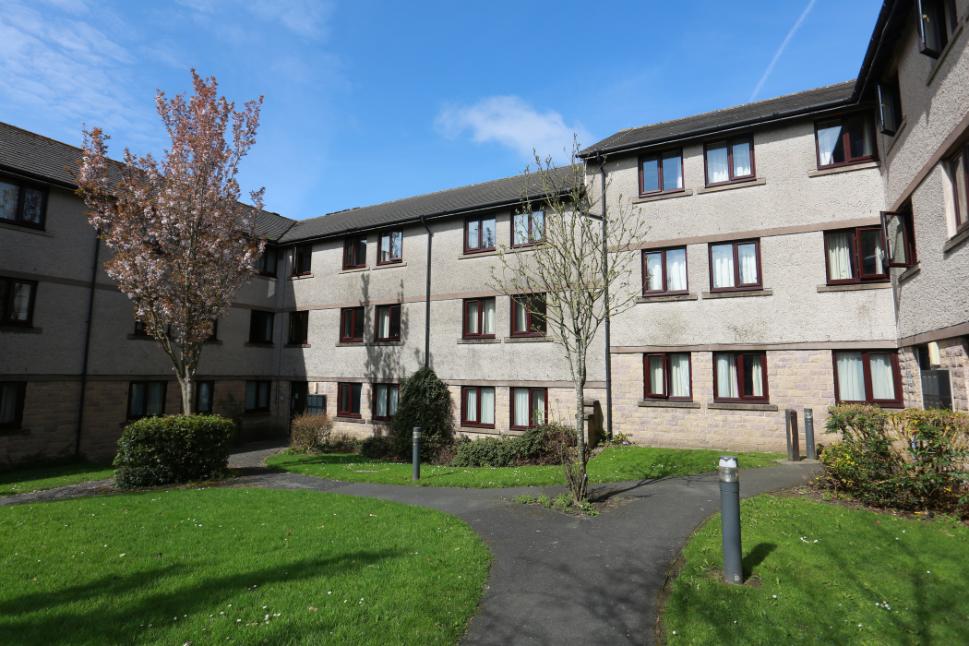
Halls of residence are available in Carlisle (Fusehill Street, Brampton Road and Denton Holme), Lancaster, Ambleside and Barrow-in-Furness, with halls guaranteed for first-choice applicants; London students find housing through StudentPad. Each main campus has a Students' Union presence, cafés and study spaces, and the Carlisle and Lancaster campuses have sports centres. International students are supported by a dedicated International Team, pre-sessional English courses and the University of Cumbria International College.
The university holds taught degree awarding powers, approved by the Privy Council in 2006, and was rated Silver in the Teaching Excellence Framework 2023. It took part in REF2014 and REF2021 and the Research Assessment Exercise 2008.
Home students (full-time, 2026/27): bachelor's degrees, DipHE/CertHE and foundation degrees £9,790 a year; integrated foundation year £5,760 (classroom-based) or £9,790 (non-classroom-based); sandwich or placement year £1,955. For 2025/26 the bachelor's fee was £9,535.
International students: bachelor's degrees £14,900 (2025/26) and £16,000 (2026/27); Social Work and pre-registration health degrees £16,900 and £17,800; Masters (MA/MSc) £14,900 and £16,000; MBA and pre-registration health Masters £16,900 and £17,500; PGCE with QTS £14,900 and £16,000. Fees can be paid in full at registration or in five instalments. International fees | Undergraduate fees
Pre-registration health courses (except under the Health and Wellbeing Scholarship), distance and blended learning, and research degrees are excluded. The university also points students to external awards such as Chevening, Snowdon, Marshall, GET and the CTBI Hardship Fund. International scholarships
Other support includes the Student Opportunity Fund, the Sanctuary Scholarship, Turing Scheme placement funding, teaching bursaries, and the NHS Learning Support Fund and Social Work Bursary. Scholarships and bursaries
Cumbria International UG Scholarship →
Cumbria Business and Tourism Scholarship →
Cumbria Law Excellence Scholarship →
Browse the scholarships listed for University of Cumbria and check each award’s eligibility.
View scholarships for University of Cumbria →All full-time undergraduate applications are made through UCAS, where applicants can choose up to five courses and submit a personal statement and academic reference. For September entry, applications should reach UCAS by the Equal Consideration deadline towards the end of January; later applications are still accepted while courses have places. Decisions are usually made within three weeks. Some courses, including health, teaching and arts, require an interview or portfolio, and professional courses in teaching, healthcare and policing always include an interview.
Entry requirements are expressed in UCAS Tariff points, with some courses asking for specific subjects. Where a range is shown, the typical offer is at the top of the range. Example equivalents:
A minimum of two A levels or equivalent is needed (one for Integrated Foundation Years). IB, Scottish Highers and Advanced Highers, Irish Leaving Certificate, Welsh and European Baccalaureates, CACHE and Open University credits are also accepted, and IB HL Grade 5 may be required in specific subjects. Many courses ask for GCSEs at grade C/4 or above, and some require DBS clearance or fitness to practise.
Applicants from POLAR4 quintile 1 postcodes, care leavers, estranged students, young carers, those who received free school meals, and those who complete the Masterclasses, Summer Schools or the Future Teachers Scheme receive offers at the bottom of the tariff range. Applicants over 21 with at least three years of relevant work experience who do not meet the standard requirements may be assessed through interview and written work, and Integrated Foundation Years are available. Recognition of Prior Learning can exempt students from part of a programme.
International students apply directly online for undergraduate and postgraduate courses (PGCE applicants use the Department for Education service). The steps are: choose a course, check country-specific entry requirements, apply, receive an offer, meet conditions and pay the deposit, receive a Confirmation of Acceptance for Studies (CAS), then apply for the Student visa and accommodation. New international students must book accommodation before travelling and live within one hour of their campus. The University of Cumbria International College offers pathway study.
The general requirement is IELTS Academic (or the university's own Password English Test) 6.0 overall with 5.5 in each skill for undergraduate study, and 6.5 overall with 5.5 in each skill for taught postgraduate study. Other accepted tests include TOEFL iBT, LanguageCert Academic, Cambridge English, Oxford Test of English, Trinity ISE and Oxford ELLT, valid for two years. Higher levels apply to some programmes: IELTS 7.0 with 6.5 in each skill for Physiotherapy, Diagnostic Radiography, MA Social Work and MSc Advanced Clinical Practice; 7.0 with no skill below 7.0 for Biomedical Science, Midwifery, BA Social Work, MSc Nursing and Medical Imaging (Ultrasound); 7.0 with 6.5 for Occupational Therapy; and 6.5 with 6.0 in each skill for PGCE and BSc Nursing. Nationals of majority English-speaking countries listed by UKVI are exempt, and online pre-sessional English courses are available.
Masters degrees and PGCEs usually require a degree, which for some programmes must be in a relevant subject or at a minimum classification. Most postgraduate course pages have an online Apply button, and professional, art and performance courses include an interview, audition or portfolio. Postgraduate research degrees (PhD, MRes, DBA and professional doctorates) are applied for through the Graduate School; enquiries go to Research Student Admissions ([email protected]).
Study programmes offered at University of Cumbria.
Experiences shared by students of University of Cumbria.
Studied here? Share your experience to help other applicants.

Book a free consultation with our expert counsellors and take the first step towards your dream university.
Copyrights © 2026 StudyMapped. All rights reserved.

Enter your credentials to continue.
Join us and start your study abroad journey.


