

University in United States
Santa Cruz, CA, United States
University profile
The University of California, Santa Cruz (UC Santa Cruz, UCSC) is a public research university in Santa Cruz, California, and part of the University of California system. It opened in 1965 and is described by the campus as an institution that leads at the intersection of innovation, social justice and sustainability. It is a member of the Association of American Universities and is designated both a Hispanic-Serving Institution and an Asian American and Native American Pacific Islander-Serving Institution.
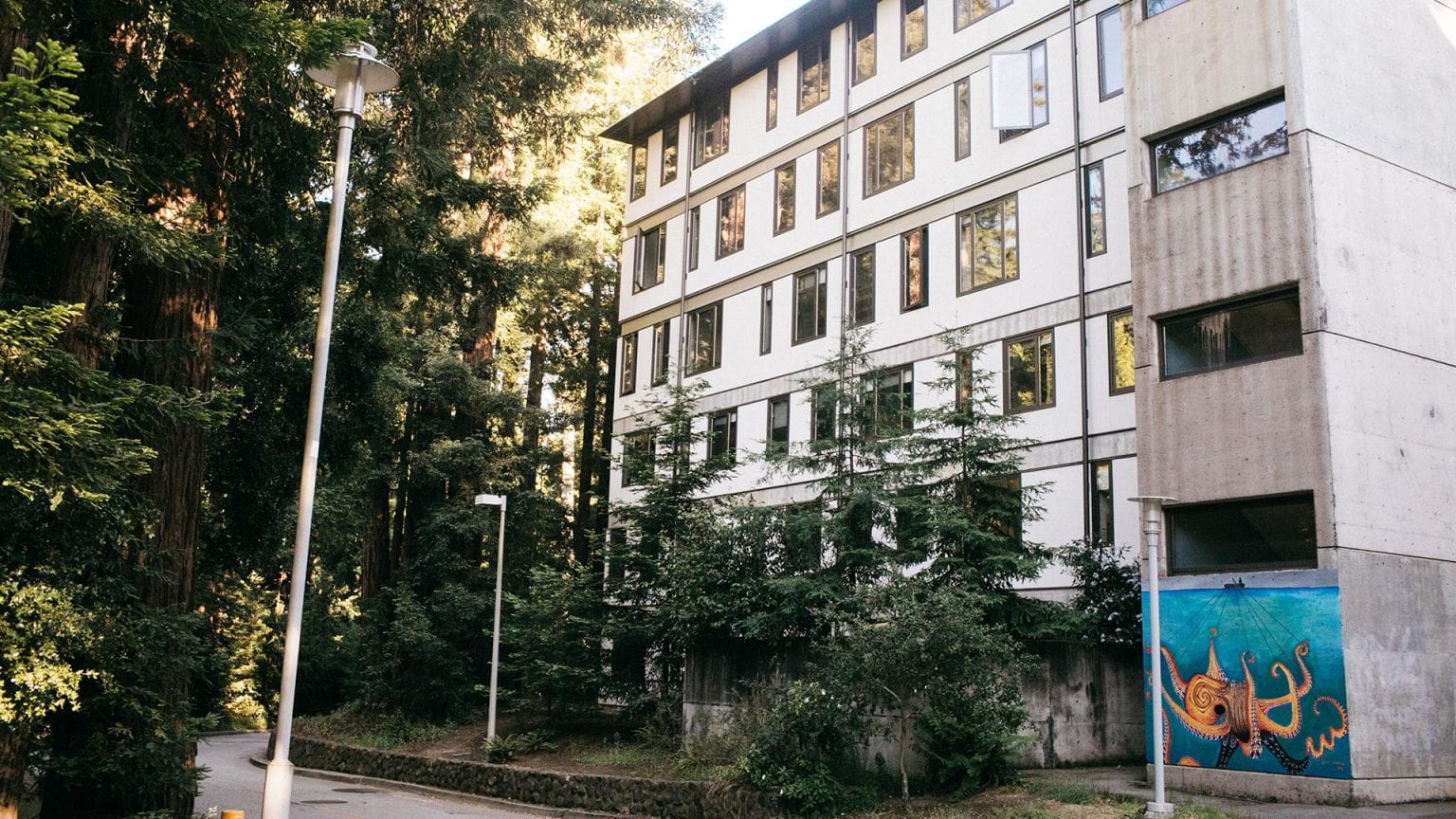
The main campus is a 2,000-acre residential site in and around a redwood forest overlooking Monterey Bay. UCSC also operates the Westside Research Park and the Coastal Science Campus at the edge of the Monterey Bay National Marine Sanctuary, and a Silicon Valley Campus that is home to UCSC Silicon Valley Extension and three professional master's programmes. It manages seven natural reserves used for teaching and research.
UCSC offers 74 undergraduate majors and 66 graduate programmes, organised through the Arts, Humanities, Social Sciences and Physical & Biological Sciences divisions, the Baskin School of Engineering and Graduate Studies. Enrolment for 2025-26 is given as 18,194 undergraduates and 1,946 graduate students. Fields in which the campus is known include agroecology, astronomy and astrophysics, cyberphysical systems, ecology and climate change, games and playable media, genomics and RNA biology, linguistics, and marine science and policy.
Every undergraduate belongs to one of ten residential colleges, which serve as living and learning communities with their own themes, advising and events: Cowell, Stevenson, Crown, Merrill, Porter, Kresge, Oakes, Rachel Carson, College Nine and John R. Lewis. Intercollegiate teams compete at the NCAA Division III level, where athletic scholarships are not awarded; the mascot is Sammy the Slug.
International students (3.3% of undergraduates in fall 2025) are supported by International Student Services and Programming, which advises F-1 and J-1 students on visas and immigration and runs orientation and events. UCSC does not partner with agents for undergraduate recruitment. Undergraduates and graduates are encouraged to take part in research; 81% report participating in research, a creative project, an internship or service learning.
UC Santa Cruz awards over $26 million in undergraduate scholarships each year; many are awarded automatically with the UC application plus the FAFSA or California Dream Act Application.
Students on F-1, F-2, J-1, J-2, G, H and other temporary visas are typically not eligible for federal, state or university need-based aid. They may be considered for the Dean's Award and Regents Scholarship, and for private loans with a qualified U.S. co-signer. Non-resident tuition applies; the 2026-27 undergraduate budget lists non-resident tuition of $39,270 in addition to $17,439 tuition and fees for entering students. See financial aid for international students.
The Blue and Gold Opportunity Plan covers UC tuition for most California families earning up to $100,000; Cal Grants, UC Santa Cruz Grants and federal Pell Grants are available subject to eligibility; FAFSA or Dream Application deadline is March 2.
Support for graduate students includes Regents and Chancellor's Fellowships, the Eugene Cota-Robles Fellowship, tuition fellowships for non-resident students, and multi-year funding packages for MFA and PhD admits. Scholarships at UC Santa Cruz
UC Santa Cruz Undergraduate Dean's Award →
UC Santa Cruz Regents Scholarship →
Browse the scholarships listed for University of California, Santa Cruz and check each award’s eligibility.
View scholarships for University of California, Santa Cruz →Applicants complete the University of California application, which is common to all UC campuses and also serves as the scholarship application. Minimum qualifications are 15 college-preparatory ("a-g") courses, at least 11 completed before senior year, with a GPA of 3.00 or better for California residents and 3.40 or better for non-residents, no grade lower than C, and the Entry-Level Writing Requirement. UCSC does not use SAT or ACT scores in admission review (test-blind); scores may still be used to satisfy area b of the a-g requirements and the Entry Level Writing requirement. Each application is read comprehensively against 13 faculty-approved criteria. California residents in the top 9 percent of state high-school graduates are guaranteed a space at a UC campus if space is available.
The application fee is $80 per campus for U.S. students and $95 per campus for international applicants; fee waivers are available for qualifying family incomes.
Junior-level transfers from California community colleges receive priority; lower-division transfers, second-baccalaureate applicants and transfers from other colleges are also considered. Screening majors have major-preparation criteria. The Transfer Admission Guarantee (TAG) gives guaranteed admission from a California community college when specific requirements are met; the TAG filing period runs September 1 to September 30, 2026. Transfer Academic Update deadline: January 31, 2027.
International first-year applicants complete 15 year-long academic courses with a 3.40 GPA: 2 years of history/social science, 4 years of composition and literature in the language of instruction, 3 years of mathematics, 2 years of laboratory science, 2 years of a second language, 1 year of visual and performing arts and 1 additional course, plus any country-specific requirements. Applicants from schools where the language of instruction is not English must show English proficiency, and must obtain the necessary visa.
Applicants hold a bachelor's degree or equivalent from an accredited university and a cumulative GPA of 3.0 (4-point scale) in the last two years of undergraduate study. A three-year degree must be accompanied by a postgraduate diploma, master's or higher degree. Applicants apply to one programme per cycle through the online graduate application (opens October 5, 2026); deadlines vary by programme, mostly between November 19 and April 15. GRE requirements vary by programme. English: TOEFL iBT minimum of 83 (pre-2026 scale) or 4.0 on the 2026 scale, rising to 89 or 4.5 for programmes such as Computer Science and Engineering, Electrical and Computer Engineering, Chemistry and Biochemistry, Statistical Science and Applied Mathematics; IELTS Academic minimum overall 7. Teaching assistants need TOEFL Speaking 26 (5.0 on the new scale) or IELTS Speaking 8. Admitted applicants with non-U.S. degrees submit a course-by-course WES ICAP evaluation.
Study programmes offered at University of California, Santa Cruz.
Experiences shared by students of University of California, Santa Cruz.
Studied here? Share your experience to help other applicants.

Book a free consultation with our expert counsellors and take the first step towards your dream university.
Copyrights © 2026 StudyMapped. All rights reserved.

Enter your credentials to continue.
Join us and start your study abroad journey.


