

University in United Kingdom
London, England, United Kingdom
University profile
University College London (UCL) was founded in 1826 as London's first university, with a founding vision of making higher education accessible to all. It was the first university in the UK to admit students regardless of religious faith and the first UK institution to formally admit women to degree study. It has held a Royal Charter since 1836 and has awarded its own degrees since 2005. Today UCL has around 51,000 students and 18,000 staff, with students from more than 150 nationalities.
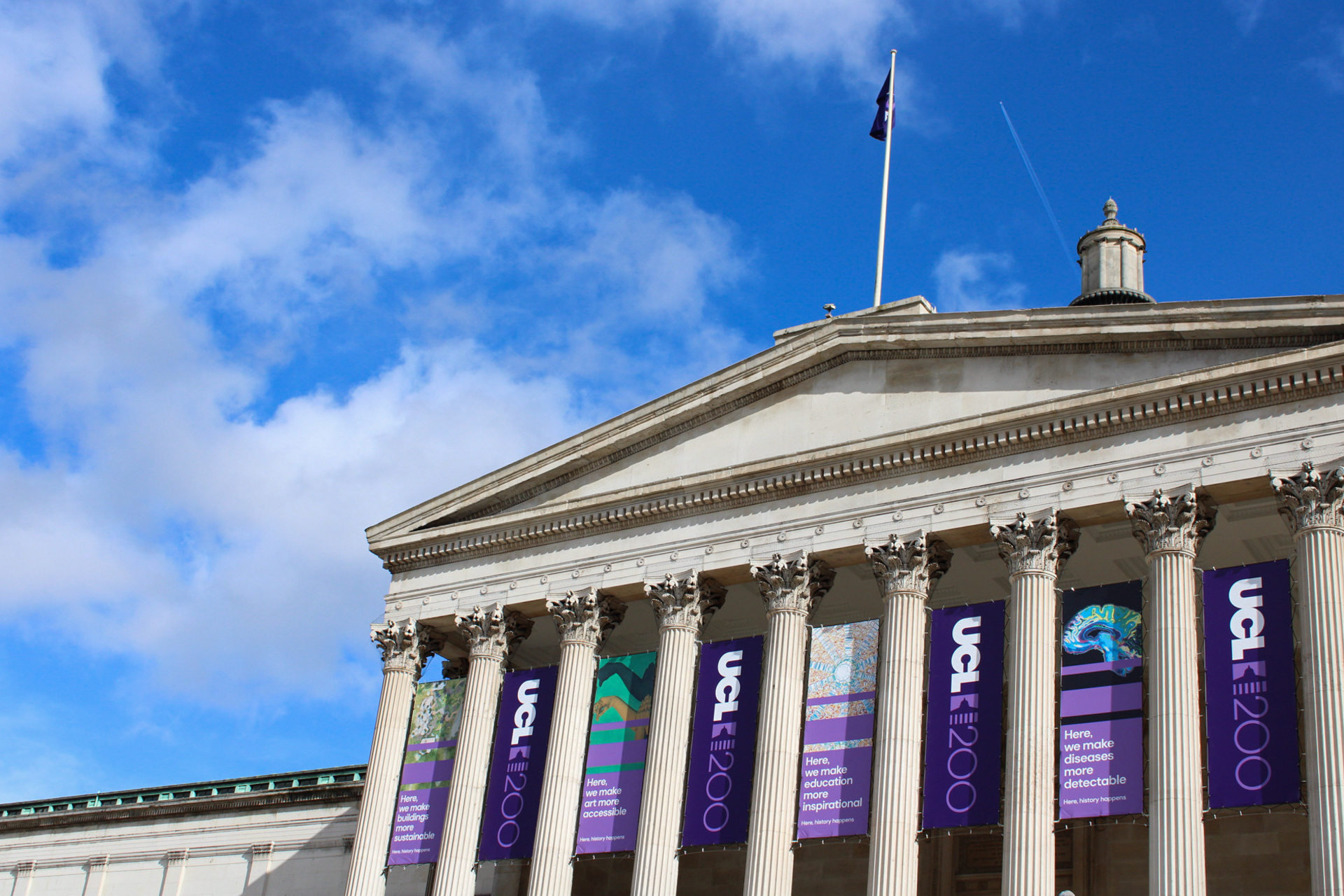
The historic home of the university is the Bloomsbury campus in central London, around Gower Street and the Wilkins Building, opposite Euston and St Pancras stations and within the Knowledge Quarter. UCL East, at Queen Elizabeth Olympic Park in Stratford, opened in 2022 as the university's largest expansion in nearly 200 years, and the UCL School of Management occupies four levels of One Canada Square at Canary Wharf. The estate comprises more than 200 buildings.
Teaching and research are organised in 11 faculties: Arts & Humanities, The Bartlett (Built Environment), Brain Sciences, Engineering Sciences, the UCL Institute of Education, Laws, Life Sciences, Mathematical & Physical Sciences, Medical Sciences, Population Health Sciences and Social & Historical Sciences. Together they offer more than 400 undergraduate and more than 700 postgraduate programmes.
Notable strengths include medicine (taught since 1834, with University College Hospital as UCL's own founding teaching hospital), education, architecture through The Bartlett, fine art through the Slade School of Fine Art, and neuroscience. UCL is a partner in the Francis Crick Institute, hosts the national headquarters of the UK Dementia Research Institute and runs the Grant Museum of Zoology, the Petrie Museum of Egyptian and Sudanese Archaeology, UCL Art Museum and the Bloomsbury Theatre. Thirty-three Nobel laureates have been among its alumni and current and former staff.
Student life centres on Students' Union UCL, which hosts over 450 clubs and societies. UCL Accommodation runs halls in central London and Stratford, with rooms graded by zone and band and rent covering Wi-Fi, utilities and basic contents insurance; students can also live in University of London intercollegiate halls. About half of the student body is international, and international applicants without a qualification accepted for direct entry can take the Undergraduate Preparatory Certificates, UCL's international foundation year.
UK (Home) undergraduate fees for 2027-28 entry are £10,050 for the first year (£9,790 for 2026-27 entry, subject to parliamentary approval); fees for later years may increase. Overseas undergraduate fees vary by course and are listed on each course page. Most overseas undergraduates have a cohort guarantee, so their fee does not rise during the course; MBBS Medicine and intercalated years are excluded and may rise by no more than RPI-X each year. Accommodation is charged separately. Fee schedules
Non-repayable bursary for Home fee status students domiciled in the UK with a household income of £42,875 or less, paid in each year of study. For 2026/27 starters: £3,000 for household income up to £16,000; £2,000 for £16,001 to £25,000; £1,500 for £25,001 to £37,000; £1,000 for £37,001 to £42,875. There is no separate application: students are assessed automatically when they share household income data in their Student Finance application. Recipients can also borrow a laptop for their whole programme. UCL Undergraduate Bursary
£1,000 a year for UK undergraduates who are estranged from their family or who live or have lived in care, with an optional £200 advance before starting the first year. Estranged Student Bursary | Care Leaver Bursary
£10,000 for one year (split over two years for part-time or two-year programmes) for Home fee status students ordinarily resident in the UK or Ireland with a household income of £42,875 or less, applying for a standalone Master's degree. Up to 200 awards for 2026/27; the 2026 deadline was 5pm BST, 25 June 2026. UCL Master's Bursary
£15,000 for one year for Overseas fee status students from lower income backgrounds taking a full-time, in-person Master's degree, applied first to tuition fees with the balance paid towards living costs. Up to 85 awards for 2026/27, five ring-fenced for students from India and one for a student from Japan; the 2026 deadline was 5pm BST, 7 May 2026. UCL Global Master's Scholarship
UCL Humanitarian Scholarships support Master's students at serious risk or displaced by armed conflict, and the UCL East London Scholarship funds fees and living costs for east Londoners on UCL East Master's programmes and selected School of Management programmes. Current students in unexpected hardship can apply to the Financial Assistance Fund, and short-term loans of up to £250 are available when funding is delayed. UCL participates in the US Federal Direct Loan Program, and Home students can apply for Student Finance loans and Disabled Students' Allowances. A scholarships finder lists further departmental and subject awards.
UCL Global Undergraduate Scholarship →
UCL Global Master's Scholarship →
UCL Research Excellence Scholarship (UCL-RES) →
Browse the scholarships listed for University College London (UCL) and check each award’s eligibility.
View scholarships for University College London (UCL) →All full-time undergraduate applications go through UCAS (institution code UCL U80); direct applications are not accepted. For 2027 entry the equal consideration deadline for most courses is 18:00 UK time on 13 January 2027, and for Medicine 18:00 UK time on 15 October 2026. Each UCL course counts as one of the five UCAS choices. All courses start in September and are taught in person; there is no January intake. Most courses admit only to Year 1, a small number consider Year 2 entry, and deferred entry for one year is possible except for BA and BFA Fine Art.
UCL does not use UCAS tariff points. Standard offers are based on three A levels and range from A*A*A to ABB depending on the course, with at least two A levels normally taken from the preferred subjects list. The full International Baccalaureate Diploma is accepted, with equivalences of 40 points including 20 in three higher level subjects (A*A*A), 39 including 19 (A*AA), 38 including 18 (AAA), 36 including 17 (AAB) and 34 including 16 (ABB), and at least 5 in each higher level subject. Scottish applicants need three Advanced Highers, or two Advanced Highers and three Highers in five distinct subjects; Highers alone are not accepted. Cambridge Pre-U, BTEC Level 3 National Extended Diplomas (not on all courses), Access to HE Diplomas (60 credits with at least 45 at level 3, on some courses) and selected T levels and UAL Extended Diplomas for named courses are also considered. The Welsh Baccalaureate is not accepted.
The Access UCL scheme gives lower contextual offers to UK-domiciled applicants from UK state schools who live in an eligible postcode, were registered for Free School Meals, are care experienced or are estranged from their parents. The Engineering Foundation Year (Year 0 on UCAS) is for UK fee-paying students from groups underrepresented at UCL and requires 100 UCAS tariff points from level 3 qualifications.
Medicine applicants must take the UCAT in the year of application, and applicants to Law courses must sit the LNAT. A number of courses, including Law, Economics, Mathematics, Statistics, Electronic and Electrical Engineering and Medicine, do not accept resits.
International applicants apply through UCAS by the same deadlines. Equivalent requirements for national qualifications are given by country on each course page. Students whose school qualification is not accepted for direct entry can take the Undergraduate Preparatory Certificates (UPC), UCL's international foundation year, applied for directly rather than through UCAS. International foundation programmes from King's College London, Warwick, Queen Mary, SOAS, Royal Holloway and Birkbeck are also considered at stated minimum marks. Most students coming for more than six months need a Student visa, and applicants to certain MSci courses in Biochemical Engineering, Chemical Engineering, Physics or Mechanical Engineering need ATAS clearance unless exempt by nationality.
Applicants who are not nationals of a majority English-speaking country must show recent proof of English proficiency at the level set for their course. IELTS Academic is the preferred test: Level 1 is 6.5 overall with 6.0 in each component, Level 2 is 7.0 with 6.5 in each component, Level 4 is 7.5 with 7.0 in each component and Level 5 is 8.0 with 8.0 in each component. PTE Academic Level 1 is 70 overall with 62 in each skill and Level 2 is 76 with 70 in each skill. TOEFL iBT is also accepted, with new score requirements for tests taken from 21 January 2026.
Master's courses (except MRes), Postgraduate Diplomas and Certificates normally require a first or second-class UK Bachelor's degree in a relevant subject or an overseas equivalent; MRes courses require a first or upper second-class degree. A few courses require the GMAT or GRE. Applicants may apply to at most two taught courses per cycle, online, with a transcript, personal statement and references as required. Most courses charge a non-refundable application fee, deadlines are at 5pm UK time and often differ for applicants who need a visa, and admissions run on a rolling basis.
MPhil, PhD and EngD applicants normally need a first or upper second-class Bachelor's degree or a recognised taught Master's degree. Applicants should contact the department to confirm a suitable supervisor before applying and submit a research proposal with the online application. Where a course has no deadline, applying at least four months before the intended start date is recommended. Student visa holders may study full time only.
Libraries: UCL Library Services runs several libraries and learning spaces across London covering specialist subjects, including the Main Library, the Science Library and the School of Pharmacy Library, with membership open to some external users.
Residences: UCL halls in central London and Stratford offer single, double, twin and family rooms; rent includes Wi-Fi, utilities, basic contents insurance and cleaning of communal areas. Students under 18 can only book at Ramsay Hall, Ian Baker House or James Lighthill House. Intercollegiate halls run by the University of London are also available.
Study programmes offered at University College London (UCL).
Experiences shared by students of University College London (UCL).
Studied here? Share your experience to help other applicants.

Book a free consultation with our expert counsellors and take the first step towards your dream university.
Copyrights © 2026 StudyMapped. All rights reserved.

Enter your credentials to continue.
Join us and start your study abroad journey.


