

University in France
Montpellier, Occitanie, France
University profile
Université de Montpellier Paul-Valéry (Montpellier 3) is a public French university specialising in letters, arts, languages and the humanities and social sciences. Created in 1970 when the former University of Montpellier, founded in 1289, was reorganised into three universities, it is named after the poet Paul Valéry, born in Sète. In 2025 it became an établissement public expérimental, alongside the École nationale supérieure d'architecture de Montpellier (ENSAM) and the Centre international de musique médiévale (CIMM).
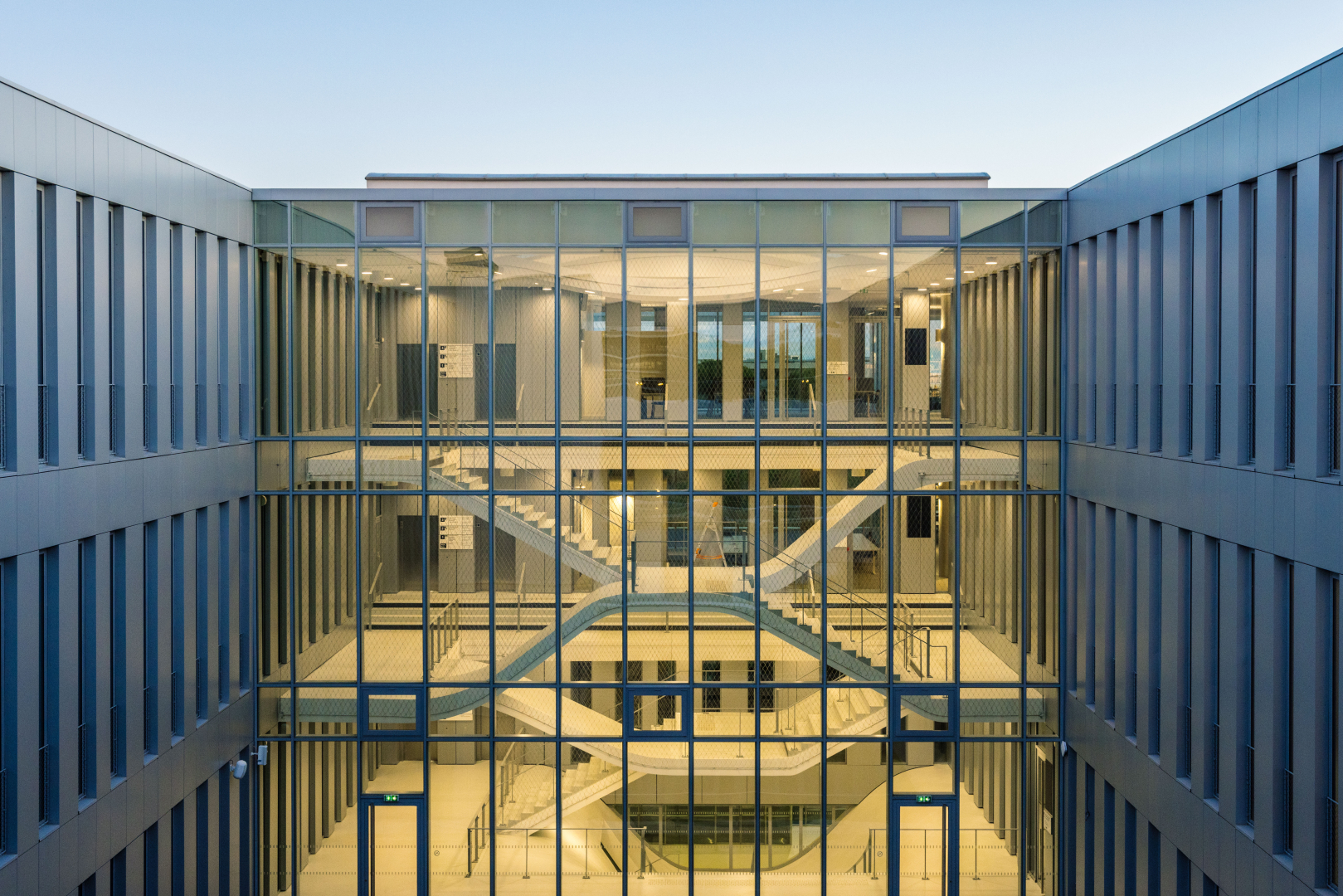
The main campus lies on the Route de Mende in the north of Montpellier, about 20 minutes from the city centre by tram. It extends over 10.5 hectares among Mediterranean planting and works of art, and carries the Ministry of Culture label Architecture contemporaine remarquable. Other sites are Espace Boutonnet, Saint-Charles and Saint-Louis in Montpellier, and the Centre Du-Guesclin in Béziers.
Teaching is organised in six Unités de Formation et de Recherche: UFR 1 (Lettres, arts, philosophie, psychanalyse), UFR 2 (Langues et cultures étrangères et régionales), UFR 3 (Sciences humaines et sciences de l'environnement), UFR 4 (Sciences sociales, des organisations et des institutions), UFR 5 (Sciences du sujet et de la société) and UFR 6 (Éducation et sciences pour les LLASHS). The Institut des Technosciences de l'Information et de la Communication (ITIC) covers information-communication, information and documentation, and language sciences, and the Institut universitaire d'Enseignement du Français langue Étrangère (IEFE) teaches French as a foreign language. The offer includes 22 Licence mentions, 8 professional Licence mentions, 52 Master mentions, 56 doctorates, a BUT, and a large range of distance-learning degrees.
The university has 23,200 students in 2025-26, of whom 4% are enrolled in Béziers, 70% are women and 47% receive grants. Campus life is organised around the Centre Culturel Universitaire, which includes the Théâtre La Vignette (a scène conventionnée d'intérêt national), the Musée des Moulages, the university symphony orchestra and the CIMM, together with the Maison des Étudiants, sports provision and student associations. The Atrium is a learning centre at the campus entrance.
International students make up nearly 20% of enrolment, from 138 nationalities, and about 680 students are enrolled at the IEFE. The university holds the Bienvenue en France label (2025-2030), the Qualité FLE label for the IEFE, the Qualiopi and Certif'Région quality labels for continuing education (2024-2027) and the DD&RS sustainability label (2023-2027). Courses are taught mainly in French.
National registration fees are set by the Ministry: EUR 178 for a Licence and EUR 255 for a Master, plus EUR 120 for distance-learning programmes. Non-EU students liable for differentiated fees pay EUR 2,902 for a Licence and EUR 3,950 for a Master. Students are not liable if they are EU/EEA, Swiss, Andorran or Monegasque nationals, have been fiscally domiciled in France for at least two years, hold a qualifying residence permit (family member of an EU citizen, resident card, long-term EU resident card, 10-year Algerian certificate), or hold refugee or subsidiary protection status. Doctorate, university diploma (DU), ancient-language certificate, summer course and auditor registrations are not subject to differentiated fees. Students already enrolled in 2025-26 with an exemption who re-enrol in the same programme at the next level can keep the exemption. Exemption requests are accepted after administrative registration until 30 November 2026.
The student life and campus contribution (CVEC) is EUR 105 for 2026-2027, paid to CROUS through messervices.etudiant.gouv.fr before online registration.
Options named by the university are the scholarship of the student's home government, the French government scholarship (Campus France), the Eiffel excellence scholarship for Master and doctoral students (Eiffel programme) and CROUS grants on social criteria (CROUS Montpellier). Students holding a CROUS grant on social criteria in an eligible national diploma are entitled to a refund of registration fees (excluding the EUR 120 distance-learning platform fee); 47% of students are grant holders. Applications for CROUS grants and housing are made through the Dossier Social Étudiant.
Erasmus+ study mobility grants (2 to 12 months, from the second year of higher education) and traineeship grants (2 to 12 months; EUR 500 per month in group 1 countries and EUR 450 in group 2 for 2026-2027) are paid according to destination country and distance, with travel allowances from EUR 28 to EUR 1,735 by distance band. Short doctoral mobilities receive EUR 79 per day for 5 to 14 days and EUR 56 per day for 15 to 30 days. See the mobility funding page.
Eiffel Excellence Scholarship (Master and Doctorate) at Université Paul-Valéry Montpellier 3 →
Browse the scholarships listed for Université Paul-Valéry Montpellier 3 and check each award’s eligibility.
View scholarships for Université Paul-Valéry Montpellier 3 →Applicants must show access to higher education in their home country for the chosen programme and prove French at the level the programme requires (TCF-DAP, TCF tout public with the compulsory written expression test, DELF B2, DALF C1 or TEF); some candidates are exempt from the language test. Teaching is in French. Some art programmes are available only through the CampusArt platform.
The route depends on profile. EU/EEA, Swiss, Andorran and Monegasque nationals, French residents abroad, and non-EU holders of a French baccalauréat apply through Parcoursup (2026 main phase 19 January to 12 March 2026; complementary phase 11 June to 10 September 2026). Applicants resident in a Campus France (Études en France / Centre d'Études en France) country, which includes Ghana and Nigeria, apply through that procedure; for entry in 2026 the Licence 1 window ran from 1 October to 15 December 2025. Applicants not resident in France and outside those routes use the Dossier Blanc via the embassy, and those resident in France use the Dossier Vert, on the same October to December window. Distance-learning Licence 1 applications use eCandidat (7 April to 8 July 2026; complementary phase 24 August to 23 September 2026).
Applications are made through eCandidat (main phase 7 April to 8 July 2026; complementary phase 24 August to 3 September 2026 in person) or, for residents of Campus France countries, through the Campus France procedure (1 October 2025 to 15 January 2026), which is mandatory for a student visa. Each programme sets its own calendar in eCandidat.
Applicants need access to higher education in their home country for the chosen programme and French at TCF tout public, DELF B2, DALF C1 or TEF level, or the level the programme requires. Master 1 applications for EU/EEA residents and French students go through Mon Master (17 February to 16 March 2026 main phase; 19 to 25 June 2026 complementary phase). Master 2 applications use eCandidat (7 April to 8 July 2026; complementary phase 24 August to 23 September 2026). Residents of Campus France countries apply through the Campus France procedure, mandatory for the visa. Residents of other countries apply for Master 1 by email to [email protected] between 2 February and 16 March 2026. Admission is decided by a pedagogical commission on the application and academic record.
Doctoral registration and re-registration are handled by the two doctoral schools: ED 58 (Langues, littératures, cultures, civilisations) and ED 60 (Territoires, temps, sociétés et développement).
Non-EU students must obtain a long-stay or short-stay student visa from the French embassy or consulate before departure. The CVEC must be paid before administrative registration. Administrative registration is in person on campus, using an OPI code sent in July or August. A CPGE first-year entry needs no application (guaranteed under the partnership agreement with the lycée).
Applications sent by email are refused unless the procedure says otherwise. Contact the international individual mobility service (SMII): [email protected].
Campus facilities include the Atrium, libraries run with the inter-university library, language laboratories, computer rooms, health and social services (SSE/SUMPPS), a disability service (Handi-Études) and sports provision (SUAPS).
Experiences shared by students of Université Paul-Valéry Montpellier 3.
Studied here? Share your experience to help other applicants.

Book a free consultation with our expert counsellors and take the first step towards your dream university.
Copyrights © 2026 StudyMapped. All rights reserved.

Enter your credentials to continue.
Join us and start your study abroad journey.


