


Engineering
BUT Génie industriel et maintenance (GIM)
Université Jean Monnet Saint-Étienne, France
- Degree
- Bachelor's

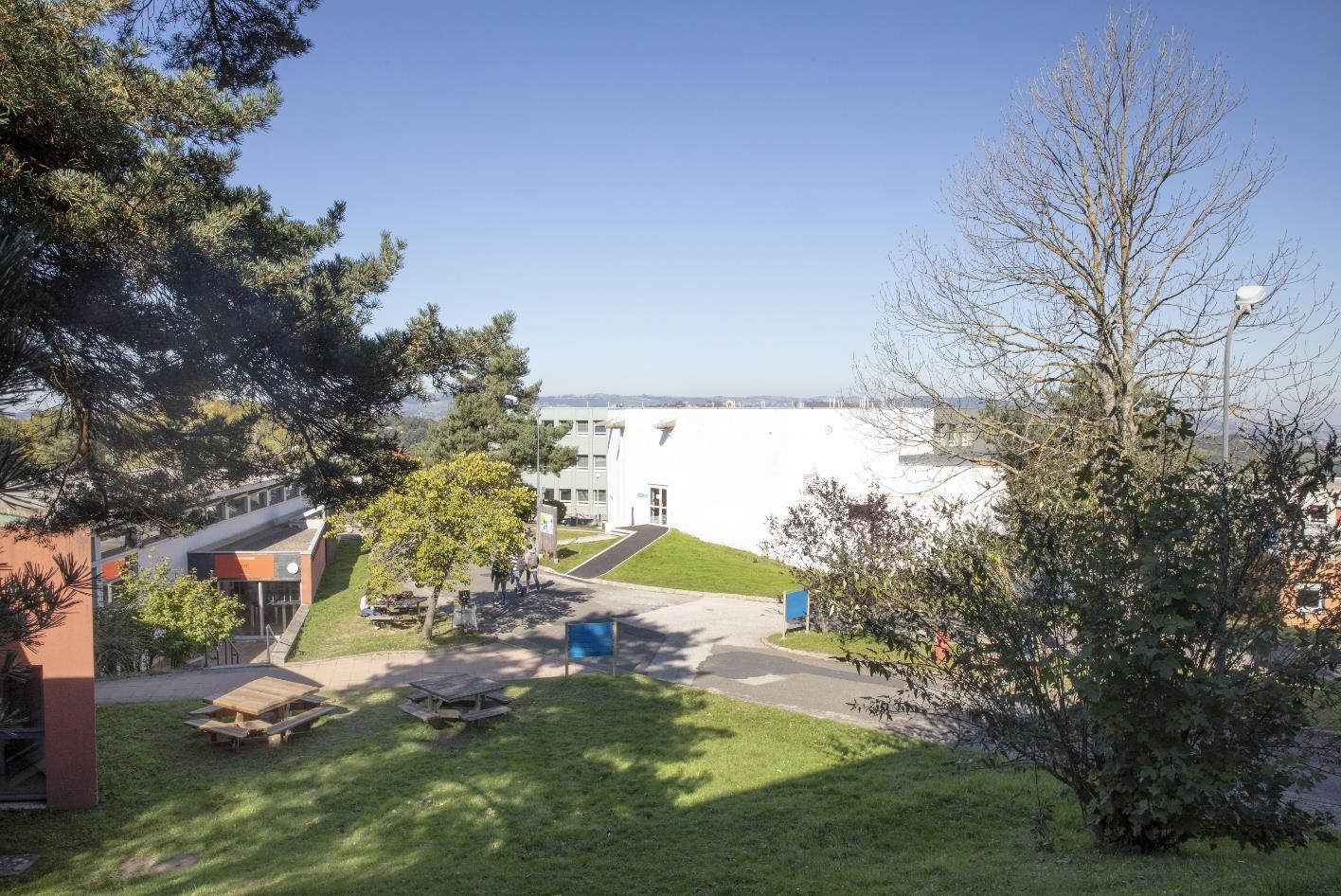

Engineering
Université Jean Monnet Saint-Étienne, France
The Gestion de l'environnement master, parcours Prévention et gestion des altérations environnementales, covers environmental degradation (water and soil pollution, biodiversity loss, hydromorphological dysfunction) and the ways impacted environments are managed. It takes an interdisciplinary approach combining social sciences with earth and life sciences.
Faculty: Faculté de Sciences Humaines et Sociales | Department: Département de Géographie | Duration: 2 years (120 credits) | Intake: 15 to 20 students per master year | Study mode: full-time; French | Location: Saint-Étienne, Auvergne-Rhône-Alpes, France
Theory on society-environment interactions (Anthropocene, socio-ecosystems, sustainable planning); biophysical functioning of environments (water, soils, biodiversity); management of current environments (regulation, territorial policy, diagnostics); and methods of data acquisition and processing (field metrology, surveys, statistics, GIS, remote sensing, modelling). A compulsory internship of 3 to 6 months takes place in semesters 2 and 4. Students may apply at the end of M1 for the M2 international master Integrated Watershed Sciences.
Environmental and territorial engineering (local authorities, State services, environmental public bodies, consultancies, expert firms, associations, regional observatories): project officer, study officer, project lead, expert or consultant; doctoral study; preparation for civil-service competitions.
Required background: bachelor degrees in humanities and social sciences (geography and planning, history, sociology, philosophy, anthropology), life and earth sciences (geology, biology, ecology, agronomy), or courses (licence professionnelle, BUT) giving environmental skills. Recommended: interest in scientific teaching, rigorous study methods, skills in statistics and GIS, good writing and cartographic skills, aptitude for fieldwork. Direct entry to M2 is open to M1 holders in social sciences and life and earth sciences, and to holders of a master in the same fields or equivalent diplomas. Université Jean Monnet master programmes: recruitment at M1 is selective, on file (dossier) or competitive exam, sometimes with an interview, according to the intake capacity of each parcours. Applications for M1 are made on monmaster.gouv.fr (17 February to 16 March 2026; complementary phase 19 to 25 June 2026), via Études en France for students from the 41 countries covered by that procedure, or on dedicated servers for international masters. M2 applications are made on the university's application server. The file comprises a CV, copy of ID, a detailed account of the previous course of study, diplomas and transcripts, a motivation letter setting out the personal and professional project, and proof of internships, international mobility and work experience where relevant; some programmes also ask for recommendation letters, personal work, a work-based-learning contract promise, certifications, language test results (TOEIC, TOEFL, DELF) or subject tests. Admission to M2 is by right, subject to exceptions, for students who validated M1 of the same mention at the same university; other M2 applicants are selected on file and capacity.
Requirements published at program group level.
Intake: 15 to 20 students per master year
Duration: 2 years (120 ECTS)
Engineering
Université Jean Monnet Saint-Étienne, France
Engineering
Université Jean Monnet Saint-Étienne, France
Engineering
Université Jean Monnet Saint-Étienne, France
Engineering
Université Jean Monnet Saint-Étienne, France
Engineering
Université Jean Monnet Saint-Étienne, France
Engineering
Université Jean Monnet Saint-Étienne, France
Engineering
Université Jean Monnet Saint-Étienne, France

Book a free consultation with our expert counsellors and take the first step towards your dream university.
Copyrights © 2026 StudyMapped. All rights reserved.

Enter your credentials to continue.
Join us and start your study abroad journey.