
University in France
Dijon, Bourgogne-Franche-Comté, France
University profile
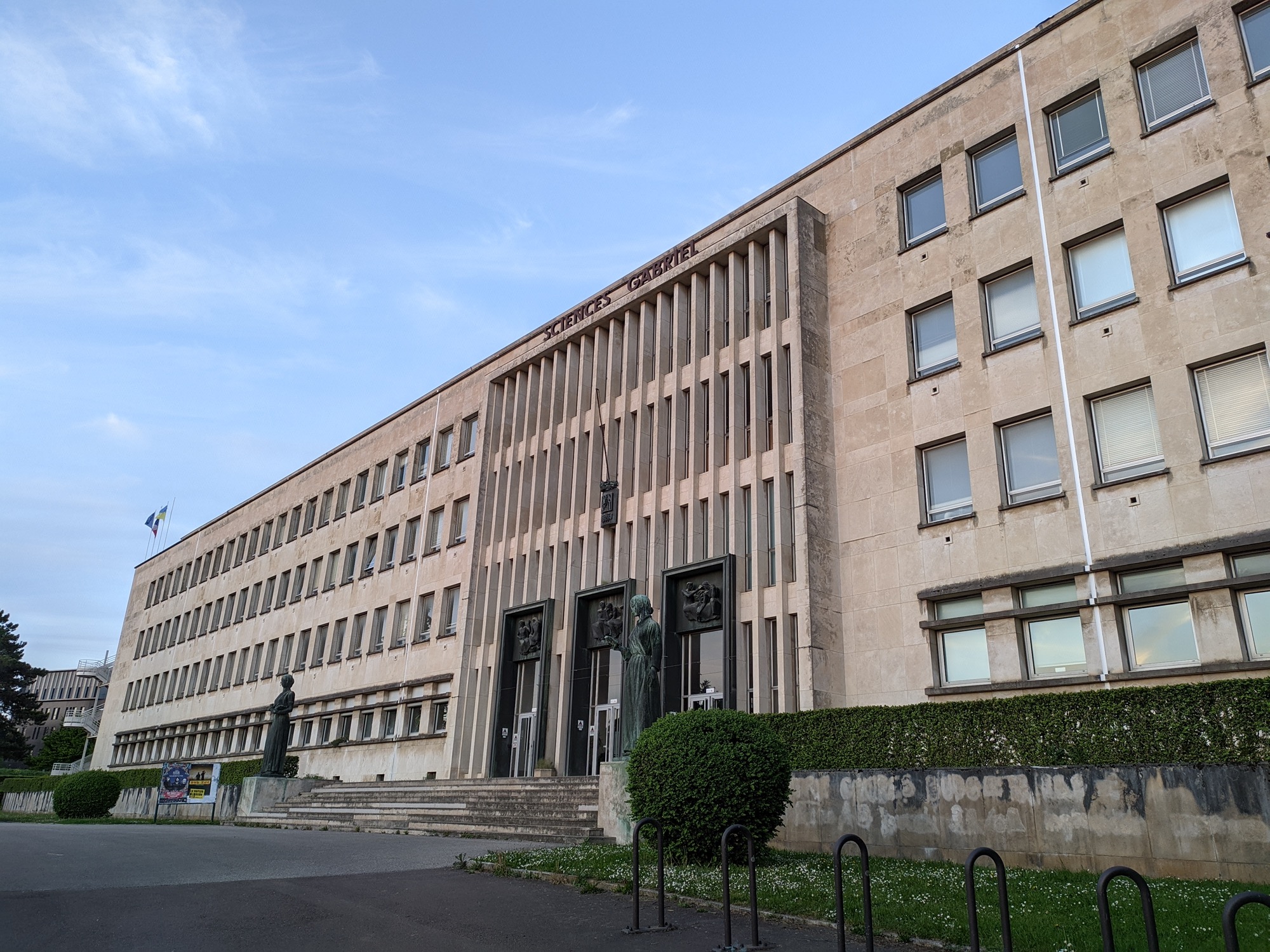
Université Bourgogne Europe (UBE) is a public multidisciplinary university based in Dijon, in the Bourgogne-Franche-Comté region of France. Founded in 1722 as the University of Dijon, it was known as the Université de Bourgogne until it took its present name on 1 January 2025, when it became an experimental public institution (EPE) grouping with other regional higher-education bodies. It offers more than 400 programmes from the Baccalaureate level to the doctorate.
The university is organised around six campuses in Burgundy: Dijon (the main campus, with close to 30,000 students), Auxerre, Chalon-sur-Saône, Le Creusot, Mâcon and Nevers. The presidency and administration sit in the Maison de l'université on the Esplanade Erasme in Dijon. Dijon is a city of more than 250,000 people whose historic centre is UNESCO World Heritage listed and which is an International City of Gastronomy and Wine.
Teaching is delivered through 16 components. The faculties (UFR) are Law, Economics and Political Science; Languages and Communication; Literature and Philosophy; Humanities; Sports Sciences (STAPS); Health Sciences (medicine, pharmacy, dentistry, midwifery); Life, Earth and Environmental Sciences (SVTE); and Science and Technology. Professional schools and institutes include Polytech Dijon and ISAT (engineering), IAE Dijon (school of management), the Institut Jules Guyot for vine and wine sciences (IUVV), INSPE Bourgogne (teacher education) and three university institutes of technology (IUT Dijon-Auxerre-Nevers, IUT Chalon-sur-Saône and IUT Le Creusot). Two further institutions, ENSAD Dijon (arts and design) and the Ecole Supérieure de Musique de Bourgogne-Franche-Comté, are component establishments; BSB, ESTP, ESEO, CESI, ESAAB, the CHU Dijon and the CGFL are associated establishments, and Sciences Po's Dijon campus, CROUS BFC and CREPS BFC are partners.
Training and research follow four pillars: technological transitions with smart and sustainable materials; Earth, environment, food and climate; a systemic and integrated approach to health; and arts, culture and humanities in society. The university is a founding member and coordinator of the FORTHEM European university alliance with Mainz, Valencia, Palermo, Jyväskylä, Agder, Opole, Riga and Sibiu.
International students come from about 120 nationalities, and the university counts more than 800 cooperation agreements with over 300 partners in around 60 countries. Sixteen English-taught Master programmes are offered, among them an Erasmus Mundus master in Quantum Technologies and Engineering (QuanTEEM), Vision and Robotics (VIBOT), Intercultural Management, International Management and Sustainability, and Automotive Engineering for Sustainable Mobility. Student services include thirteen libraries, the Student Health Service, the university sports service (SUAPS), cultural programmes, student associations and support for students with disabilities.
National registration fees: Licence 178 EUR, Master 255 EUR and engineering degree 630 EUR per year. French government scholarship holders pay 0 EUR. EU, EEA, Swiss, Andorran, Monegasque and Quebec nationals, refugees and beneficiaries of subsidiary protection, long-term residents of France and persons who have been French tax residents for more than two years pay the national fees. Non-EU students admitted to first year, changing cycle (Licence to Master) or changing programme or university pay differentiated fees under decree no. 2026-385 of 19 May 2026: Licence, engineering preparatory cycle or BUT 2,902 EUR; Master 3,950 EUR; engineering cycle 3,950 EUR. Students from foreign institutions with an agreement exempting French students from fees are also exempt. Erasmus+ exchange students pay no registration fees.
International Master in Business Studies 3,500 EUR; International Management and Sustainability 3,500 EUR; Intercultural Management 4,000 EUR; Projects in International and European Cultural Engineering 4,000 EUR; Vision and Robotics 1,500 EUR (national fees included); Automotive Engineering for Sustainable Mobility 5,500 EUR. These are paid by bank transfer before classes start.
The Contribution à la vie étudiante et de campus (CVEC) is 105 EUR per year, paid from July online or at a post office through the CVEC website. French government scholarship holders, CROUS scholarship holders, refugees and asylum seekers, exchange students and QuanTEEM scholarship holders are exempt but must still obtain the certificate.
Université Bourgogne Europe does not award scholarships, and no specific grants are available after arrival, so students need a reliable funding plan; the recommended budget is about 900 EUR per month. Funding that applicants may be eligible for includes scholarships from French embassies abroad, the France Excellence Eiffel and Europa programmes (Eiffel applications at UBE run from early October to early December), the Campus France scholarship directory, Agence universitaire de la francophonie grants, Fulbright, Jean Monnet Turkey, Excellence-Major, German BAföG and the Colombian Crédito Beca. Details: https://www.ube.fr/en/get-information.
Browse the scholarships listed for Université Bourgogne Europe and check each award’s eligibility.
View scholarships for Université Bourgogne Europe →Applicants with a French Baccalaureate, or an EU, EEA or Swiss nationality, apply for first-year Licence through Parcoursup. Non-EU applicants with a baccalaureate from an EU, EEA or Swiss country also apply through Parcoursup. For first-year entry with a foreign secondary diploma, applicants resident in a country that uses the Études en France procedure apply through Campus France from 1 October, with the closing date set by each embassy. Applicants residing in France apply from 1 October to 15 December with the green Demande d'admission préalable (DAP) file sent to up to three universities, and those living in other countries use the white DAP file lodged with the French embassy cultural service in the same period (dates for the 2026/2027 intake). Admission to the 2nd or 3rd year of Licence or the 2nd year of Master from outside the Études en France countries is sent by email to the International Relations unit between 1 October and 31 March. Required documents, translated into French: identity document, proof of address under 3 months old, CV, personalised motivation letter, last diploma, all transcripts and a French test or proof of exemption. Candidates cannot change programme or campus once admitted.
French-taught programmes require a French level between B2 and C2: B2 for most programmes (including all Licence programmes in Literature and Philosophy), C1 for some, and C2 for the Master in Recherche et Veille Internationale. Only the full-public TCF, DELF and DALF are accepted. Non-EU, EEA and Swiss applicants for first-year Licence must present the TCF DAP unless exempt. English-taught masters set their own levels: International Management and Sustainability B2 (no test required); Intercultural Management C1; Projects in International and European Cultural Engineering C2; ForTheMicrobes B2; International Master in Business Studies good English with no test required and a B2 French test recommended. Internationally recognised English tests such as TOEIC and TOEFL are accepted, and applications may start before the certificate is available, though the file must be complete by the deadline.
French and EU applicants apply through MonMaster (applications between February and March) or eCandidat. International degree-seeking applicants to the 16 English-taught masters use Études en France (1 October to 1 January, for non-EU applicants living in a listed country), eCandidat (after 1 January) or MonMaster, and must use one platform only. Programme-specific eCandidat periods for 2026 include 1 February to 30 April (Physics, Photonics and Nanotechnology), 9 February to 22 May (Mathematical Physics), 2 February to 2 May (International Management and Sustainability) and 30 January to 30 May (QuanTEEM). Applications are not pre-screened. Typical documents: passport or ID, CV, higher-education transcripts and diplomas, motivation letter and recommendation letters, each programme coordinator deciding the exact list.
PhD studies are open to holders of a French master's degree and international students with equivalent qualifications. The programme lasts 36 months, is attached to a research unit within a doctoral school, and ends with a dissertation defended before a jury. International applicants contact the Research Department ([email protected], +33 3 80 39 50 36).
Non-EU students need a passport valid at least 15 months from arrival and a long-stay student visa. The admission letter is used for the visa application, since no pre-registration certificate is issued, and proof of accommodation and of financial resources (877.50 EUR per month) is required. Enrolment is in person in Dijon in late August and early September through the International Office; enrolment documents include the signed form, photograph, ID or passport, civil liability insurance certificate, admission letter, CVEC certificate, the original and a copy of the latest diploma with sworn translation, and a social-security affiliation for those without EU health insurance. Admission lapses if enrolment is not completed within 15 days after the programme start date.
Student Health Service antennas operate on the Dijon, Auxerre, Le Creusot-Chalon and Nevers sites. The Maison internationale, a hotel-style residence on the Dijon campus, accommodates visitors.
Study programmes offered at Université Bourgogne Europe.
Experiences shared by students of Université Bourgogne Europe.
Studied here? Share your experience to help other applicants.

Book a free consultation with our expert counsellors and take the first step towards your dream university.
Copyrights © 2026 StudyMapped. All rights reserved.

Enter your credentials to continue.
Join us and start your study abroad journey.


