

University in United Kingdom
Guildford, England, United Kingdom
University profile
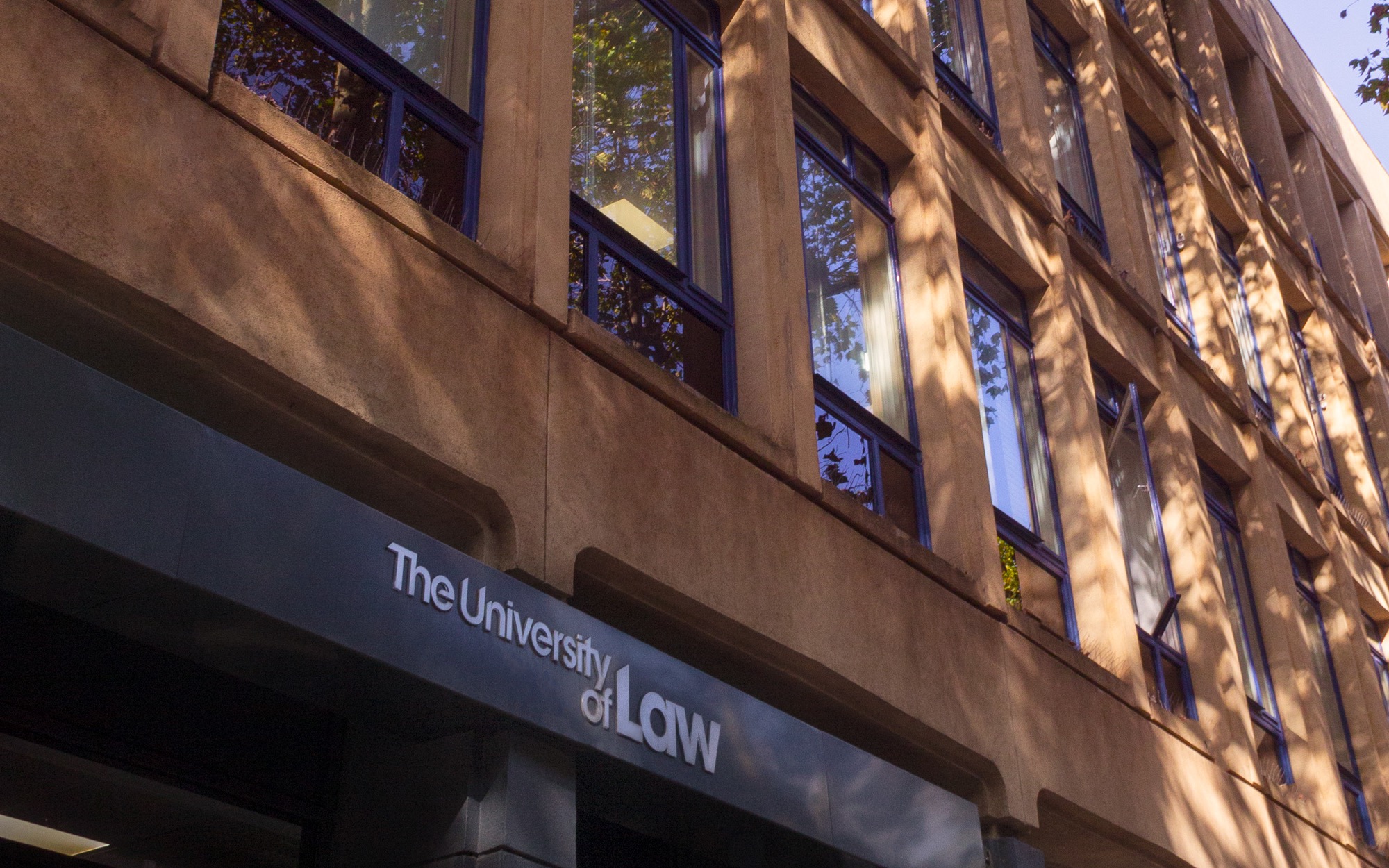
The University of Law (ULaw) is a specialist, teaching-focused university for law and business, with further programmes in criminology, computer science, psychology, policing and education. It traces its origins to 1876 and the tutorial firm Gibson & Weldon, gained degree-awarding powers in 2006 and full university status in 2012. It describes itself as the largest provider of legal education in the UK, with more law students choosing it than any other UK university in 2025 (HESA 2024/25). The University of Law Ltd is a company whose ultimate parent is Global University Systems Holding BV, and its Chancellor is Lord Neuberger, former President of the Supreme Court.
Study takes place at 19 campuses across the UK and through ULaw Online. ULaw runs its own campuses in London (Bloomsbury and Moorgate), Birmingham, Bristol, Leeds, Manchester and Nottingham, and “ULaw@” campuses hosted by partner universities: Lancaster, Newcastle, Oxford Brookes, Royal Holloway (University of London), East Anglia, Exeter, Hull, Leicester, Liverpool, Reading, Sheffield and Southampton. London Bloomsbury is the largest campus.
Teaching is organised around the Law School and the Business School (opened 2016), with undergraduate and postgraduate programmes in criminology, computer science and psychology, and an MBA added since 2020. The professional portfolio includes the LLM Legal Practice (SQE1&2), SQE preparation, the Postgraduate Diploma in Law and MA Law conversion courses, the Bar Practice Course, solicitor and paralegal apprenticeships, and US Bar preparation. The University states that it trains for 90 of the top 100 UK law firms and delivers SQE training exclusively for over 65 leading UK and US firms. More than 250 lecturers hold professional qualifications in law or business, and every student is assigned an academic coach.
Student life centres on the Students’ Union, which every student joins automatically, with a Student Parliament, campus clubs and societies and a Welcome Week each September. The careers and employability service and an award-winning pro bono programme, offering over 3,700 opportunities a year, run at every campus. Accommodation is arranged through Studentpad and partner providers of purpose-built student housing in the main campus cities, with a limited number of rooms reserved for first-year undergraduate, foundation year and international students.
International students are supported by a dedicated International Advice team, an automatic International Bursary and the University’s own English test (ULET), accepted for UK visa purposes. ULaw has Access and Participation Plans with the Office for Students, received an overall Silver rating in the Teaching Excellence Framework 2023 (Gold for Student Experience, Silver for Student Outcomes) and holds a five-star QS Stars rating. Its alumni network numbers over 100,000 graduates in 155 countries.
Fees cover tuition, interactive learning resources and first-attempt assessments (excluding SQE assessments). Eligible UK students can apply for tuition fee and maintenance loans from their national funding body.
For new full-time UK undergraduates starting in September 2026 or January 2027 with household income up to £50,000: £1,500 in year one and £1,000 in later years for household income of £0; £1,250, £1,000 or £750 in year one for incomes up to £25,000, £35,000 and £50,000. There is no separate application: students must consent to share household income through their student finance service by 31 October 2026 (September starters) or 28 February 2027 (January starters).
£2,000 per academic year for full-time undergraduates given independent status by their UK funding body as care leavers or estranged students; assessed automatically through student finance data.
How to apply: most awards need a single application made through the link in the offer letter, plus a 30-minute online critical thinking assessment (pass mark 10 for undergraduate and 12 for postgraduate). For January 2027 intakes the deadline is Sunday 15 November 2026, with winners announced on Thursday 10 December 2026. Awards must be applied for before enrolment.
The International Bursary is applied automatically as a fee reduction for eligible overseas fee payers: £2,500 per year for three-year and two-year LLBs and three-year BSc degrees, and totals ranging from £1,000 to £5,500 for postgraduate courses (2026/27 offers). An Enhanced International Bursary adds a first-year discount for undergraduates from qualifying countries, and a European Bursary reduces postgraduate fees for students domiciled in qualifying European countries. The Nottingham Postgraduate Award gives £1,000 to students starting at Nottingham between 1 June 2026 and 31 May 2027.
Hardship funds are administered by the Student Support Funds team. Details: Scholarships and bursaries | International scholarships and bursaries | Undergraduate fees and funding.
The Amal Clooney Scholarship for Human Rights Advocates →
Browse the scholarships listed for The University of Law and check each award’s eligibility.
View scholarships for The University of Law →Most on-campus undergraduate courses are applied for through UCAS (institution code L17, short name LAW). Campus codes are Birmingham 2, Bristol 5, Leeds 8, London Bloomsbury 1, Manchester 7 and Nottingham 6. Online courses and International Foundation Programmes are applied for directly with the University. Applications usually open one year before the course starts, and deadlines vary by intake. Applications are assessed mainly on academic ability, together with the academic reference, personal statement, any extenuating circumstances and widening participation characteristics.
Non-standard routes based on two or three years’ professional work experience, a reference and a formal interview are available to applicants who do not need a Student Route visa. Applicants aged 17 at entry are accepted at named campuses, subject to the under-18s policy.
Care-experienced and estranged applicants receive a contextual offer one grade below the standard entry requirement, and should declare their circumstances on the UCAS form. Applicants who narrowly miss the advertised grades may be reconsidered or offered a foundation year place.
Entry requirements vary by country, and country-specific minimums are set for each subject area. The International Foundation Programmes in Law and Business (online) require completion of secondary education (typically at least 11 years) and English equivalent to IELTS 5.0 with 4.5 in each component. While UK Government restrictions apply, applications requiring a Student Route visa are not accepted from Afghanistan, Cameroon, Sudan and Myanmar.
Applicants without an accepted qualification can take The University of Law English Test (ULET), a free online test of listening, reading, writing and speaking that is accepted for UK visa purposes; results arrive within five working days and are valid for two years. Pre-sessional English courses are also offered.
Most postgraduate programmes require a UK bachelor’s degree in any subject at 2:2 or above (or equivalent), including LLMs, the LLM Legal Practice (SQE1&2), MA Law (Conversion), MA Law (SQE1), PGDL and MBA. The LLM Legal Practice also requires knowledge of the seven foundation subjects of law. The Bar Practice Course requires a 2:1 in a Qualifying Law Degree or in any degree with a law conversion course, compliance with Bar Standards Board requirements and an online selection interview. SQE preparation courses have no entry requirements.
Full-time on-campus PGDL, MA Law (Conversion), MA Law (SQE1), LLM Legal Practice (SQE1&2) and PGDip Legal Practice are applied for through the Central Applications Board (lawcab); all other postgraduate, online, part-time and business courses are applied for directly with the University on a first-come, first-served basis.
International students needing a Student Route visa must receive a Confirmation of Acceptance for Studies (CAS). Before visa sponsorship is assessed, a payment of £4,000 or £8,000 (depending on location) is required, either as the International Acceptance Payment or as a pre-payment towards fees.
ULaw teaches at 19 UK campuses and online. Students can move between campuses during their course through the CampuSwitch scheme.
Library and Learning Skills supports all campuses with the UDiscover search tool, online legal and business databases with over 20,000 eBooks, a Skills Academy and study skills workshops. Partner purpose-built accommodation is reserved in the main campus cities, for example en-suite rooms at Mary Sturge (Unite Students) in Birmingham at £176 per week including bills for 2026/27.
Study programmes offered at The University of Law.
Experiences shared by students of The University of Law.
Studied here? Share your experience to help other applicants.

Book a free consultation with our expert counsellors and take the first step towards your dream university.
Copyrights © 2026 StudyMapped. All rights reserved.

Enter your credentials to continue.
Join us and start your study abroad journey.


