

University in United Kingdom
Milton Keynes, England, United Kingdom
University profile
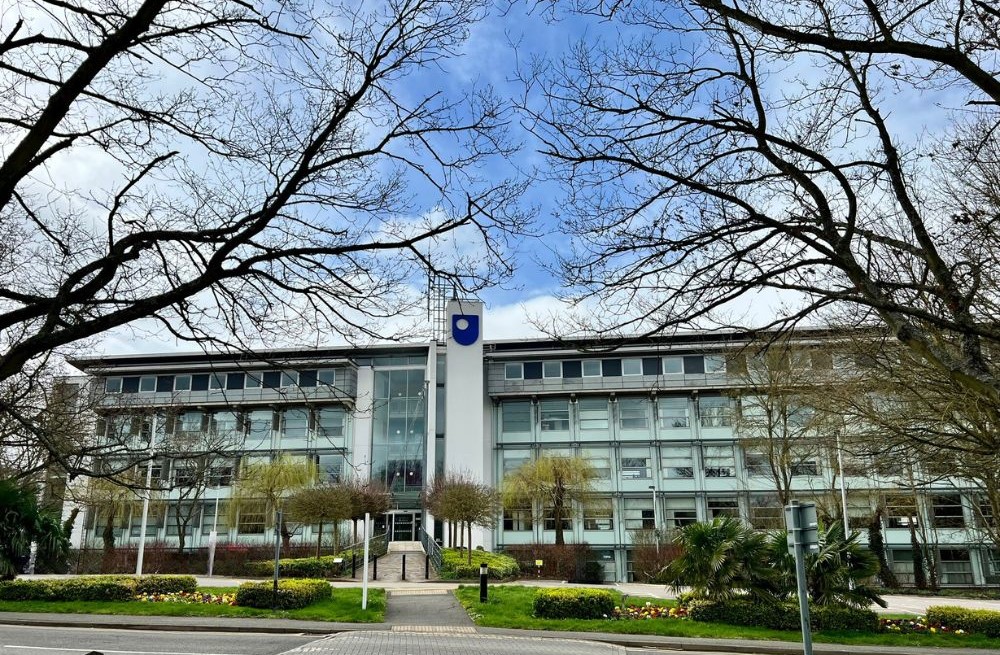
The Open University (OU) is the United Kingdom's only university dedicated to distance learning. Established by Royal Charter in 1969, it has its headquarters at Walton Hall in Milton Keynes and a significant presence in all four nations of the UK, with national offices in Belfast, Edinburgh and Cardiff. Almost 200,000 students study with the OU, and more than 2.3 million people worldwide have studied with it since its first intake in 1971.
Teaching follows a model of supported open learning: qualifications are built from individual modules, study materials are supplied, and every student is allocated a tutor for each module. More than 5,000 tutors, most of them associate lecturers who also work in other academic or industry roles, mark assignments, give written feedback and run online and face-to-face tutorials and day schools.
Teaching and research are organised through the Faculty of Arts and Social Sciences (schools of Arts and Humanities; Social Sciences and Global Studies; Psychology and Counselling), the Faculty of Business and Law (The Open University Business School and The Open University Law School), the Faculty of Science, Technology, Engineering and Mathematics (schools of Computing and Communications; Engineering and Innovation; Environment, Earth and Ecosystem Sciences; Life, Health and Chemical Sciences; Mathematics and Statistics; Physical Sciences) and the Faculty of Wellbeing, Education and Language Studies (schools of Education, Childhood, Youth and Sport; Health, Wellbeing and Social Care; Languages and Applied Linguistics). Two institutes, the Institute of Educational Technology and the Knowledge Media Institute, complete the structure. The OU offers around 120 undergraduate qualifications, plus postgraduate taught courses and research degrees.
The student body is largely adult and in work: 69% of directly registered students work full or part-time, and 76% of undergraduates had no previous higher education qualification on entry. The OU is the largest provider of higher education for disabled students in the UK, with 38,991 students declaring a disability in 2023/24, and the largest provider of law graduates in the UK. The University has partnered with the BBC for over 50 years, co-producing around 30 TV, radio and podcast series a year, and its free learning platform OpenLearn has had 117 million visits since 2006.
Most qualifications are open to international students, with 8,819 international students studying directly with the University; availability varies by country and course. Every student automatically becomes a member of The Open University Students Association (OUSA), and social clubs and societies run through the OU Club. The OU is licensed by UK Visas and Immigration to recruit non-UK PhD students.
Fees apply to modules starting before 31 July 2027 and are charged module by module. Per 120 credits (full-time equivalent year): England £8,176 (honours degree of 360 credits £24,528); Wales £2,872 (degree £8,616); Scotland £2,672 (degree £8,016); Northern Ireland £2,600 (degree £7,800); Republic of Ireland £7,696 (degree £23,088); international £8,840 (degree £26,520). Module materials, tuition, assessment and exams are included. See fees and funding.
Tuition Fee Loans in England (used by over 85% of students there), Part-Time Tuition Fee Loans and non-repayable maintenance support of up to £4,590 a year in Wales, Part-Time Fee Grants in Scotland for those with personal income of £25,000 or less or on certain benefits, and Part-Time Fee Grants of up to £1,230 a year in Northern Ireland. Other options include instalment loans from The Open University Student Budget Accounts Ltd (OUSBA), employer sponsorship, card payment, Enhanced Learning Credits for Armed Forces members and tax relief for Irish taxpayers.
Applications for the 2026/27 scholarship round are closed; eligibility generally requires UK residence and a UK fee. Enquiries: 0300 303 5303, [email protected]. Funded PhD studentships cover fees and a stipend at or above Research Council rates.
Open Futures Scholarship for Black Students →
Open Futures Care Experienced Scholarship →
Open Futures Sanctuary Scholarship →
Open Futures Carers' Scholarship →
Browse the scholarships listed for The Open University and check each award’s eligibility.
View scholarships for The Open University →Most OU undergraduate courses have no formal academic entry requirements. Students register directly with the University rather than through UCAS: choose a qualification and start date, select "Register Now", choose the first-year module(s) and confirm a funding method. There is nothing to pay at the registration stage. Students using a student loan apply separately to their national student finance body (Student Finance England can take 6–8 weeks) and confirm their Customer Reference Number to complete registration. Individual modules can carry advisory or formal prerequisites listed in the module description. Typical study is part-time at 60 credits a year (around 18 hours a week), with full-time-equivalent study at 120 credits a year possible.
Introductory Access modules start in February and October and typically run for 30 weeks at nine to ten hours a week, with fast-track versions available. Previous university study may count towards an OU qualification through credit transfer; applications must be made 4–5 weeks before the registration closing date of the course.
Most undergraduate and postgraduate qualifications are open to international students, though availability varies by country and course and some qualifications (for example certain healthcare courses) have country-specific restrictions. Recognition of the qualification for regulated professions abroad should be checked locally.
A formal English language qualification is not usually required for taught study, but students need a reasonable standard of written and spoken English, at least enough to understand written English of the standard of a broadsheet newspaper, complete assignments and take part in tutorials.
Applicants are typically expected to hold an undergraduate degree; individual qualifications set their own entry requirements, and significant professional experience may be accepted as alternative entry. All postgraduate taught courses are offered part-time.
The normal minimum entry requirement is an upper second class (2:1) honours degree or a master's degree relevant to the proposed research, with overseas qualifications compared through UK ENIC. A minimum IELTS score of 6.5 with no less than 6.0 in each component (or approved equivalent) is required. MPhil and PhD study starts on 1 October each year (some areas also on 1 February); applications open in late October/early November of the previous year, and funded studentships have closing dates in January and June. Applicants complete an online form with a research proposal and two academic referees; shortlisted candidates are interviewed, normally at Milton Keynes. Full-time study is up to four years and part-time up to eight years. For overseas students needing a visa, the University issues a Confirmation of Acceptance for Studies (CAS) with the offer; distance-learning research study is not available on the Student Route visa. Graduate School: +44 (0)1908 653806.
Study is by distance learning, so there are no halls of residence; tutorials, day schools and online forums provide contact with tutors and fellow students.
Study programmes offered at The Open University.
Experiences shared by students of The Open University.
Studied here? Share your experience to help other applicants.

Book a free consultation with our expert counsellors and take the first step towards your dream university.
Copyrights © 2026 StudyMapped. All rights reserved.

Enter your credentials to continue.
Join us and start your study abroad journey.


