
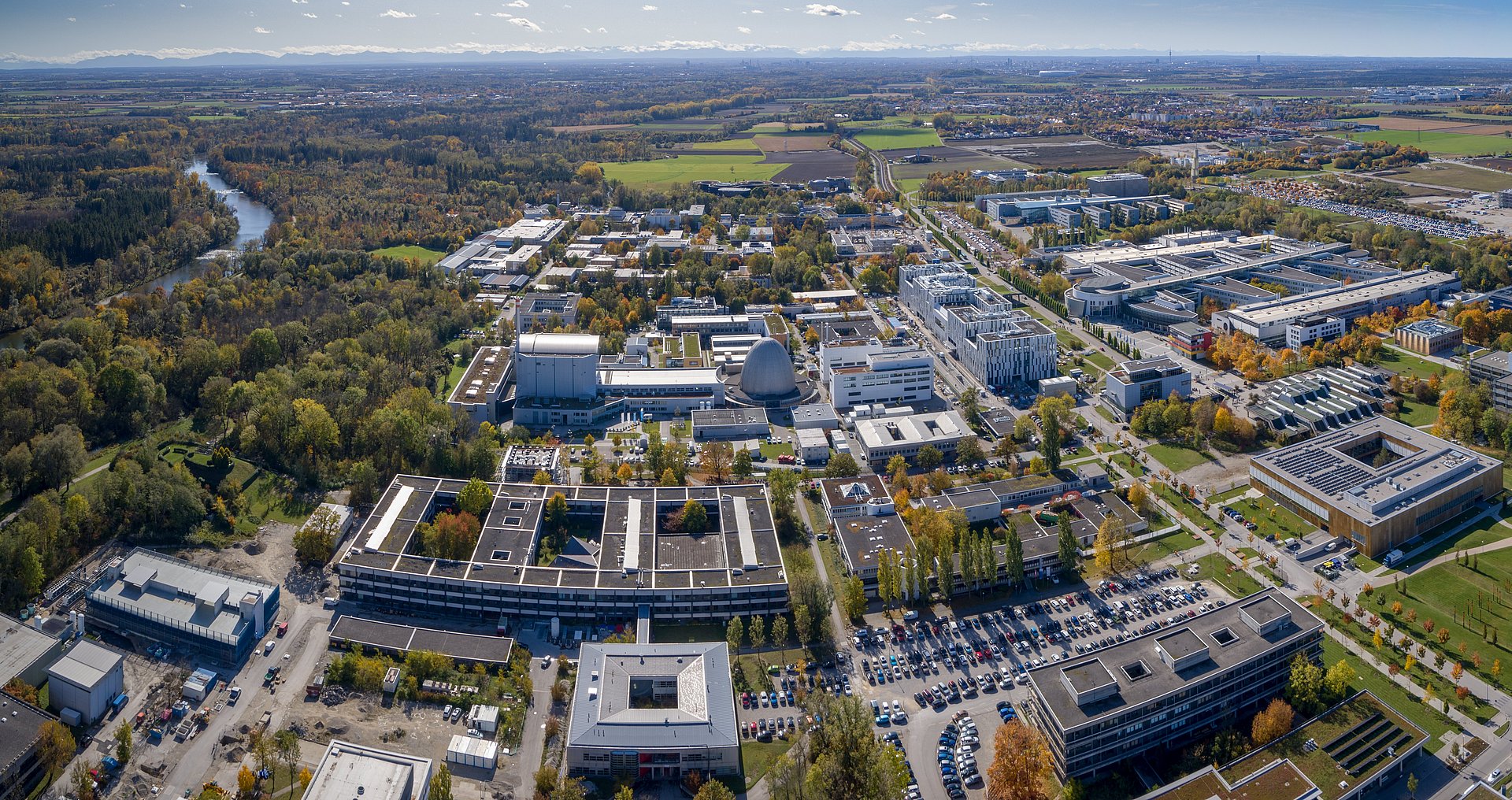

University in Germany · Featured · Top university
München, Bayern, Germany
University profile
The Technical University of Munich (TUM) is a public research university founded in 1868 as a polytechnic school by King Ludwig II of Bavaria. It teaches and researches in engineering, natural sciences, life sciences, medicine and health, computing, management and social sciences and technology. It has held the title University of Excellence under the German Excellence Strategy since 2006 (2006, 2012, 2019 and 2026), and is described by the university as the only technical university in Germany to have done so continuously.
TUM has its home site in Munich's Maxvorstadt district (Arcisstrasse 21) and extends to the TUM University Hospital Rechts der Isar and a sports and health campus at the Olympic Park. The Garching campus north of Munich is the largest and hosts natural sciences, engineering and computing. Other sites are Weihenstephan in Freising (life sciences), Straubing (biotechnology and sustainability), Ottobrunn-Taufkirchen (aerospace and geodesy) and Heilbronn (management, computing and technology). TUM Asia and TUMCREATE operate in Singapore, and international liaison offices represent the university in Europe, Asia and the Americas.
Seven schools form the academic base: the TUM School of Computation, Information and Technology; Engineering and Design; Natural Sciences; Life Sciences; Medicine and Health; Management; and Social Sciences and Technology. Integrative Research Institutes cut across them, among them the Munich Data Science Institute, the Munich Design Institute, the Munich Institute of Biomedical Engineering, the Munich Institute of Integrated Materials, Energy and Process Engineering and the Munich Institute of Robotics and Machine Intelligence, together with the TUM Campus Straubing.
In winter semester 2025/26 TUM enrolled 51,954 students, 45% of them international from about 140 countries, in 180 degree programmes. It has around 700 professors. Courses are taught in German and English, and programmes are either wholly in one language or mix both.
Student life includes more than 250 student initiatives (TUM Student Clubs), a university sports programme run through the University Sports Center in Munich, Garching and Weihenstephan with further offers in Straubing and Heilbronn, a music and arts programme, and the University Library with branch libraries on the campuses. TUM does not operate its own residence halls; most student hall places are allocated by the Munich Student Union (Studentenwerk) and by church-affiliated organisations and associations, and the TUM Living service supports students in finding housing. Doctoral candidates are supported through the TUM Graduate School and its graduate centres.
International applicants are advised through the Student Advising and Information Services and, for doctoral candidates, the TUM-GS Welcome Office. Non-EU/EEA students newly enrolling in Bachelor's and Master's programmes pay tuition fees, for which waiver scholarships exist.
Most students at TUM pay no tuition. International students from non-EU/EEA countries who newly enrol in a Bachelor's or Master's programme pay tuition fees, normally 2,000 or 3,000 euros per semester for Bachelor's and 4,000 or 6,000 euros per semester for Master's programmes (exact amounts are on each programme page). For winter semester 2027/28 the fees rise to 2,300 or 3,400 euros (Bachelor's) and 4,600 or 6,800 euros (Master's). Doctoral candidates, exchange and visiting students, Studienkolleg participants, state-examination programmes and students with an established domestic connection under Section 8 BAföG are generally exempt.
Separately, every student pays the semester fee, which is not tuition. In summer semester 2026 it was 97.00 euros in Munich, Garching, Weihenstephan and Heilbronn and 82.00 euros in Straubing.
Waiver scholarships for outstanding achievement or financial need, exemptions and hardship waivers are credited against tuition and not paid out. The waiver scholarship for high-achieving Master's students normally waives the tuition fee for two semesters; applications run 1 January to 31 May for the winter semester and 1 November to 15 January for the summer semester, with an official ranking certificate required. See tuition scholarships and waivers.
Details and the scholarship office contact are on the TUM scholarships page; stays abroad are supported through the TUM Global and Alumni Office. The Munich Student Union (Studentenwerk) allocates most halls of residence places.
Deutschlandstipendium at TUM →
TUM Scholarship for International Students →
Oskar Karl Forster Scholarship for Books and Learning Materials →
Linde / MDSI Master's Scholarship →
Browse the scholarships listed for Technical University of Munich and check each award’s eligibility.
View scholarships for Technical University of Munich →Admission requires a university entrance qualification. Applicants with a German Abitur apply directly through the TUMonline portal; applicants with a foreign qualification must hold a qualification recognised as giving access to German universities (a first check is possible in the DAAD admission database and anabin). Applicants whose qualification does not give direct access can prepare at the Studienkolleg Muenchen, a two-semester course ending in the Feststellungsprüfung, with courses G (humanities and arts), M (medicine and biology), T (technical, mathematical and natural sciences) and W (business and social sciences). Studienkolleg applications run 15 May to 15 July for the winter semester and 15 November to 15 January for the summer semester.
Programmes are unrestricted, restricted by Numerus Clausus, or subject to an aptitude assessment, in which grades are scored on a point system and applicants are admitted, rejected or invited to a 20-minute interview. Applications are submitted online in TUMonline with PDF uploads (entrance qualification, transcripts, CV without gaps, passport, proof of language skills and, where required, a letter of motivation or essay). Applicants with an international qualification must obtain preliminary documentation (VPD) from uni-assist before 15 July for the winter semester or 15 January for the summer semester. Application deadlines for each programme are set on the programme pages.
German-taught programmes need proof of German: DSH-2, DSD II (B2 in all four sections), telc Deutsch C1 Hochschule, TestDaF level 4 in all sections, Goethe-Zertifikat C2, or ÖSD C2 (lower levels apply for the Bachelor's in Aerospace and in Information Engineering). English-taught programmes accept TOEFL iBT 88 (test-date score), IELTS Academic 6.5 overall, PTE Academic 65, Cambridge CAE or CPE (grades A to C), or English as the language of instruction in at least 50% of previous schooling or studies. A GMAT above 600 is accepted for some School of Management Master's programmes.
A first academic degree at least equal to a German three-year (six-semester) Bachelor's is required; another Master's does not qualify. All Master's programmes use an aptitude assessment: bachelor's grades and written documents are scored, and applicants are admitted, rejected or invited to a 20-minute interview (telephone interviews in some cases for international applicants). Exact requirements, ECTS prerequisites and deadlines are in each programme's Academic and Examination Regulations (FPSO). Applicants with foreign degrees apply for uni-assist preliminary documentation within the application period and upload documents not in German or English with a sworn translation.
Doctoral candidates are admitted through the schools and their graduate centres within the TUM Graduate School; routes include employment as a research assistant or funding by a scholarship, and open positions are advertised on TUM job pages and professorship websites. The TUM-GS Welcome Office advises on admission, recognition of foreign degrees, entry and residence.
Many international students need a visa; a visa for seeking a university place can be applied for before admission and converted to a study residence permit. Enrolment requires confirmation of health insurance status sent digitally by a German statutory health insurer, and payment of the semester fee. First-time enrolment payment is due by 15 March (summer) or 15 September (winter). Applicants from certain countries have to meet special document requirements.
The University Library has a main campus branch in Munich and branch libraries on the other campuses. TUM does not run its own residence halls.
Reasons students choose Technical University of Munich for their study abroad journey.
Experiences shared by students of Technical University of Munich.
Studied here? Share your experience to help other applicants.
A glimpse of campus life and the academic environment.




Book a free consultation with our expert counsellors and take the first step towards your dream university.
Copyrights © 2026 StudyMapped. All rights reserved.

Enter your credentials to continue.
Join us and start your study abroad journey.


