
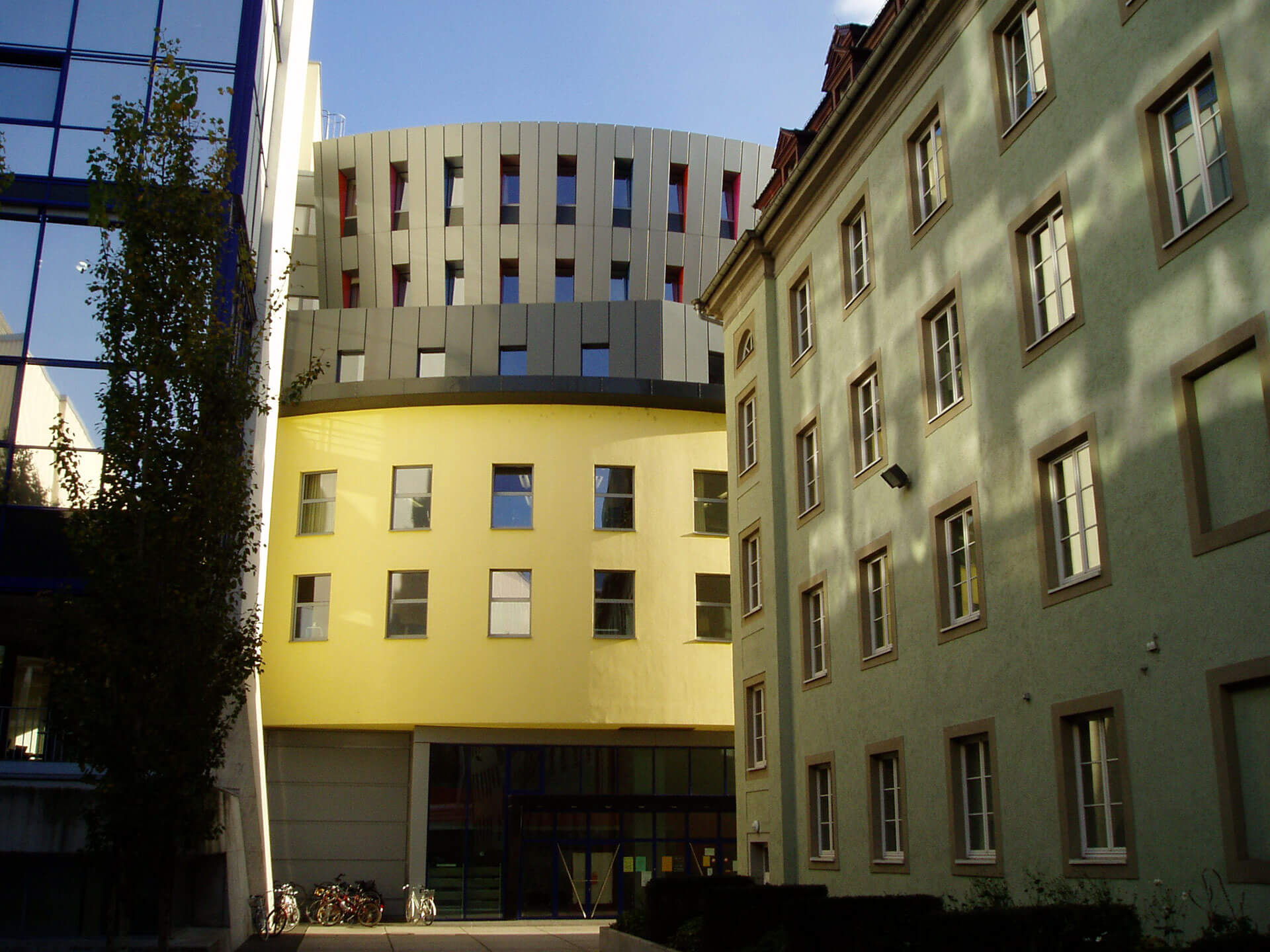

University in Germany
Mannheim, Baden-Württemberg, Germany
University profile
The Staatliche Hochschule für Musik und Darstellende Kunst Mannheim (SHMDK Mannheim, also called MuHo Mannheim) is a state arts university in Mannheim, Baden-Württemberg, at N7, 18. It is the only state-run arts university in the Rhein-Neckar metropolitan region. Its roots go back to the 18th-century Mannheim Tonschule and Académie de Danse, and it came under state sponsorship in 1971.
The university offers ten study programmes: Bachelor Musik, Bachelor Lehramt Musik an Gymnasien (school music teaching), Bachelor of Music (Jazz / Popularmusik) and Bachelor of Arts (Tanz / Tanzpädagogik), the matching Master programmes, Solistische Ausbildung (also part-time) and Zusatzstudium (also part-time). Doctorates (Doktor:in der Philosophie and artistic-scholarly doctorates) and the Habilitation are possible. Pre-College prepares gifted young people for study, and the university co-sponsors the Musikgymnasium Mannheim with the Moll-Gymnasium.
Main subjects include composition, composition with new media, voice (concert and opera), keyboard instruments, orchestral instruments, elementary music education, music theory and ear training, music research and media practice, chamber music, song interpretation and repertoire accompaniment. The Landeszentrum für Dirigieren covers symphonic, opera, choir, wind orchestra, jazz ensemble and avant-garde conducting. In Jazz / Popularmusik the main subjects are composition/arrangement, voice, piano, saxophone, trumpet, trombone, drums, percussion, guitar, double bass and electric bass. The Akademie des Tanzes is the only higher education institution in Baden-Württemberg that trains dancers.
Practical experience is central. The Orchesterakademie Rhein-Neckar, founded in 2005 with the Deutsche Staatsphilharmonie Rheinland-Pfalz, the Kurpfälzisches Kammerorchester, the Nationaltheater Mannheim and the Theater und Philharmonisches Orchester Heidelberg, lets students gain experience in symphonic, music theatre and chamber orchestra work. Other offers are the Bläserakademie Rhein-Neckar, the Opernstudio run with the Pfalztheater Kaiserslautern, and the Netzwerk Amadé, which prepares gifted young musicians with regional music schools. The university stages nearly 500 events a year and works with universities, theatres, orchestras and music schools.
International students are advised by the International Office (accommodation search, buddy programme, integration, scholarships). Partnerships include Yale University (USA) and Seoul National University (South Korea), and Erasmus+ exchange is available. Students are served by the library, the student council (AStA) and the Studierendenwerk Mannheim. Entry to every programme requires an artistic entrance examination (Aufnahmeprüfung) in addition to the school-leaving qualification.
Each semester students pay a re-registration amount (Rückmeldebetrag) of 193.00 euro (as of March 2026), made up of the Studierendenwerk contribution of 100.00 euro, an administrative cost contribution of 80.00 euro and the student body contribution of 13.00 euro. This is the Semesterbeitrag and is not tuition. Additional tuition fees apply: 1,500.00 euro for international students in Bachelor and Master programmes who are citizens of countries outside the EU or EEA, 650.00 euro for a second degree (same degree already completed in Germany), and in the postgraduate programmes Zusatzstudium and Solistische Ausbildung 350.00 euro (part-time) or 700.00 euro (full-time), and for ensembles 250.00 euro (part-time) or 500.00 euro (full-time). Students in an international exchange programme pay only the 100.00 euro Studierendenwerk contribution. The application itself carries a 75.00 euro administrative fee. Language courses for students who need German are free.
The Deutschlandstipendium pays 300 euro a month for one year (September to August), half from the federal government and half from private donors, independent of income. Students in all main subjects of the Bachelor, Master, Aufbaustudium and Solistische Ausbildung can apply if enrolled with at least two semesters of standard study time ahead (or declaring intent to continue at the university); exceptions are the Orchesterakademie Rhein Neckar and the SO Opernstudio. Applicants send the application form and a CV, and applicants not yet enrolled add their school-leaving certificate (foreign certificates with translation and conversion to German grades), study records, evidence of awards and engagement and, for Master applicants, the first degree certificate. An internal selection committee decides. Details: Deutschlandstipendium.
The DAAD-Preis for international students (1,000 euro, one-off, awarded once a year) honours outstanding academic results and social or intercultural engagement; applicants must have gained their Hochschulzugangsberechtigung abroad, be at least in the second year of a Bachelor or second semester of a Master, and be supported by their main-subject teacher. The 2026 deadline was 15 July 2026, with applications to [email protected]. DAAD-Preis. STIBET I scholarships for particularly engaged international students in a regular Bachelor or Master were awarded at 450 euro per month for five months (April to August 2026) with a deadline of 16 March 2026. STIBET I.
PROMOS short-term scholarships support German and international students and doctoral candidates attending specialist courses (such as masterclasses) or international competitions abroad: 500.00 euro per course of up to 10 days plus a mobility lump sum varying by destination, or 45.00 euro per day for competition trips of up to 12 days. The 2027 round covers activities from 1 January to 30 June 2027; applications run from 12 October to 30 November 2026 to the International Office. PROMOS. Erasmus+ gives enrolled students grants for study stays of two to twelve months at partner universities in 33 programme countries after one completed study year.
The university also points students to the Studienstiftung des deutschen Volkes, PE-Förderungen für Studierende der Musik e.V. and the Deutsche Orchester-Stiftung programme Musiker Zukunft for Master students. Overview: Förderungen / Wettbewerbe.
Deutschlandstipendium at SHMDK Mannheim →
DAAD Prize for International Students at SHMDK Mannheim →
STIBET I Scholarships for International Students at SHMDK Mannheim →
Browse the scholarships listed for Staatliche Hochschule für Musik und Darstellende Kunst Mannheim and check each award’s eligibility.
View scholarships for Staatliche Hochschule für Musik und Darstellende Kunst Mannheim →Matriculation in an arts programme requires the general or subject-specific Hochschulreife and proof of artistic aptitude through an entrance examination (Aufnahmeprüfung) before a university commission. Foreign qualifications must be recognised as equivalent; in Baden-Württemberg the Staatliche Akademie der Bildenden Künste Stuttgart decides on equivalence. For certain artistic programmes, applicants without a Hochschulreife can show exceptional artistic talent and sufficient general education through the Begabtenprüfung, which includes an essay on a topic from music or dance; this does not apply to programmes ending in a state teaching examination.
Applications are made online only, directly to the university; there is no uni-assist route stated. Admission takes place twice a year, except Bachelor and Master of Music (Jazz / Popularmusik), Bachelor and Master of Arts (Tanz / Tanzpädagogik), Vorstudium Tanz and the Bläserakademie, which admit once a year for the autumn semester (Herbstsemester). Application periods: Bachelor Musik, Lehramt Musik an Gymnasien, Master Musik, Solistische Ausbildung and Zusatzstudium and Pre-College: 15 October to 15 November for the spring semester (Frühjahrsemester) and 1 to 31 March for the autumn semester. Jazz / Popularmusik (Bachelor and Master): 1 to 31 March. Bachelor Tanz / Tanzpädagogik: 1 to 28 February. Master Tanz: 1 to 30 April; Master Tanzpädagogik: applications possible at any time by email. For the spring semester 2027 the online application is expected to open on 26 October 2026, with the deadline remaining 15 November 2026. Fagott and Posaune cannot be applied for in the spring semester 2027 (exceptions apply for teaching programmes and some conducting and ensemble subjects).
Applicants submit proof of the 75.00 euro administrative fee, a CV, a copy of the last school certificate (or Bachelor/Master certificate for postgraduate applications), declarations as required by the online form, and for international applicants a nationality certificate and, if applicable, a passport copy. Documents must be in German or English as officially certified translations. Bachelor of Arts (Tanz / Tanzpädagogik) applicants add a medical certificate of fitness for dance study; composition applicants submit scores of several own works with a works and performance list.
Requirements differ by programme and main subject. In piano, strings, bassoon, clarinet, oboe, flute, horn, trombone, trumpet and percussion the first stage is a video pre-selection (complete works, MP4 up to 1 GB per video, programme sheet as PDF); successful applicants are invited to the in-person round. Jazz / Popularmusik, teaching programmes and dance are examined in person.
Applicants without German citizenship or a German Hochschulreife must show German at level B2 (DSH, TestDaF or telc accepted) by enrolment at the latest. Proof is required with the online application, by the application deadline, for: Bachelor and Master Lehramt Musik an Gymnasien (C1), Bachelor Musik with Musikforschung / Medienpraxis (C1), Bachelor and Master Musik main subject Dirigieren (B2), Master Musik and Solistische Ausbildung voice with opera focus (B2), and Master of Arts Tanz / Tanzpädagogik (A2). Failure to provide proof by the deadline excludes the applicant.
Master applicants submit the Bachelor certificate (or proof that the degree will be completed in the current semester, or a current enrolment certificate), and Master Lehramt applicants from other universities submit longer written work in musicology and music education. Solistische Ausbildung and Zusatzstudium require a Master certificate. Doctoral study (Dr. phil. or artistic-scholarly doctorate) and the Habilitation are governed by the university's Promotionsordnung and Habilitationsordnung.
Non-EU students need a valid student visa and must have health insurance in Germany; the university recommends statutory German health insurance for non-EU citizens. EU citizens can rely on the EHIC for emergencies.
Study programmes offered at Staatliche Hochschule für Musik und Darstellende Kunst Mannheim.
Experiences shared by students of Staatliche Hochschule für Musik und Darstellende Kunst Mannheim.
Studied here? Share your experience to help other applicants.

Book a free consultation with our expert counsellors and take the first step towards your dream university.
Copyrights © 2026 StudyMapped. All rights reserved.

Enter your credentials to continue.
Join us and start your study abroad journey.


