
University in United Kingdom
London, England, United Kingdom
University profile
SOAS University of London is a specialist public research university focused on the study of Asia, Africa and the Middle East. Founded in 1916 as the School of Oriental Studies under a Royal Charter, it is a college of the University of London and a legally independent corporate body and charity, and since 2011 it has awarded degrees in its own name. Its expertise spans the languages, cultures, politics, economics, law and development of these regions, and its students and academics represent over 130 nationalities.
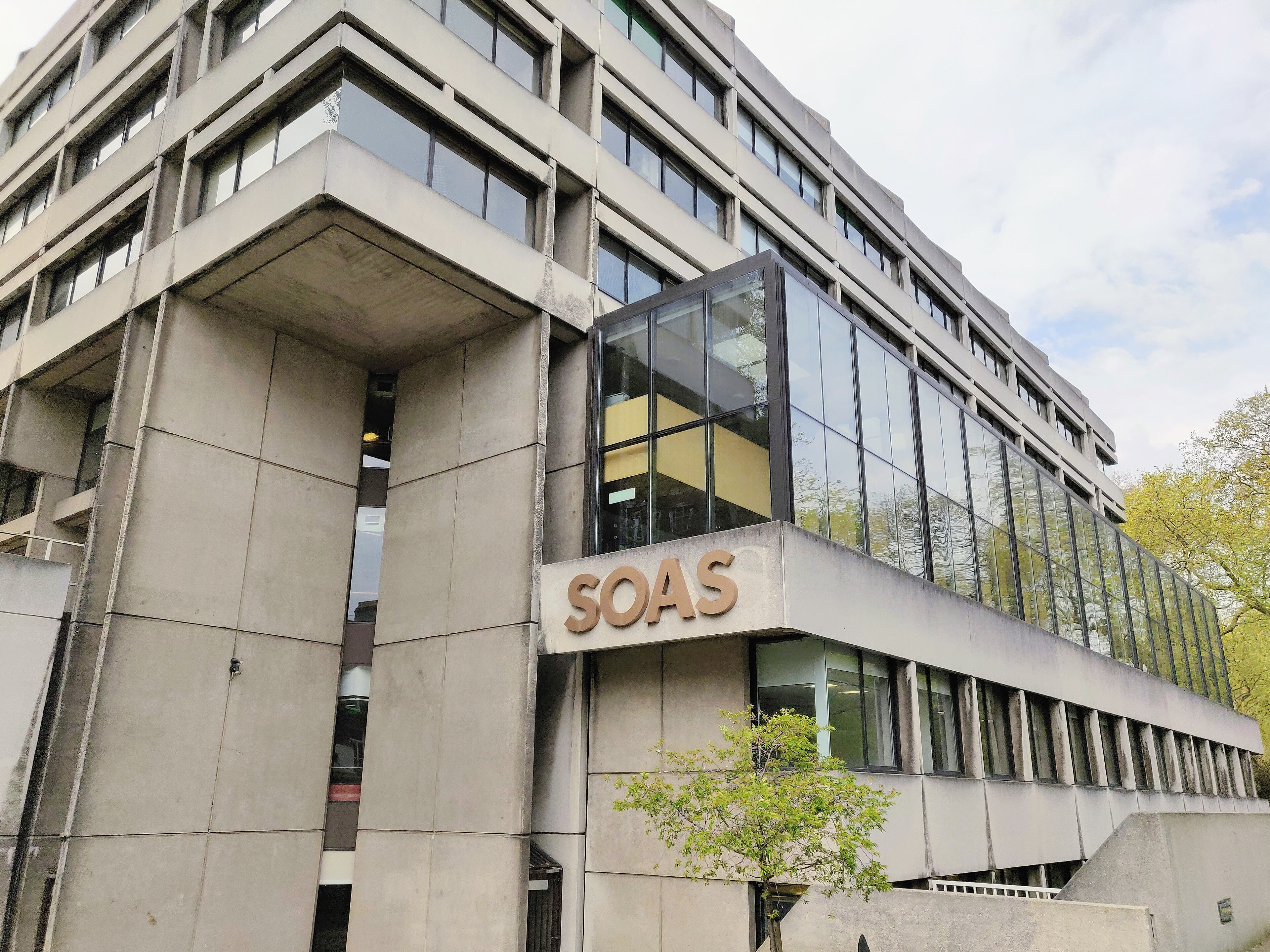
The university occupies a single city-centre campus at the north-west corner of Russell Square in Bloomsbury, central London, within walking distance of Euston, St Pancras and King's Cross stations and a few minutes from the British Museum and the British Library. The campus includes the Grade II* listed SOAS Library, the Brunei Gallery and the Paul Webley Wing in part of the historic Senate House building.
Teaching and research are organised in three colleges:
A Foundation College runs integrated foundation years, pre-sessional English and summer programmes. SOAS is particularly known for Asian, African and Middle Eastern languages, development studies, international politics and diplomacy, law and human rights, political economy, anthropology and religion, and the music and arts of Africa and Asia. It hosts more than 20 research centres, institutes and clusters, including the SOAS South Asia Institute, SOAS Middle East Institute, SOAS China Institute and Japan Research Centre.
Students come from over 135 countries, and study abroad and exchange links cover more than 70 destinations. Accommodation is offered in SOAS halls such as Dinwiddy House, Paul Robeson House and Wood Green Hall and in University of London intercollegiate halls including College Hall, Connaught Hall, International Hall, Nutford House and the Garden Halls. In the QS World University Rankings by Subject 2026, Development Studies is placed 2nd worldwide, Politics 16th, Anthropology 19th, History of Art 24th and History 36th.
Overseas fees may rise by up to 5% in later years of study. See tuition fees.
For September 2026 entry, Home undergraduates ordinarily resident in England with a household income of £25,000 or less can receive £1,500 a year in cash (£4,500 over the degree), with priority for care leavers, students from POLAR Quintile 1 areas, the lowest household incomes, first-generation students and refugees. Eligibility is assessed through Student Finance household income data with no separate application. SOAS Bursary.
Awards include the SOAS Sanctuary Scholarship (tuition and stipend for UK residents with Limited Leave to Remain or similar), the Cowrie Foundation Scholarship (tuition and stipend for Home students of Black African and Caribbean heritage; next available 2028), the SOAS Grant (£24,000), the Undergraduate International Academic Excellence Scholarship (£5,000 for overseas students), the University of London Scholars Programme (£10,000), the SOAS Hong Kong Alumni Association Bursary (£5,000) and the Rahim Lalji'14 Development Studies Bursary (£2,500). Undergraduate scholarships.
Over 320 awards totalling £4m are offered for 2026/27. Full scholarships with stipend include Chevening, Commonwealth Shared Scholarships, Alphawood, Mo Ibrahim Foundation, Felix, Shapoorji Pallonji, the SOAS Sustainable Development Goal Scholarship and the Hanna and Peter Singer Sanctuary Scholarship; tuition-fee awards include the Allan and Nesta Ferguson, Hyundai Motor Group (African nationals) and Kamran Djam scholarships; partial awards include the SOAS Masters Scholarships and SOAS Academic Excellence Scholarships for Home and international students. Applicants must first apply for a place, and 2026/27 awards opened between November 2025 and January 2026. Postgraduate taught scholarships.
Doctoral funding includes AHRC Landscape Awards, ESRC UBEL studentships, Bloomsbury Colleges PhD studentships, CAMHRA Doctoral Scholarships, the Pan-African Frontiers Studentship, the SOAS Research Academic Excellence Scholarship and smaller awards such as the Fürer-Haimendorf Fund and Meiji Jingu Scholarships. Research scholarships.
SOAS graduates receive 25% off the first year of a higher on-campus qualification, and family members of SOAS staff or alumni can apply for 25% off the first year. Enrolled students can apply to the Access to Learning Fund (Home students), the Additional Study Support Fund and the SOAS International Hardship Fund; these funds do not cover tuition fees. SOAS participates in the US Federal Direct Loan Program and accepts Canadian and Nordic government student funding. Hardship funds.
SOAS Undergraduate International Academic Excellence Scholarship →
SOAS Academic Excellence Scholarship (International) for Postgraduate Taught Study →
SOAS Master's Scholarship (International) 2026 →
SOAS Sustainable Development Goal Scholarship →
Browse the scholarships listed for SOAS University of London and check each award’s eligibility.
View scholarships for SOAS University of London →All applications for full-time undergraduate courses, including from international students, are made through UCAS (institution code S09). Applicants need the UCAS course codes, evidence of existing and predicted qualifications, a reference, the application fee and a personal statement. Courses start in September and UCAS opens in September for entry the following year. After applying, students receive a SOAS applicant ID and use the applicant portal to see decisions and upload documents, and accept or decline offers through UCAS Hub. Year 2 transfers require the Year 1 entry requirements, being on track for a 2:1 in first year and coverage of the core modules; transfer into Year 3 is not possible.
Entry requirements vary by programme and are set in A-level terms. Equivalents are:
Subject requirements include A-level Maths at grade B for BSc Economics and GCSE Maths at 6/B for BA Economics, BSc Development Economics, Economics combined honours, BSc Accounting and Finance and BSc Management. Law applicants presenting an Access to HE Diploma, BTEC, WJEC Criminology or foundation and other non-standard qualifications must sit the LNAT. BTECs alone are not considered for Politics programmes. T Levels, IB certificates and the IBCP are assessed case by case, and the EPQ is considered alongside three A-levels with a predicted grade B or above.
UK applicants meeting at least one contextual criterion (such as free school meals, experience of care, POLAR4 or IMD data, estrangement, caring or parenting responsibilities, armed forces links, or refugee or asylum seeker status) may receive offers up to two grades below the standard requirement. Contextual offers do not apply to BTECs, A-levels combined with other qualifications, subject-specific requirements or Clearing.
Equivalences are set country by country against the AAA to BBB scale; some national school-leaving qualifications require an International Foundation Programme first. Students who do not meet direct entry can take the SOAS four-year degree with integrated Foundation Year or recognised external foundation programmes such as the University of London, NCUK, INTO, Kaplan, Study Group and Warwick programmes.
Direct entry to undergraduate and taught postgraduate programmes requires IELTS Academic 6.5 with 6.0 in each component, PTE Academic 65 (60 in each), TOEFL iBT 95, Duolingo 120 (110 in subscores), LanguageCert Academic 70 (65), Kaplan Test of English 480 (450) or Oxford Test of English 130 (120). Lower scores (for example IELTS 6.0 or 5.5) can be accepted with a 4-week or 8-week pre-sessional English course. UK nationals, nationals of majority English-speaking countries with English-medium schooling or degrees, and holders of UK or majority English-speaking country degrees are exempt. The Doctoral School and online programmes have separate requirements.
Master's applicants need a 2:2 or above honours degree or international equivalent, plus any subject-specific requirements. Applications are made online through each programme page with transcripts, a CV, a passport copy and a supporting statement of around 1,000 words; references are optional. Applicants can hold an offer for one programme per year. The deadline for September 2026 master's entry is 31 July, and complete applications are normally processed within four weeks.
MPhil/PhD applicants need a good master's-level degree in a relevant subject and submit a personal statement, CV, research proposal, transcripts, certificates and one reference, and may suggest a supervisor. The deadline for Doctoral School MPhil/PhD programmes is 15 June 2026; assessment typically takes two to three months. Visiting research students apply three months before their start term.
SOAS sponsors Student visas for full-time study only. A Confirmation of Acceptance for Studies requires a firmly accepted unconditional offer and a non-refundable £4,000 tuition deposit, and must be requested by 3 September or three weeks before the course start, whichever is earlier.
Russell Square campus, Bloomsbury, London (10 Thornhaugh Street, London WC1H 0XG): the single teaching campus for all colleges, schools and departments, the Doctoral School and the Foundation College.
Halls of residence (2026/27)
Study programmes offered at SOAS University of London.
Experiences shared by students of SOAS University of London.
Studied here? Share your experience to help other applicants.

Book a free consultation with our expert counsellors and take the first step towards your dream university.
Copyrights © 2026 StudyMapped. All rights reserved.

Enter your credentials to continue.
Join us and start your study abroad journey.


