
University in Germany
Saarbrücken, Saarland, Germany
University profile
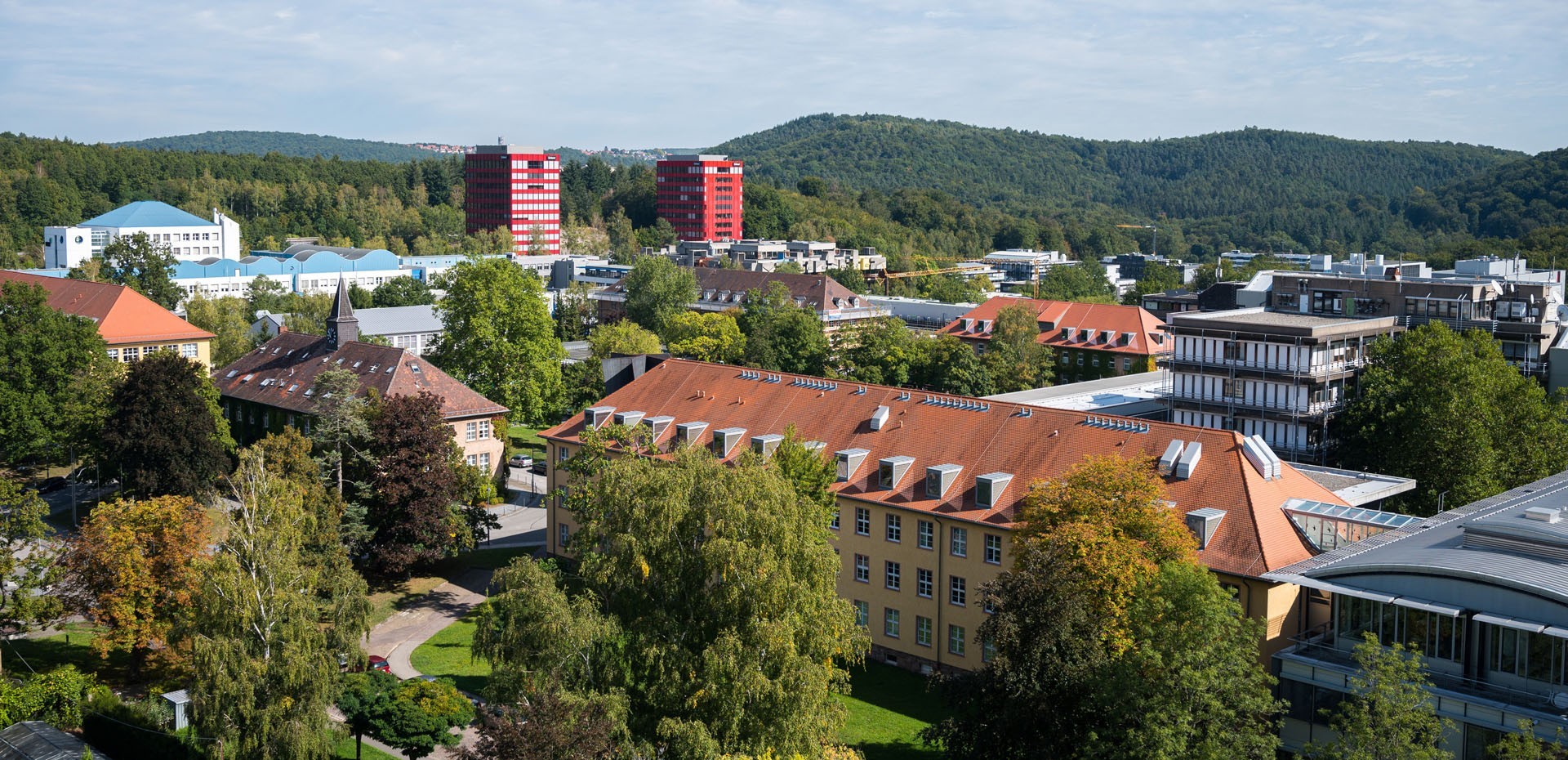
Saarland University (Universität des Saarlandes) is a public university in Saarbrücken, Saarland, in south-western Germany close to the French border. Founded in November 1948 as a bilingual institution combining French and German educational traditions, it retains a pronounced European focus and close ties to France. It is a public corporate body established by law, supervised by the Saarland Ministry of Finance and Science.
The university has about 16,300 students (November 2025), of whom about 24% are international, and employs 5,125 people, including 289 professors and junior professors. It teaches on two sites, the main campus in Saarbrücken and the medical campus in Homburg, with a shuttle bus linking the two. The Saarbrücken campus occupies the grounds of a former military barracks.
Teaching and research are organised in six faculties:
Research concentrates on four core areas: BioMed (Life and Materials), Computer Science, Interdisciplinary European Studies and Sustainability. Computer science, nanosciences and life sciences are its best-known strengths. The Saarbrücken campus also hosts independent research organisations, including two Max Planck institutes, CISPA Helmholtz Center for Information Security, the German Research Center for Artificial Intelligence (DFKI), Fraunhofer IZFP and the Leibniz Center for Informatics.
Students from more than 120 nations study at the university. It offers cross-border programmes leading to double or triple degrees, partnerships with 550 higher education institutions in 52 countries, a Welcome Center and a Center for International Students (ZiS) for newcomers. Campus life includes university sport, choirs and orchestras, student clubs and the Erasmus Student Network Saarbrücken. All Bachelor's and Master's programmes are accredited, and the university was one of the first in Germany to achieve system accreditation for quality assurance.
There are no tuition fees for first-degree programmes or consecutive Master's programmes. All students pay the semester fee (Semesterbeitrag), which is not tuition: EUR 412.30 for winter semester 2026/27, made up of EUR 121.20 to Studierendenwerk Saarland, EUR 1.30 insurance cover, EUR 13.00 to the General Student Committee (AStA), EUR 50.00 administrative charge and EUR 226.80 for the nationwide student travel ticket. Advanced professional study programmes (weiterbildende Studiengänge) charge tuition fees. Non-enrolled students (Gasthörer) pay EUR 111.30 to EUR 156.30 per semester, and cross-enrolled students (Zweithörer) pay EUR 124.90.
The university advises on BAföG, scholarships, student jobs and other funding, and runs a scholarship information page with a seven-step guide: what scholarships are, who can get one, what is available, how to find the right one, how to apply, the selection process and where to get advice. International students should contact the Welcome Center. Details are on the scholarship page and the funding page.
Deutschlandstipendium at Saarland University →
Stipendium für mehr Chancengerechtigkeit (STIBET, Saarland University) →
Browse the scholarships listed for Saarland University and check each award’s eligibility.
View scholarships for Saarland University →Programmes are either unrestricted (zulassungsfrei) or restricted (zulassungsbeschränkt). For unrestricted programmes applicants who hold a university entrance qualification enrol directly through the SIM portal, without a prior admission application: from the beginning of June to 30 September for the winter semester and from December to 31 March for the summer semester. For restricted programmes, applications are made through the SIM portal by 15 July for the winter semester and from early December to 15 January for the summer semester; some programmes start only in the winter semester. Applicants from outside the EU/EEA with a foreign entrance qualification take part in a special quota of five per cent for restricted programmes. Some programmes have their own procedures: Computer Science (English) and Cybersecurity (English) at the Saarland Informatics Campus, Deutsch-Französische Studien, and Droit français et allemand. Applications for some programmes are also made through hochschulstart (DoSV).
Applicants with a foreign school-leaving certificate need a preliminary review documentation (Vorprüfungsdokumentation, VPD) from uni-assist for a first-semester application. Documents to submit digitally include the VPD, proof of German language skills, the secondary school certificate (with a certified translation into German, English or French if issued in another language), a passport or identity card, and where relevant earlier study records, a degree certificate and the Feststellungsprüfung certificate from a Studienkolleg. For enrolment after admission, proof of health insurance and payment of the semester fee are also required. Applicants from China, Vietnam and India need a certificate from the Akademische Prüfstelle (APS) by the application deadline.
Applicants whose certificate gives only an indirect entrance qualification must first complete a preparatory course, usually at a Studienkolleg, ending with the Feststellungsprüfung. Saarland University has no Studienkolleg of its own. Applicants interested in certain humanities and economics programmes, or the Bachelor Plus MINT programme, can apply for the Vorbereitungsstudium International (VSI) without a Studienkolleg certificate. A preparatory German course is available at the Internationales Studienzentrum Saar, with applications by 15 July (winter semester) and 15 January (summer semester).
Proof of German at DSH-2 level is required. Accepted certificates are DSH-2 or DSH-3, PNDS, TestDaF level 4 or 5 in all parts, Goethe-Zertifikat C2 (GDS, KDS or ZOP) and the Deutsches Sprachdiplom Stufe II of the Kultusministerkonferenz. Other certificates, for example telc C1, are not accepted. Exchange and programme students are exempt.
The same rules apply to all applicants regardless of nationality. Admission requirements, the application platform and the contact for subject advice are set by each Master's programme; for some programmes applications go through the SIM portals during the application period, for others through the department.
German and international doctoral students must register or enrol with the Admissions Office (Studierendensekretariat); whether this is mandatory or optional depends on the faculty.
Services on campus include food and drink outlets, shops and services, university sport (Hochschulsport in Saarbrücken and Homburg), choirs and orchestras, student film and clubs, a Language Centre, and a shuttle bus between the Saarbrücken and Homburg campuses. Virtual and 360-degree campus tours are available.
Study programmes offered at Saarland University.
Experiences shared by students of Saarland University.
Studied here? Share your experience to help other applicants.

Book a free consultation with our expert counsellors and take the first step towards your dream university.
Copyrights © 2026 StudyMapped. All rights reserved.

Enter your credentials to continue.
Join us and start your study abroad journey.


