
University in Germany
Aachen, Nordrhein-Westfalen, Germany
University profile
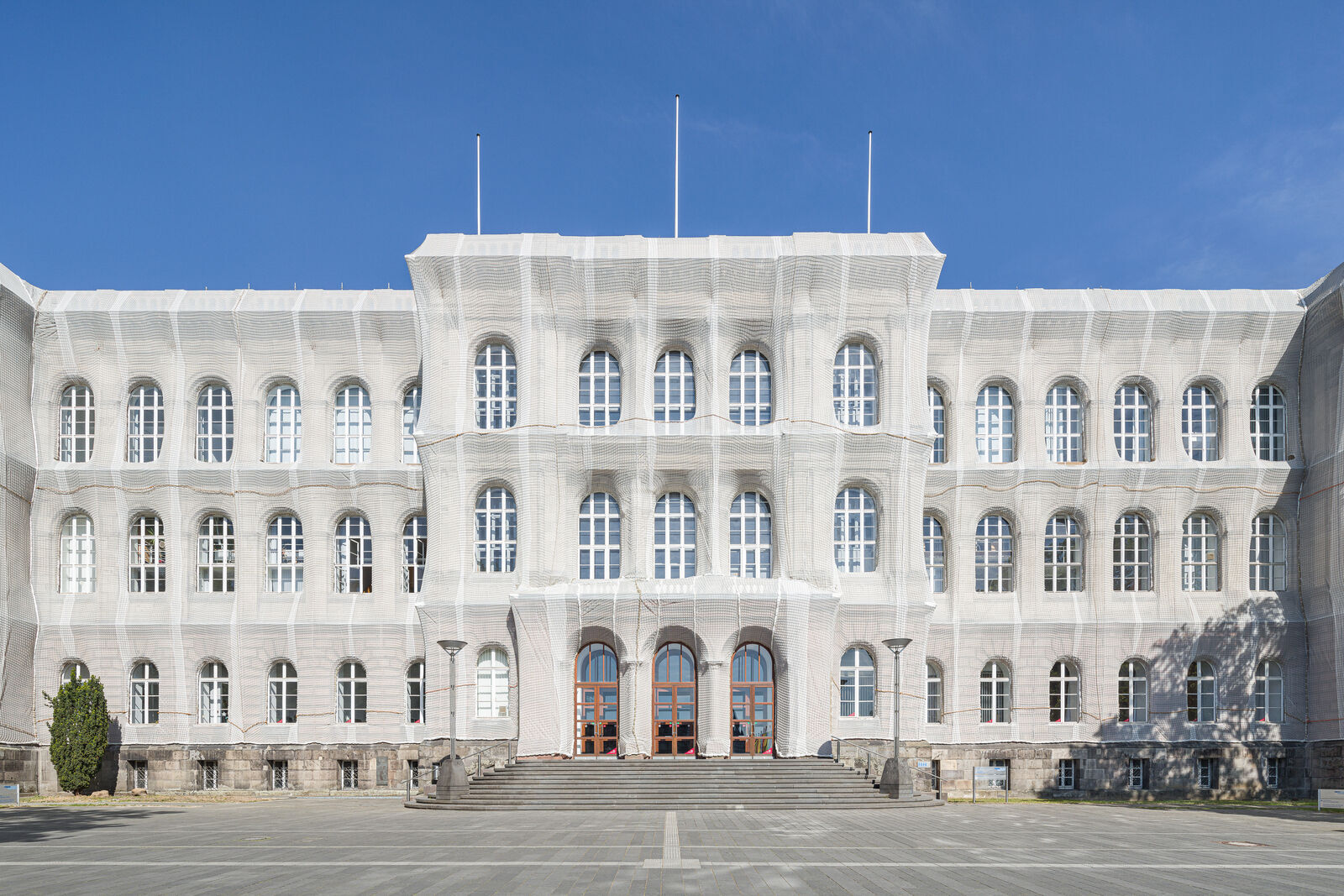
RWTH Aachen University (Rheinisch-Westfälische Technische Hochschule Aachen) is a public university in Aachen, North Rhine-Westphalia, that opened in 1870 as a polytechnic and is today the largest technical university in the German-speaking world by student numbers. Its motto, Mens agitat molem (the mind moves the mass), is carved into the former chemical laboratory. The university describes itself as an integrated interdisciplinary university of science and technology, with engineering at its core extended into the natural sciences, data science, medicine and biology, and with the humanities and social sciences contributing to how new technologies are shaped. It is a University of Excellence under the German federal and state Excellence Strategy.
In winter semester 2025/26 RWTH had 44,382 students, of whom 15,811 were international students from 141 countries. Around 570 professors work across ten faculties and 260 institutes: Mathematics and Natural Sciences; Architecture; Civil Engineering; Mechanical Engineering; Georesources and Materials Engineering; Electrical Engineering and Information Technology; Arts and Humanities; School of Business and Economics; Computer Science; and Medicine. The teaching offer includes Bachelor's, Master's and Staatsexamen programmes (including medicine and dentistry) as well as teacher training and doctoral studies, and all faculties award doctorates.
Research is organised across the faculties and nine interdisciplinary Profile Areas: Built and Lived Environment; Energy, Chemical and Process Engineering; Information and Communication Technology; Materials Science and Engineering; Medical Science and Technology; Mobility and Transport Engineering; Modeling and Simulation Sciences; Molecular Science and Engineering; and Production Engineering. RWTH hosts three Clusters of Excellence (CARE, FSC² and ML4Q) and, with Forschungszentrum Jülich, runs the Jülich Aachen Research Alliance (JARA). The RWTH Aachen Campus at Melaten and West brings institutes, Fraunhofer institutes and companies together in thematic research clusters.
Student life centres on Aachen, a city close to the Belgian and Dutch borders. Over 100 sports are offered through University Sports (Hochschulsport), the university libraries and learning spaces serve all faculties, and 109 accredited student initiatives cover subjects from engineering and robotics to music and sport. International students are supported by the International Student Center, a Welcome Week before the start of lectures, and a Housing Advice Service. RWTH does not own or manage student residences; rooms are provided by Studierendenwerk Aachen and private operators. RWTH is a state-run institution under the Ministry of Culture and Science of North Rhine-Westphalia.
RWTH does not charge tuition fees to any students, including international students from non-EU countries; the State of North Rhine-Westphalia bears the cost of study. All students pay only the Student Body and Social Contribution Fee (Semesterbeitrag, commonly called the semester fee), which is not tuition, varies slightly each semester and is shown in RWTHonline during enrolment.
The RWTH Education Fund, set up in winter semester 2009/10, awards the Deutschlandstipendium, supported by the federal ministry responsible for research and by private donors. It supports students with outstanding academic performance and potential; personal life experiences, extracurricular involvement, community service and social background may also be considered. The long-term goal is to fund the top ten percent of RWTH students, and about 20 percent of applicants are awarded a scholarship each year. Recipients also join a framework programme of social, cultural and sporting events. Applications run annually. Details: Deutschlandstipendium at RWTH.
RWTH maintains an overview of scholarships awarded, administered or facilitated by the university, including its liaison officers for the German foundations that support gifted students (Begabtenförderungswerke), at Scholarships and Funding Programs. Funding via DAAD scholarships is also pointed to by the university. German students can apply for BAföG through the BAföG office of Studierendenwerk Aachen, which also advises on KfW and DAKA student loans. RWTH notes that German universities generally do not offer full-coverage scholarships of their own, and that the application itself is free of charge. Further information for international students: Financing Your Studies. Part-time work and student assistant jobs can be found through the RWTH Jobs Portal.
RWTH Degree Completion Scholarship for International Students (DAAD STIBET I) →
RWTH Scholarship for Particularly Involved International Students (BEIS, DAAD STIBET I) →
RWTH Equal Opportunity Scholarship (DAAD STIBET I) →
RWTH Deutschlandstipendium (RWTH Education Fund) →
Browse the scholarships listed for RWTH Aachen University and check each award’s eligibility.
View scholarships for RWTH Aachen University →Applicants need a university entrance qualification (Hochschulzugangsberechtigung, HZB), such as the Abitur or an equivalent school-leaving certificate, plus language proof where applicable and, for restricted-admission programmes, an admission notification. A self-assessment test for the chosen programme must also be completed (not required for medicine and dentistry). All applications are made online through RWTHonline, and open-admission Bachelor programmes still require use of the application wizard. For programmes with a numerus clausus (NC), places are allocated by the average grade of the entrance qualification; RWTH takes part in the Dialogue-Oriented Service Procedure (DoSV) of the Stiftung für Hochschulzulassung for restricted-admission Bachelor programmes. Persons without the Abitur may qualify through a vocational-qualification route.
International applicants (those without German citizenship or a German degree) need an HZB recognised for direct entry; if the school certificate alone is not sufficient, applicants must first study in their home country or complete a Studienkolleg in Germany (recognition is checked via anabin). The overall average grade must be at least equivalent to German 2.5; a weaker grade can be compensated with a sufficient TestAS result, and TestAS is always mandatory for medicine (model programme) and dentistry. RWTH currently offers Bachelor and Staatsexamen programmes in German only (some programmes are bilingual German and English), so German at level C1 is required at enrolment; some Bachelor programmes, for example computer science, also require English at B2. The Fast Track Bachelor Admission Program (FTBA) offers direct entry to six STEM Bachelor programmes (Mechanical Engineering; Business Administration and Engineering with a focus on Mechanical Engineering; Electrical Engineering and Information Technology; Computer Engineering; Computer Science; Chemistry) for qualified international students whose qualifications would otherwise require preparatory study, with language courses, tutorials and accommodation in an RWTH student residence.
Winter semester: Bachelor without NC, 1 May to 20 October; Bachelor and medical studies with NC, 1 May to 15 July; Master with NC, 1 May to 15 July; Master without NC, 1 May to 15 July for Germany and EU, 1 December to 1 March for other countries; doctorate, 1 August to 15 December. Summer semester: Bachelor without NC, 1 December to 20 April; no summer admission to Bachelor and medical studies with NC; Master without NC, 1 December to 15 January for Germany and EU, 1 June to 1 September for other countries; Master with NC, 1 December to 15 January; doctorate, 1 February to 15 June. For international Master applicants from outside the EU/EEA, restricted-admission programmes have deadlines of 15 July (winter) and 15 January (summer), and applicants currently enrolled at RWTH or holding a relevant German degree also use these dates. Deadlines are final and late applications are not considered.
Most Bachelor and many Master's programmes are taught in German; several Master's programmes are taught entirely in English. Applicants must prove proficiency in the language of instruction, usually with a recognised certificate (German via the DSH examination or equivalent recognised tests; English via recognised tests with a minimum score achieved in a single sitting; TOEFL MyBest scores are not accepted). German certificates are waived for holders of a school-leaving qualification giving access to higher education in Germany, Luxembourg, Austria, German-speaking Switzerland, German-speaking Belgium or South Tyrol, for those who completed a German-taught degree at a German higher education institution, and for holders of qualifying bilingual International Baccalaureates. English certificates are waived for those with a school or university qualification from the UK, Ireland, Australia, New Zealand, Canada or the USA; citizenship alone does not qualify. Programme-specific minimum levels are set in the examination regulations and the RWTH language-requirements document.
A first university degree (such as a Bachelor's, Staatsexamen or Diplom) from a recognised university is required, and its content must be quantitatively and qualitatively equivalent to the background knowledge set out in the programme's examination regulations. Programmes can also require practical achievements or language skills, and for NC programmes an admission letter. International applicants upload a transcript of records or diploma supplement, a module catalogue or course descriptions, a CV and, where the examination board requires them, further tests such as the GRE (institution code 8504) or TestAS; documents not in German or English need a certified translation, and the examination board reviews the relevance of the first degree, which can take several months. Admission can be with or without additional requirement modules. Applicants do not need to have completed the Bachelor's degree at the time of application.
All faculties award doctoral degrees. Candidates need a Master's degree or equivalent, a written confirmation from an RWTH professor willing to supervise, and admission by the responsible doctoral committee; enrolment as a doctoral student is limited to twelve semesters unless the committee extends it. Doctoral studies at RWTH have no coursework phase; structured programmes exist only in affiliated graduate schools and research training groups. Whether a language certificate is needed is decided by the supervisor.
Non-EU students need a residence permit and a registered address in Germany. The International Student Center advises on visa and immigration matters and the Welcome Week introduces new international students to study and life in Aachen.
Campus Central (city centre, Aachen): the historic main site around Templergraben, with the central administration, the International Student Center (SuperC, Templergraben 57) and the University Library (Templergraben 61); institutes of the faculties are located here and across the city.
RWTH Aachen Campus as a whole has 455 companies represented and 800,000 square metres of development area at Melaten and West.
Reasons students choose RWTH Aachen University for their study abroad journey.
Study programmes offered at RWTH Aachen University.
Experiences shared by students of RWTH Aachen University.
Studied here? Share your experience to help other applicants.
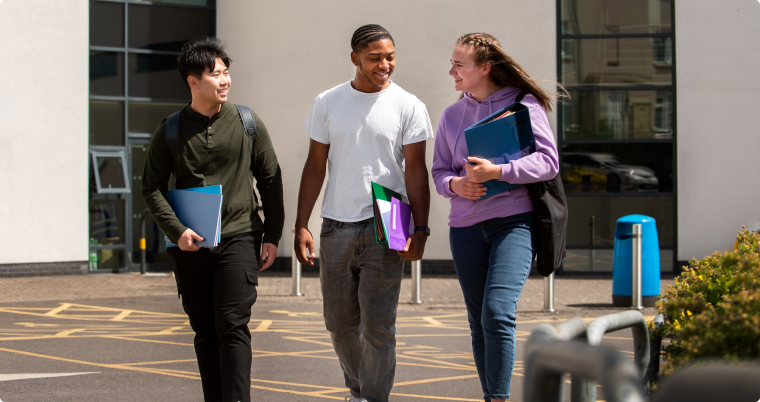
A glimpse of campus life and the academic environment.


Book a free consultation with our expert counsellors and take the first step towards your dream university.
Copyrights © 2026 StudyMapped. All rights reserved.

Enter your credentials to continue.
Join us and start your study abroad journey.


