
University in United Kingdom
Cirencester, England, United Kingdom
University profile
The Royal Agricultural University (RAU) in Cirencester, Gloucestershire, is a specialist university for the land-based sector and the first agricultural college in the English-speaking world. Founded in 1845 and granted a Royal Charter by Queen Victoria in the same year, it gained full university status from the Privy Council in 2013. More than 1,100 students study agriculture, business, environment, equine science, farm management, food, real estate and rural land management, and His Majesty King Charles III, President of the institution from 1982, was announced as its patron in May 2024.
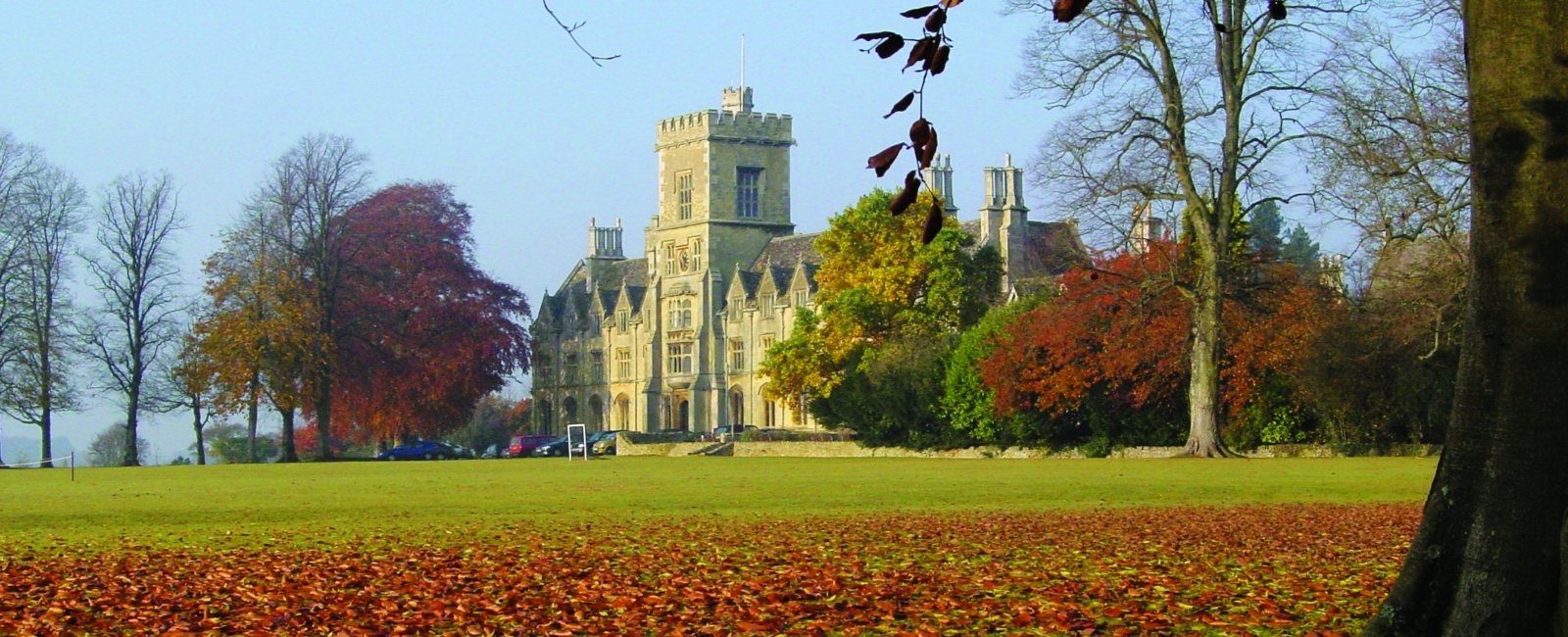
The single main campus sits on the outskirts of Cirencester, within walking distance of the town and surrounded by Cotswold countryside. Teaching is organised by subject area rather than faculties: Agriculture, Business and Entrepreneurship, The Environment, Equine Management and Science, Land and Property and Cultural Heritage (postgraduate). The portfolio runs from two-year Foundation degrees (FdSc) and foundation-year entry through more than 20 undergraduate degrees, placement-year and top-up routes, to MSc, PgDip, PgCert, MSc by Research and PhD programmes. The University also validates the FdSc and top-up BSc in Animal Management and Zoology delivered at Capel Manor College in Enfield, north London.
Practical learning draws on Land Laboratories and an Experimental Barn opened in summer 2025, the RAU Equestrian Centre at Fossehill Farm, Coates Manor Farm (a 457-acre regenerative arable farm farmed with SS Horton and Sons), access to Leaze Farm's 300-cow dairy herd, the GREAT Market Garden Project, and a vineyard producing Cotswold Hills wine run as a social enterprise. The agri-tech incubator Farm491, the National Innovation Centre for Rural Enterprise (NICRE) and the planned 12-hectare Innovation Village, which received outline planning permission in May 2026, link the University with industry.
Student life centres on the campus: halls of residence with half-board or self-catered rooms, The Restaurant, the Tithe Barn and The Tithe student bar, a library, a gym, a chapel, rugby, football and lacrosse pitches, netball and padel courts. The Students' Union runs clubs and societies ranging from polo, hockey and clay pigeon shooting to beekeeping, a choir and an Officer Training Corps, and subsidised teams compete in BUCS.
Students from over 40 countries study on the Cirencester campus, and over 2,000 more study with overseas partners. The RAU holds a Student Sponsor Licence, has a dedicated Visa Support Team, and partners with seven Chinese universities as well as institutions in Uzbekistan, the UAE and Ukraine. It is a registered higher education provider with the Office for Students, was awarded Silver in the Teaching Excellence Framework 2023.
On-campus accommodation for 2026-27 ranges from £7,350 (self-catered en-suite, 35 weeks) to £9,555 (large half-board en-suite). See undergraduate fees and postgraduate fees.
The RAU Bursary pays £1,000 a year (Stream 1) or £3,500 a year (Stream 2) for up to three years; there is no application, as eligibility is assessed from the student's Student Finance application. A Prospective Undergraduate Student Travel Bursary covers travel to the Cirencester campus. New 2026 entrants may hold one additional award on top of the RAU Bursary, including the RAU Next Generation Scholarship (UK ethnic minority students; £6,000 a year for up to three years plus trips and activities), the Bowyer Family Memorial Trust Scholarship (UK; up to £3,000), the Clyde Higgs Scholarship (UK; up to £2,000) and the Sir Emrys Jones Memorial Trust award (UK students with strong Welsh links; up to £2,000 a year). Current students can apply for the Kaleb Cooper Agriculture Bursary (£3,000; closes 16 November 2026) and the Douglas Bomford Trust Scholarship. Details: Undergraduate bursaries, awards and scholarships.
For UK and international students competing at UK national or international level: at least £1,000 a year, paid in three instalments, with re-application each year. Applicants submit an online form and a reference from a tutor, coach or employer; the 2026 deadline was 6:00pm, 1 May 2026. RAU Sports Scholarships.
An offer of a place is required before applying for any bursary or scholarship. Requests received after the spring committee deadline are considered monthly. External awards listed by the University include Chevening Scholarships, the Marshal Papworth Scholarship (£21,875 in total), the NFU Mutual Charitable Trust Centenary Award (up to 75% of course fees for postgraduate agricultural students), Postgraduate Solutions Study Bursaries and UK Postgraduate Master's and Doctoral Loans. See Postgraduate bursaries, awards and scholarships and International scholarships and awards.
UK undergraduates can take Tuition Fee Loans of up to £9,790 (full-time) and Maintenance Loans for 2026/27 of up to £9,118 living with parents or £10,830 living away. The Access to Learning fund helps students in financial hardship at any point in their course (contact [email protected]). Scholarship enquiries: [email protected].
RAU Africa Agricultural Leadership Award →
Vice-Chancellor's Global Impact Scholarship →
Browse the scholarships listed for Royal Agricultural University and check each award’s eligibility.
View scholarships for Royal Agricultural University →All full-time undergraduate applications, from UK and international applicants alike, are made through UCAS, where up to five choices can be listed and progress tracked in UCAS Track. The equal-consideration deadline for 2026 entry was 14 January 2026; late applications can be sent through UCAS until 1 July, and Clearing operates afterwards. Transfers from other universities are also considered.
Applicants without standard qualifications may be considered on personal, professional and educational experience, and ex-service personnel are welcomed under the Armed Forces Covenant and ELCAS scheme. Contextual offers are available to applicants from link colleges, care leavers, applicants from non-white ethnic backgrounds, those from areas with low progression to university, and veterans or children of armed forces families.
Two-year FdSc programmes (Agriculture & Farm Management; Wildlife Conservation & Countryside Management) suit applicants without traditional entry requirements and lead to a one-year top-up to a full Bachelor's degree.
International undergraduates apply through UCAS and send scanned colour copies of results and secondary certificates directly to the University, since most international results are not sent through UCAS. Country-specific pages set out qualification equivalences, and the International Team ([email protected]) and educational agents can assist.
IELTS Academic is the preferred test (IELTS Academic UKVI for visa applicants). Minimum scores include:
Foundation degree applicants needing a Student visa who are not nationals of a majority English-speaking country must hold IELTS Academic UKVI at 6.0 overall with no component below 5.5 (or an accepted SELT such as LanguageCert Academic UKVI, PTE Academic UKVI or Trinity ISE II).
Applications for Master's, PgDip, PgCert and Graduate Diploma programmes go directly to the University through the 'Apply' button on each course page, at any time of year, with the main period between November and May. Applicants supply a personal statement, a CV of up to two pages, two academic references, transcripts and degree certificates, English test results and a passport copy; decisions are aimed for within two weeks of receiving all documents. MSc programmes typically ask for an honours degree at 2:2 or above or an equivalent professional qualification or experience, and non-standard applicants may be interviewed. Many courses offer September and January starts.
MSc by Research and PhD applications follow a two-stage process: applicants first email [email protected] with a research proposal; if a supervisor is matched, they submit a formal application and attend an academic interview. The standard PhD entry requirement is a Master's degree or equivalent, with mature candidates with significant work experience considered after interview. The process usually takes 4-12 weeks.
The RAU is a licensed Student sponsor and sponsors full-time students only. Applicants need an unconditional firm place, must meet the English language and financial requirements, and must claim 70 points (50 for the Confirmation of Acceptance for Studies, 10 financial, 10 English language). The Visa Support Team checks applications before students submit them. International students pay a 50% tuition deposit by 1 August, with the balance due by registration (20 September 2026).
Main campus, Cirencester (GL7 6JS): all on-campus teaching for undergraduate and postgraduate programmes.
RAU Equestrian Centre, Fossehill Farm, Coates (GL7 6NX): eight barns with three to 31 stables each, 58 paddocks, a 30 x 60m floodlit outdoor arena, a 990m all-weather exercise track and a horse walker; used for equine teaching, dissertations and research; highly commended by the British Horse Society in 2021.
Farms and field sites: Coates Manor Farm (457-acre regenerative arable farm within walking distance), the seven-acre GREAT Market Garden next to campus, Leaze Farm (300-cow grass-based dairy herd), the RAU vineyard, and estates such as Miserden and Guiting Power for visits.
Capel Manor College, Enfield, north London: partner college delivering the RAU-validated FdSc and BSc (Hons) Top-up in Animal Management and Zoology.
Study programmes offered at Royal Agricultural University.
Experiences shared by students of Royal Agricultural University.
Studied here? Share your experience to help other applicants.

Book a free consultation with our expert counsellors and take the first step towards your dream university.
Copyrights © 2026 StudyMapped. All rights reserved.

Enter your credentials to continue.
Join us and start your study abroad journey.


