

University in United Kingdom
Plymouth, England, United Kingdom
University profile
Plymouth Marjon University is a single-campus university in Derriford, on the northern side of Plymouth in Devon. It is the trading name of the University of St Mark & St John, an institution that traces its origins to two Victorian teacher-training colleges in London and has been based in Plymouth since 1973. It is a small, values-led university with small class sizes, a Personal Development Tutor for every student and work placements built into all of its programmes.
Teaching is organised into subject areas rather than large faculties: Arts & Humanities, Business, Education & Communities, Health & Wellbeing, Law & Crime, Sport, Physical Education & Coaching and Teacher Training. Undergraduate, foundation, postgraduate taught, PGCE, apprenticeship, distance-learning and research degrees are offered, and PhDs in business, education, health, the social sciences and sport are accredited by the University of Chichester. Marjon also validates programmes delivered by partner providers in the UK and overseas, including AIC Campus in Sri Lanka, Exeed College and Hanoi University of Science and Technology.
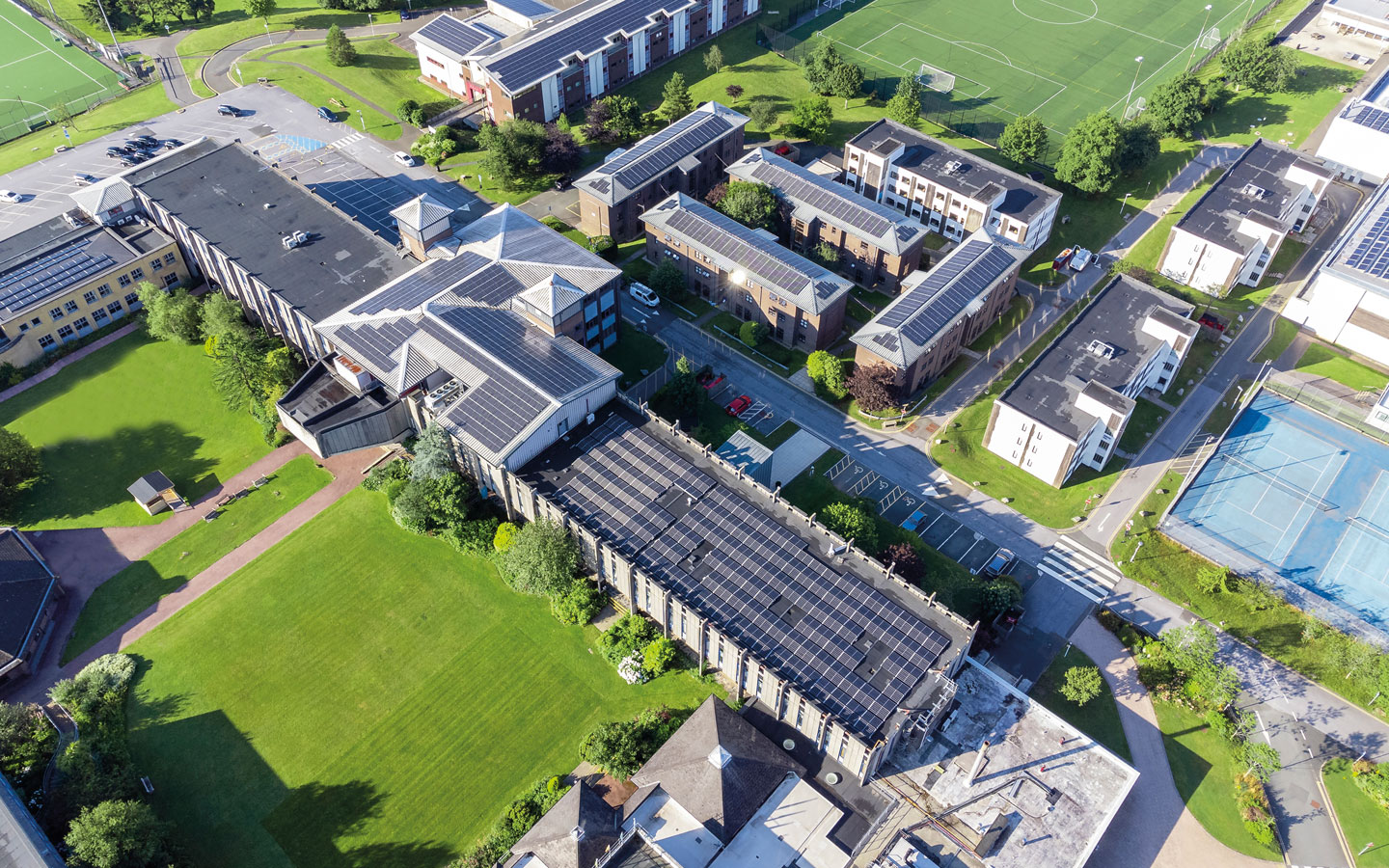
Teacher education remains a defining strength, alongside sport and health. The campus houses the Marjon Sport & Health centre with a 25 by 10m swimming pool, a sports hall, a 3G pitch, two hockey astro pitches and padel courts, together with a sports science lab, a Sports Therapy & Rehabilitation Clinic open to the public, and laboratories for speech, voice, psychology and the neurocognition of language. Health students train with real patients in the on-site clinics, and the Marjon Arts Centre is also on campus.
Student life centres on the campus itself. Residences include Coleridge, Kay Shuttleworth and Tufnell Halls, Cromwell and Hudson Halls, Dix Hall, a 38-house student village and The Oaks for postgraduate and PhD students, all with 24/7 security and wellbeing support. Sport is a major part of the student experience: Marjon competes in BUCS, hosts the Women's and Men's U23 National Basketball teams in partnership with Plymouth Raiders, and works with Argyle Community Trust on its football degrees. A Flying Start nursery operates on campus in a purpose-built building.
International students from more than 60 countries have studied at Marjon. International undergraduates apply through UCAS and international postgraduates apply directly to the university; most need a Student Visa, for which the university issues a CAS. A Study Abroad programme admits overseas students for a semester or a full year, and the university takes part in the Turing Scheme.
Marjon received Gold in the 2023 Teaching Excellence Framework. Its Access and Participation Plan for 2025-26 to 2028-29 is approved by the Office for Students. In the Research Excellence Framework 2021 it submitted to two units of assessment, Education and Sport and Exercise Sciences, Leisure and Tourism.
For 2026/27, undergraduate and foundation degrees cost £9,790 a year for Home students and £15,200 for non-UK students (2025/26: £9,535 and £14,600). Work-based foundation degrees cost £6,353 for Home students (2025/26: £6,186). Taught master's degrees cost £8,800 (Home) and £16,500 (non-UK) in 2026/27; the PGCE costs £9,790 and £15,200. MPhil and PhD fees for 2026-27 are £5,238 full-time and £2,848 part-time for Home students, and £16,000 full-time and £8,914 part-time for non-UK students, with a £400 write-up fee. Overseas fee payers must pay each year in full before registration.
Undergraduate care leavers and estranged students aged 25 or under when they start receive an annual grant of £2,000, plus a named adviser and year-round campus accommodation. Care leavers and estranged students
A means-tested fund for registered students in financial difficulty, including student parents, mature students with financial commitments, students from low-income families, care leavers and homeless students. Payments are usually made in instalments; application forms are available from [email protected]. Student funding advice
For students competing at national or international level who can represent Marjon in BUCS. Scholarships provide performance support worth up to £2,000 a year (free use of the Sport & Health Centre and clinics, BUCS entry costs, kit, sport psychology and strength and conditioning), and some scholars also receive financial support. Applications run from mid-January to mid-June; international students apply through the Student Sport Company. Sport Performance Scholarships
Marjon graduates receive a 20% discount on postgraduate programmes, excluding the PGCE and progression to MPhil or PhD.
Placement students may receive help with travel and subsistence costs, assessed by need. PGCE students can access Student Finance England loans and may receive a government teacher training bursary, administered automatically on application. Postgraduate Loans of up to £13,206 (2026/27) and Postgraduate Doctoral Loans of up to £31,122 are available to eligible students, and Disabled Students' Allowances of up to £27,783 (2026-27) are supported by the disability team. Fees and funding | Postgraduate funding
Marjon Sport Performance Scholarship →
Marjon Care Leaver and Estranged Student Bursary →
Marjon Attribute Development Bursary →
Marjon University Hardship Fund →
Browse the scholarships listed for Plymouth Marjon University and check each award’s eligibility.
View scholarships for Plymouth Marjon University →Most undergraduate applications are made through UCAS (institution code P63, PMARJ), either through a school or college or independently. Applications should normally reach UCAS between the start of September and the UCAS deadline on the last Wednesday of January; all applications received by that deadline are reviewed, and later applications are considered for courses that still have places. Part-time applicants apply directly to the university through Apply Direct, normally between 1 September and 31 July; part-time study is not available for all teacher training and Speech & Language Therapy programmes.
Typical offers are set for each course, and different offers may be made in some cases. The Admissions team reviews qualifications and the personal statement, and the Programme Lead also assesses qualifications, predicted grades and the statement; applicants may submit a portfolio, be asked for a short piece of work or request a discussion with the Programme Lead. Applicants with non-standard qualifications or substantial experience are considered individually.
Under the contextual admissions policy, applicants whose personal circumstances, background or educational setting have affected their exam performance may be eligible for a lower offer. Care leavers are advised to tick the care leaver box on the UCAS form.
All undergraduate applicants need GCSE English Language at grade C/4 or an equivalent. For non-visa undergraduate entry, accepted equivalents include IELTS Academic with 6.0 in each component and PTE Academic with 50 in each component (both within the last two years), Cambridge Proficiency at C2 and Trinity ISE II. Student Visa undergraduates need IELTS for UKVI 6.0 in each component, LanguageCert Academic 65 in each component, PTE Academic UKVI 59 in each component, or Skills for English UKVI B2. Student Visa postgraduates need IELTS for UKVI 6.5 in each component, LanguageCert Academic 70, PTE Academic UKVI 76 in each component, or Skills for English UKVI C1. Initial Teacher Training and some linguistically demanding programmes may require higher standards.
International undergraduates apply through UCAS; international postgraduates apply directly. Fee status (Home or Overseas) is assessed after application. Students on full-time on-campus courses need a Student Route visa. A CAS is issued once all offer conditions are met and 50% of the first year's tuition fee has been paid; the balance must be paid before registration, and later years must be paid in full before registration, with no instalments for overseas fee payers. The deposit is refundable if the visa is refused, except where refusal is due to incorrect or fraudulent documents.
Overseas students may study for the autumn semester (apply by 30 April), the spring semester (apply by 30 October) or a full year, earning 60 or 120 UK credits respectively.
Most postgraduate programmes take direct applications through the university's online form; part-time applications are usually made between 1 September and 31 July. PGCE and School Direct applications go through the Department for Education Apply for teacher training service. PhD enquiries are handled through the research degrees pages, and postgraduate queries go to [email protected].
All teaching, residences and sport take place on a single campus at Derriford Road, Derriford, Plymouth PL6 8BH, about 15 minutes' drive from Plymouth city centre and next to a nature reserve, with Dartmoor National Park a short drive away.
Study programmes offered at Plymouth Marjon University.
Experiences shared by students of Plymouth Marjon University.
Studied here? Share your experience to help other applicants.

Book a free consultation with our expert counsellors and take the first step towards your dream university.
Copyrights © 2026 StudyMapped. All rights reserved.

Enter your credentials to continue.
Join us and start your study abroad journey.


