

University in Germany
Karlsruhe, Baden-Württemberg, Germany
University profile
The Pädagogische Hochschule Karlsruhe (PHKA) is a university of education in Karlsruhe, Baden-Württemberg, with the right to award doctorates and to confer the Habilitation. It describes itself as an educational-science institution that teaches and researches school and out-of-school learning, and it is a public body (Körperschaft des Öffentlichen Rechts) supervised by the Baden-Württemberg Ministry of Science, Research and the Arts. Around 3,400 students are taught by about 50 professors, around 170 academic staff and 140 further staff in administration.
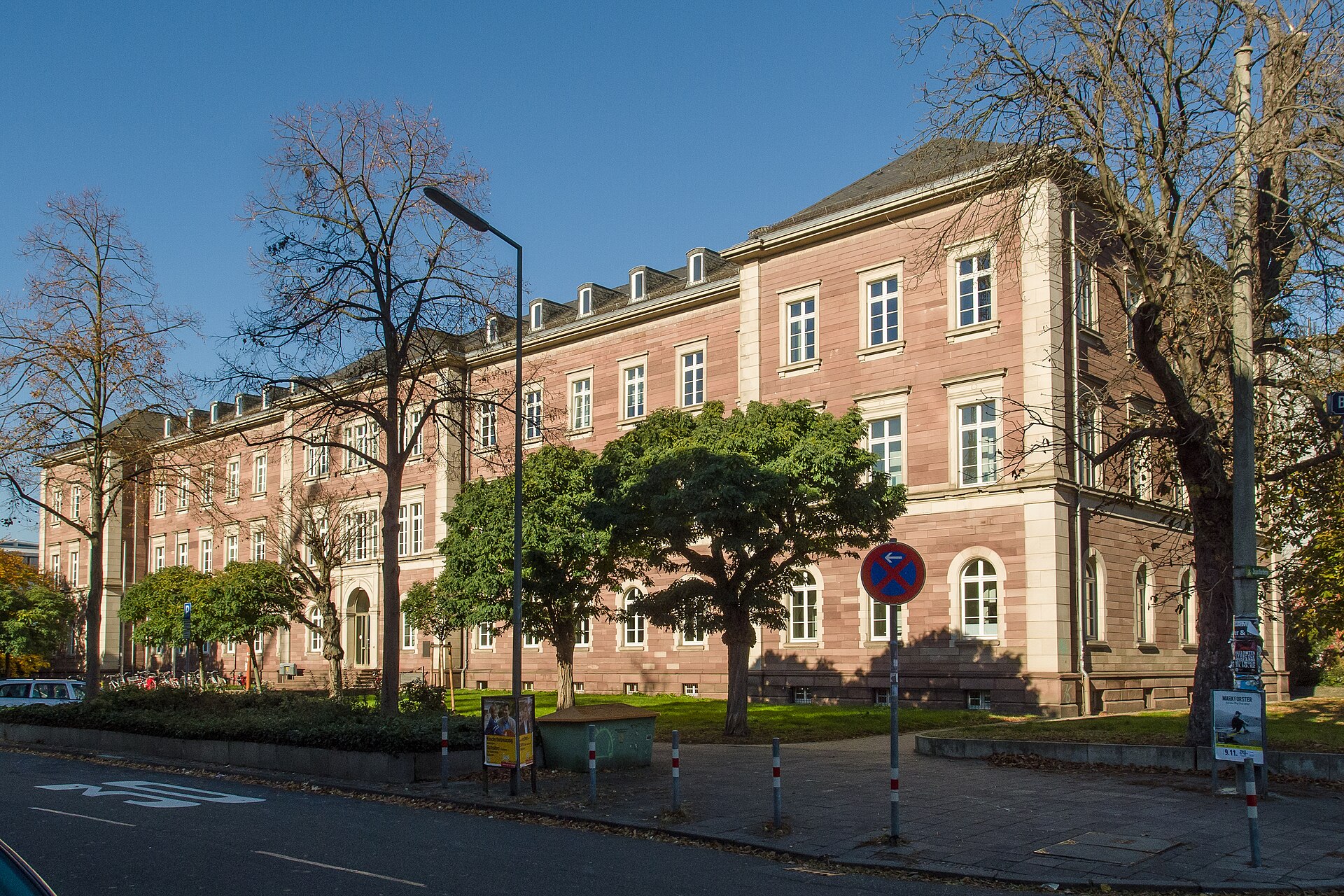
The main campus is at Bismarckstraße 10 (buildings 1 to 3), a few minutes on foot from the city centre, the Karlsruhe Palace gardens and the Botanical Garden. It houses the Rectorate, administration, the university library, the cafeteria and most institutes of both faculties. Building 4 on Erzbergerstraße 119 hosts the institutes for Islamic Theology and Religious Education, Transdisciplinary Social Science, Political Science, Economics and its Didactics, and Psychology. The Ecological Teaching and Learning Garden (9,000 square metres) lies on Adenauerring.
Teaching and research are organised in two faculties. The Faculty of Humanities and Human Sciences (Fakultät für Geistes- und Humanwissenschaften, Faculty A) has twelve institutes, among them Empirical Educational Research, German Language and Literature, Childhood Education, Multilingualism, Psychology and Protestant, Catholic and Islamic Theology. The Faculty of Natural and Social Sciences (Fakultät für Natur- und Sozialwissenschaften, Faculty B) has thirteen institutes, including Mathematics, Chemistry, Physics and Technical Education, Computer Science and Digital Education, Biology, Art, Music, Sport and Political Science.
Study programmes include Bachelor degrees in Primary Teaching (Lehramt Grundschule), Secondary I Teaching (Lehramt Sekundarstufe I), Childhood Education (Kindheitspädagogik) and Sport-Health-Leisure Education; the European Teaching profile (Europalehramt, English or French) is offered within the teacher programmes. Master programmes cover teacher education for primary, Secondary I and vocational schools, plus Digital Education, Adult Education and Geragogik, among others. Doctorates (Dr. paed. or Dr. phil.) are available, with more than 130 doctoral researchers.
Student life centres on the Bismarckstraße campus: the caphete cafeteria and the Mensa Moltke run by the Studierendenwerk Karlsruhe, the general university sports programme organised by the student body, and music ensembles from big band to university choir under the Institute of Music. The campus is barrier-free and has a parent-child room. Karlsruhe has nine universities and over 43,000 students. Students find housing through the Studierendenwerk halls and private-room service.
International students are advised by the International Office. Regular degree programmes are taught in German, so proof of German is required; exchange students from partner universities receive a one-month orientation programme with a buddy scheme and intensive German courses.
In Baden-Württemberg, state universities generally charge no tuition for EU/EEA students; the semester contribution (Semesterbeitrag), which is not tuition, is currently about 210 euros per semester and includes the contribution to the Studierendenwerk Karlsruhe. Since the winter semester 2017/18 the state charges tuition fees to international students who are not nationals of an EU or EEA state; the fee is currently 1,500 euros, with exemptions regulated by the Landeshochschulgebührengesetz. Some programmes may carry additional fees.
The Deutschlandstipendium pays 300 euros per month, half from private donors and half from the federal government, for two semesters. For the winter semester 2026/2027 fourteen scholarships are advertised, funded by Sparkasse Karlsruhe, Heinrich-Hertz-Gesellschaft Karlsruhe, BBBank Stiftung Karlsruhe and Vector Stiftung; six go to Secondary I teacher students of mathematics, computer science, biology, chemistry, physics or technology. Applicants must be enrolled at PHKA in 2026/2027 and show strong achievement and financial need; selection also considers social engagement. The deadline is 31 October 2026 and applications (motivation letter of up to two pages, CV, entrance qualification certificate and, for Master applicants, the first degree certificate) go to [email protected]. Details: Deutschlandstipendium at PHKA.
PHKA awards graduate scholarships under the Landesgraduiertenförderungsgesetz (LGFG), advertised within the university. The research office supports applications for external doctoral scholarships. Details: Doctorates at PHKA.
The university points students to BAföG (applied for at the Studierendenwerk Karlsruhe), scholarship portals and the Begabtenförderungswerke, with contact persons in the central study advisory service. The International Office coordinates Erasmus+, DAAD and Baden-Württemberg Stiftung programmes. Details: Financing your studies.
Deutschlandstipendium at PH Karlsruhe →
STIBET Scholarship for International Students at PH Karlsruhe →
Browse the scholarships listed for Pädagogische Hochschule Karlsruhe and check each award’s eligibility.
View scholarships for Pädagogische Hochschule Karlsruhe →Entry requires the general university entrance qualification (Abitur) or an equivalent qualification. Bachelor programmes last six semesters. Applications are made online through the university's E-Portal; the childhood education and sport-health-leisure programmes additionally require registration at hochschulstart.de. For the Bachelor of Primary Teaching and Secondary I Teaching, the first-semester application period runs from 2 November to 15 January. Applicants need the entrance qualification, proof of the teacher orientation test, proof of the aptitude test for Art or Sport, a motivation letter for Music and, for international applicants, proof of German. Places are allocated by points: up to 60 for the entrance grade and up to 30 for other achievements, 90 in total. Several programmes start only in the winter semester.
Applicants from EU countries are checked by the International Office; certificates from non-EU countries must be assessed and recognised by the International Office, following Kultusministerkonferenz recommendations. No official recognition by the Regierungspräsidium Stuttgart or the ZAB is needed to apply. Certificates from some countries are recognised only after one or two years of successful study at a recognised university in the home country. Applicants with Chinese (excluding Hong Kong and Macao), Vietnamese or Indian certificates always need an APS certificate from the German embassy. If a school certificate is not equivalent to the Abitur, applicants may be offered a one-year course at the Studienkolleg of the University of Heidelberg, ending with the Feststellungsprüfung; applicants apply first for a subject at PHKA, which then registers them for the entrance test, and at least 750 hours of German instruction are recommended. Documents needed include certified copies of school and any university certificates with notes overview (translation not needed for English, French or Spanish), proof of German, proof of payment of the recognition administration fee for some programmes and the self-assessment test for study orientation.
Programmes are taught in German except for a few events. Accepted proof: DSH-2, TestDaF (at least 4 x TDN 4), Goethe-Zertifikat C2 (Großes Deutsches Sprachdiplom or earlier KDS, GDS, ZOB), telc Deutsch C1 Hochschule, DSD II of the Kultusministerkonferenz, German language examinations II of the Sprachen- und Dolmetscher-Institut München, or the Feststellungsprüfung certificate. The language certificate may be submitted by 30 September for winter semester entry and by 31 March for summer semester entry.
A first academic degree (Bachelor) is required, with the specific subject background set per programme. Applications are made through the E-Portal. For the Master of Primary Teaching, the first-semester deadline is 2 to 30 November; applicants submit the Bachelor certificate and transcript of records, the curriculum of the teacher-education Bachelor, enrolment and exmatriculation certificates and proof of German for foreign applicants. Selection is by points (up to 40 for the degree grade and 5 for other achievements). All Bachelor credits must be earned by 30 September for winter entry or 31 March for summer entry. For Migration, Education and Democracy, a first degree in education, social sciences, German, English, Romance studies, theology, philosophy or a related field is required, with a motivation letter of up to 750 words; the programme starts only in the winter semester.
Doctorates (Dr. paed. or Dr. phil.) require formal acceptance as a doctoral candidate by one of the faculties, a dissertation and an oral examination (Rigorosum or Disputation) under the Promotionsordnung. A doctorate may be written in another language than German by arrangement with the supervisor.
Facilities include the university library (specialising in education and psychology, with over 200,000 freely accessible printed books, journals and media, about 40,000 e-books and over 20,000 licensed e-journals), the Mensa Moltke (Moltkestraße 12, up to 1,800 guests daily, run by the Studierendenwerk), teaching-learning laboratories, a barrier-free campus and a parent-child room. Sport is organised by the student body through the general university sports programme.
Study programmes offered at Pädagogische Hochschule Karlsruhe.
Experiences shared by students of Pädagogische Hochschule Karlsruhe.
Studied here? Share your experience to help other applicants.

Book a free consultation with our expert counsellors and take the first step towards your dream university.
Copyrights © 2026 StudyMapped. All rights reserved.

Enter your credentials to continue.
Join us and start your study abroad journey.


