

University in United Kingdom
Oxford, England, United Kingdom
University profile
Oxford Brookes University is a public university in Oxford, England, whose roots go back to the Oxford School of Art founded in 1865. It took its present name in 1992, when Oxford Polytechnic became a university and chose to honour John Henry Brookes, the educationalist regarded as its spiritual founder. It is a member of University Alliance and the ARC Universities Group of universities between Oxford and Cambridge.
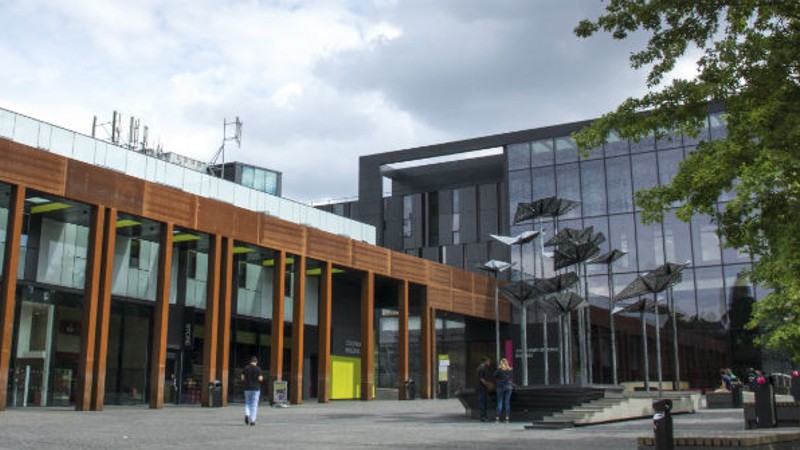
Teaching is concentrated on the Headington Campus, one mile east of Oxford city centre, made up of the Gipsy Lane site, Headington Hill and the Marston Road site. All remaining teaching and library services at Harcourt Hill, three miles west of the centre, moved to Headington for the 2025/26 academic year, and the site now provides student accommodation. The Swindon Campus in West Swindon, opened in 2017, teaches nursing.
Academic work is organised in two faculties. The Faculty of Arts, Humanities and Social Sciences contains the School of Arts, Oxford Brookes Business School, the School of Education, Humanities and Languages, Oxford Brookes Law School and the School of Social Sciences. The Faculty of Health, Science and Technology contains the School of Architecture, the School of Biological and Medical Sciences, the School of the Built Environment, the School of Engineering, Computing and Mathematics, the Oxford School of Nursing and Midwifery, the School of Psychology, Social Work and Public Health, and the School of Sport, Nutrition and Allied Health Professions. Awards range from foundation courses to PhDs and professional doctorates.
Research institutes include the Oxford Institute for Sustainable Development, the Oxford Institute of Applied Health Research and the AIDAS Institute. Nine staff hold National Teaching Fellowships, and Brookes Rowing members have won 28 Olympic or Paralympic medals since 2000.
Every student is a member of Brookes Union, which runs more than 100 student-led societies, an independent advice service and the alcohol-free 0% Event series. Support services include counselling, an Inclusive Support Service and a Multifaith Chaplaincy. Accommodation is offered in University-managed halls such as Cheney Student Village, Clive Booth Student Village, Paul Kent Hall and Warneford Hall, in partnership halls run by Unite Students and A2Dominion, and in Brookes Lettings shared housing.
More than 3,400 international students from 145 countries study at Oxford Brookes. The International Student Advice Team helps with visas, immigration and finance, and runs socials and free English language support. International pathway courses, including International Foundation programmes, Pre-Master's courses and Pre-sessional English, prepare students for degree entry, and many courses offer September and January starts.
Full-time undergraduate tuition for UK students is £9,790 in 2026/27 (up from £9,535), applying to new and continuing students; part-time undergraduate study costs £1,220 per single module. Fees are expected to rise annually with inflation. Postgraduate research fees in 2026/27 are £5,338 a year full-time for home students, and £18,300 to £20,100 a year full-time for international students depending on the faculty (Business School £20,100; Health and Life Sciences £19,900; Technology and Built Environment £18,500; Humanities and Social Sciences £18,300). Postgraduate taught and international undergraduate fees vary by course. A full placement year in 2026/27 costs £1,905; Study Abroad and associate students pay £8,625 per semester or £17,250 for a full year. International Foundation courses cost £17,250 for international students (£5,760 for UK students) in 2026/27, Pre-Master's Certificates £7,650, and the Pre-Master's Diploma £15,100.
New full-time international fee-paying students funding their own studies receive a £2,000 scholarship, applied as a discount on second-semester fees, if they pay their tuition deposit by the deadline. For January 2027 entry the deposit deadline is 4 December 2026; for September 2026 entry deadlines ran from 13 May to 7 August 2026 depending on the offer date. The scholarship covers listed undergraduate, postgraduate, pathway and CPD courses and cannot be combined with other Oxford Brookes funding. International Student Scholarship (January entry).
International students starting an Oxford Brookes Business School undergraduate degree in January 2027 who pay their deposit by 4 December 2026 receive £2,000 in each academic year of the degree. Business School International Student Scholarship.
UK full-time on-campus undergraduates paying £9,790 tuition fees receive a non-repayable annual bursary of £1,250 if household income is under £35,000, or £1,000 if it is between £35,000 and £45,000, paid in three instalments. Eligibility is assessed automatically. Oxford Brookes Bursary for New Students.
The Transition from Care Bursary and the Estranged Students Bursary each provide £2,000 a year to eligible UK full-time undergraduates under 25. The Estranged Students Bursary is paid in two instalments of £1,000, and applications close on 31 July 2027. A Young Carer Bursary and the Unite Foundation Accommodation Scholarship are also available.
One scholarship for 2026/27 entry is available for people seeking asylum or holding protection who cannot access government student finance. It includes a full tuition fee waiver, a £4,000 cash bursary, £10,000 of accommodation support and guaranteed 52-week halls accommodation for each year of full-time study. The application deadline for 2026/27 entry was 25 May 2026. Sanctuary Scholarship.
Graduates returning for another degree, and international students progressing from an International Foundation or Pre-Master's course, receive a 20% discount on first-year tuition fees. A 10% Research Alumni Discount, a Family Discount for Concurrent Study and a Visa Renewal Discount are also offered. 20% Alumni Discount Scheme.
Programme-specific awards include the British Chambers of Commerce Planning Scholarship, the London Book Fair Scholarship, the Mason Gilbert MSc Motorsport Engineering Scholarship, the Tessa Jane Evans Bursary for Nursing, and scholarships for Global Development and Humanitarian Practice, Humanitarian Action and Peacebuilding, and Digital Craft in Architecture. UK applicants from under-represented backgrounds can claim an Open Day or Offer Holder Day travel bursary of £0.40 per mile, up to £80.
UK students can use Student Loans Company tuition fee and maintenance loans, Postgraduate Master's and Doctoral Loans, Advanced Learner Loans and the NHS Learning Support Fund. US students can use US Federal Aid or Sallie Mae loans. Funding your studies.
Oxford Brookes International Student Scholarship (September 2026 entry) →
Oxford Brookes International Student Scholarship (January 2027 entry) →
Oxford Brookes Business School International Student Scholarship (January 2027 entry) →
Global Development and Humanitarian Practice Scholarship →
Browse the scholarships listed for Oxford Brookes University and check each award’s eligibility.
View scholarships for Oxford Brookes University →Full-time undergraduate degrees starting in September, foundation courses (other than international pathway courses), full-time foundation degrees, HNDs and HNCs, and the integrated MEng in Automotive, Mechanical and Motorsport Engineering are applied for through UCAS using institution code OXFD O66 (no separate campus code) and the individual course code. Applicants seeking credit, transferring from another institution, mature applicants and employer-sponsored applicants also apply through UCAS.
The standard entry requirement is three A-levels or equivalent, with some courses specifying subjects and additional GCSE requirements. Conditional offers are made in UCAS tariff points wherever possible, often without specified grades, and typical offers and any required subjects appear on each course entry. Accepted qualifications include the Welsh Baccalaureate, the Access to Higher Education Diploma, BTEC National Certificates, Diplomas and Extended Diplomas in a relevant subject, the International Baccalaureate Diploma, the European Baccalaureate Diploma, Scottish qualifications (five SCE subjects with two at Higher or one at Advanced Higher, or three Highers or two Advanced Highers), recognised foundation courses and T-levels. Some courses use a gathered field process in which applications are assessed together, with waiting lists where demand exceeds places. Some courses require interviews, and medical or police clearance applies to certain programmes.
UK applicants to undergraduate degrees (excluding foundation years and foundation degrees) may receive a contextual offer of up to three grades below the standard requirement if they have lived in local authority care, have refugee or humanitarian protection status, took part in Brookes Engage outreach, are eligible for free school meals, or are under 25 with caring responsibilities; a combination of lower-performing school and low-participation or higher-disadvantage area also qualifies. There is no separate form.
For the 2026 entry cycle, UCAS applications opened on 2 September 2025, the equal consideration deadline for UK/EU applicants was 14 January 2026, and the deadline for international applications was 30 June. Offer holders are invited to applicant days.
International undergraduates may apply directly to the University or through UCAS. Country-specific academic and English requirements apply, and approved international agents can help with applications free of charge. Applicants without equivalent qualifications can enter through International Foundation courses (International Foundation Diploma, International Foundation Business and Technology, International Foundation Arts, Humanities and Law, International Foundation Art and Design), which guarantee progression with sufficient grades. Supporting documents include official transcripts and certificates (with certified translations), proof of English, a personal statement of around 500 words and an academic or professional reference.
Requirements are expressed in IELTS Academic. Most undergraduate courses require 6.0 overall with 6.0 in reading and writing and 5.5 in listening and speaking; Law, Architecture, Interior Architecture and English Literature require 6.5 overall with the same components; health and social care courses require 6.5 or 7.0 in all components; International Foundation courses require 5.5 overall with 5.5 in all skills. Postgraduate requirements range from IELTS 6.0 (business, computing and engineering courses) to 7.0 (for example Social Work, Occupational Therapy, Dietetics and the Graduate Diploma in Law). The Pre-sessional English course accepts students from IELTS 4.5 overall (4.0 in all skills) and progresses them with a pass of 50% or 60% for undergraduate and 60% for postgraduate study. Selected school-leaving English qualifications from other countries are accepted for students who do not need a Student visa.
The normal requirement for a master's course is an honours degree, a postgraduate diploma or an equivalent professional qualification, usually in the same or a related subject; applicants with other qualifications or relevant experience are also considered. Most taught courses use the online direct application form. PGCE applications go through the DfE Apply portal, the Graduate Diploma in Law through the Central Applications Board, and the Oxford Brookes Global MBA has its own application form. International applicants can prepare through Pre-Master's Certificate and Diploma courses, normally progressing with an average of 60% (55% for business and hospitality degrees).
MA, MSc and LLM by Research require at least a lower second-class UK honours degree or equivalent; MPhil and MPhil with transfer to PhD require a first or upper second-class honours degree; direct PhD entry normally requires a relevant master's degree with research training. Two academic referees are required. Applicants are advised to speak to the relevant Postgraduate Research Tutor before applying.
International applications for January 2027 should be submitted by 11 December 2026, with deposits paid by the same date to confirm a place. The standard last date for CAS issue is 21 December 2026 (11 December 2026 for applicants from Nigeria and Pakistan). Induction starts on 18 January 2027 and teaching on 25 January 2027. Applicants must show financial evidence meeting UKVI rules. Additional compliance measures, including earlier offer and CAS deadlines and higher pre-CAS interview thresholds, apply to applicants from certain markets, and sponsorship is paused for nationals of some countries.
Accommodation: University-managed halls include Cheney Student Village (750 en suite rooms next to Headington Campus), Clive Booth Student Village and New Clive Booth (0.5 miles away, including family flats and the Clive Booth Postgraduate Centre), Paul Kent Hall, Warneford Hall and Crescent Hall. Partnership halls include Parade Green (Unite Students, 887 rooms) and Canterbury House (A2Dominion) on Cowley Road. Brookes Lettings offers shared houses, and specific options exist for PGCE and Primary Teacher Education, Art Foundation, Paramedic Science, and Nursing and Midwifery students.
Study programmes offered at Oxford Brookes University.
Experiences shared by students of Oxford Brookes University.
Studied here? Share your experience to help other applicants.

Book a free consultation with our expert counsellors and take the first step towards your dream university.
Copyrights © 2026 StudyMapped. All rights reserved.

Enter your credentials to continue.
Join us and start your study abroad journey.


