

University in United Kingdom
Newcastle upon Tyne, England, United Kingdom
University profile
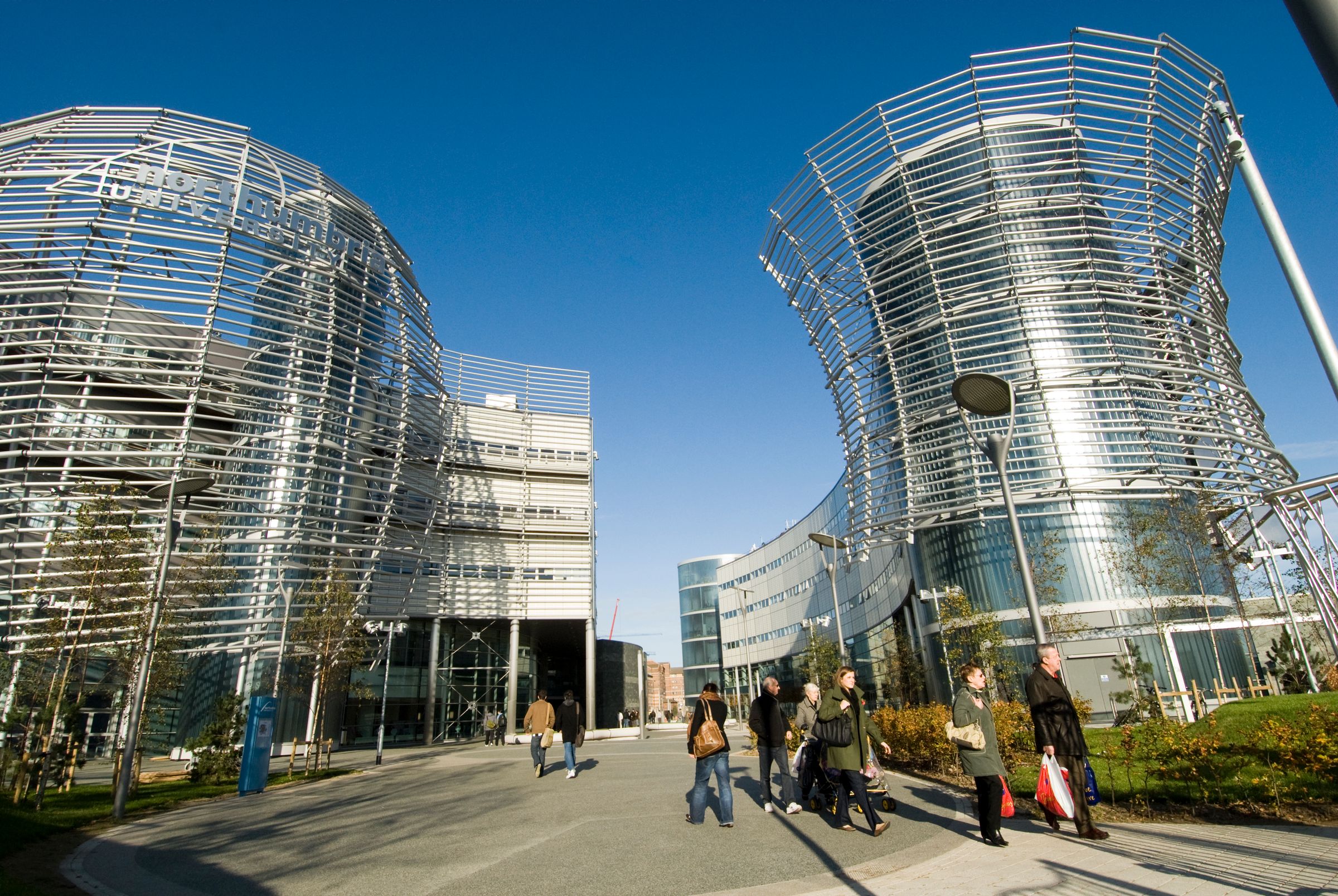
Northumbria University is a research-intensive public university based in Newcastle upon Tyne, with an additional campus in London. It became a university in 1992, when Newcastle Polytechnic was granted university status, and traces its roots to the School of Science and Art founded by Dr John Hunter Rutherford in 1877. Widening access to education has been part of its mission since those origins. Northumbria was named UK University of the Year 2022 by Times Higher Education and Modern University of the Year 2025 by The Times and The Sunday Times.
In Newcastle the university has two campuses: City Campus in the centre of the city and Coach Lane Campus about three miles away, home to health and nursing teaching, a Clinical Skills Centre and the High Performance Sports Centre. The London Campus, near Liverpool Street station, teaches business, computing, cyber security, project management and technology programmes. More than £250 million has been invested in the estate over the last decade.
Teaching and research are organised in three faculties and twelve schools:
Notable activities include the Student Law Office, a free legal clinic set up in 1991 that won the Queen's Anniversary Prize in 2013, and the Business Clinic run by Newcastle Business School. The North East Space Skills and Technology Centre (NESST), a £50 million space technology centre, is being developed within the Faculty of Science and Environment. Programmes run from foundation years and undergraduate degrees to masters, doctorates, degree apprenticeships and distance learning.
Student life centres on the Northumbria Students' Union, which has a presence at City Campus, Coach Lane and London and supports more than 100 societies, and on Northumbria Sport, with 37 student sport clubs and a sports scholarship programme for around 200 athletes each year. New full-time first-year undergraduates are guaranteed a place in university-owned or university-commissioned residences. Northumbria attracts students from 137 countries, has global offices and regional teams for international applicants, and runs an English Language Centre whose programmes are accredited by the British Council.
Scholarships for home and international applicants are awarded by eligibility criteria and, for international students, by country of domicile, and are listed through the university's scholarship search; awards for September 2027 are being announced. Graduates of Northumbria (or Newcastle Polytechnic) receive an automatic 20% alumni discount on most masters and postgraduate research courses. Sport scholarships support around 200 student athletes each year. The NU Belong package supports carers, care leavers and estranged students.
At the London Campus, most awards are applied automatically as tuition fee discounts and shown in the offer letter. They include an academic scholarship of 25% for postgraduate applicants with a first-class degree; a London cost of living bursary of £1,529 off first-year fees for self-funded international students; alumni discounts of 30% (first), 25% (2:1), 20% (2:2) and 10% (third); regional bursaries of 22% to 28% for self-funded applicants from Africa, South and South East Asia, the Middle East and other regions; and Latin America scholarships setting postgraduate fees at £15,629 (£16,629 with Advanced Practice).
Home students can apply for tuition fee and maintenance loans through Student Finance England or the equivalent bodies in Scotland, Wales, Northern Ireland and the Crown Dependencies, and ELCAS funding is accepted for eligible service leavers. The Tees Foundation's John Bloom Law Bursary pays £2,500 a year for up to three years to a first-year law student with a Teesside postcode. US students can use William D. Ford Federal Direct Loans for undergraduate and masters study. The international masters funding pages also cover Chevening Scholarships and Fulbright Postgraduate Awards; queries go to [email protected].
Northumbria UK International Scholarship (PGT) →
Northumbria Alumni Discount (Masters and Postgraduate Research) →
NU Aspire Scholarship Programme →
Browse the scholarships listed for Northumbria University and check each award’s eligibility.
View scholarships for Northumbria University →UK applicants apply for most undergraduate courses through UCAS. For September 2026 entry, applications should reach UCAS by 14 January 2026 to be considered; applications are accepted after that date in most areas, though popular courses may close early. Entry requirements are set course by course and are expressed in UCAS tariff points; T Levels are accepted, although some professionally accredited courses may not accept every T Level. Some courses require an interview (individual, group, or with a written test or scenario), and art, design and architecture courses require a portfolio, which may be made a condition of the offer rather than an upfront requirement.
Under the 2027/28 Contextual Admissions Scheme, home-fee applicants who apply through UCAS, meet at least one eligibility criterion and firmly accept their offer are accepted with lower tariff points, typically 104 points on a 120-point course, 96 on a 112-point course and 56 on a 72-point course. Criteria include living in a POLAR4 quintile 1 or 2 or IMD decile 1 to 4 area, time in care, free school meals, being over 21, caring responsibilities, estrangement, being a first-generation student, Armed Forces connections, refugee or asylum status, and Black, Asian or Minority Ethnic origin. Applicants who firmly accept but miss the contextual offer are guaranteed a place on an extended degree. The university also makes aspirational offers, dual offers with a reserved foundation-year place, and offers of alternative programmes, and runs the Destination Northumbria supported-entry scheme.
International applicants apply online through the university's course pages or through UCAS, and may use one of more than 150 official education agents. Country pages set out equivalent qualifications; for example, applicants from Ghana with WASSCE or NECO grades A to D in five subjects enter the International Foundation Programme, while a Polytechnic National Diploma, university diploma or Polytechnic HND can give entry to first year, Level 5 or Level 6 respectively. International Foundation Year (two to four semesters), International Year One and Pre-Masters routes are delivered through Northumbria's pathway programmes; the International Foundation Programme requires IELTS 4.5 with no element below 4.0 and a minimum age of 16, and International Year One requires IELTS 5.5 with no element below 5.5 and a minimum age of 17.
For September 2026, the international application deadline for undergraduate and postgraduate courses was 6 August 2026, the deposit deadline 13 August 2026 and the CAS request deadline 20 August 2026. CAS requests are made through the applicant portal once an applicant is unconditional firm and has paid the deposit (or provided evidence of sponsorship).
Undergraduates typically need GCSE English Language or a recognised equivalent. Accepted tests include IELTS Academic, PTE Academic and TOEFL iBT (test centre only), LanguageCert Academic, Trinity ISE, PSI Skills for English, Duolingo, Cambridge Advanced English and others, subject to UKVI rules for visa students. Some national qualifications are accepted, for example WAEC at C6 or NECO at B3 for most courses (not all professional or pre-registration health courses). Pre-sessional English and Summer School programmes run in Newcastle in June, July and September and in London throughout the year.
Postgraduate applications are made online through the course pages and applicant portal, with no application fee. Applicants normally provide evidence of qualifications, a personal statement and references, plus a portfolio, ATAS or DBS clearance where the course requires it. For Ghanaian applicants, a second class lower (50%, C, 2.0) degree is the guide for courses requiring a 2:2 and a second class upper (60%, B, 3.0) for courses requiring a 2:1. The standard home postgraduate deadline for September 2026 was 10 October 2026; MSc Occupational Therapy, MA Social Work, PGCE and MA Publishing typically close on 30 June and Bar programmes on 31 July. PGCE applications are made through the Department for Education service.
PhD study starts on 1 October (deadline 1 July, or 1 June for Business and Law) or 1 March (deadline 1 December); DBA/DBL entry is October only with a 1 June deadline. Applicants usually need an upper second class honours degree, or a lower second plus a relevant masters, and must submit a 1,000-word research proposal. Non-native English speakers need IELTS 6.5 overall with no component below 6.0 (6.5 in writing for Newcastle Business School). Eligible applicants are interviewed in person or on Microsoft Teams.
Experiences shared by students of Northumbria University.
Studied here? Share your experience to help other applicants.

Book a free consultation with our expert counsellors and take the first step towards your dream university.
Copyrights © 2026 StudyMapped. All rights reserved.

Enter your credentials to continue.
Join us and start your study abroad journey.


