
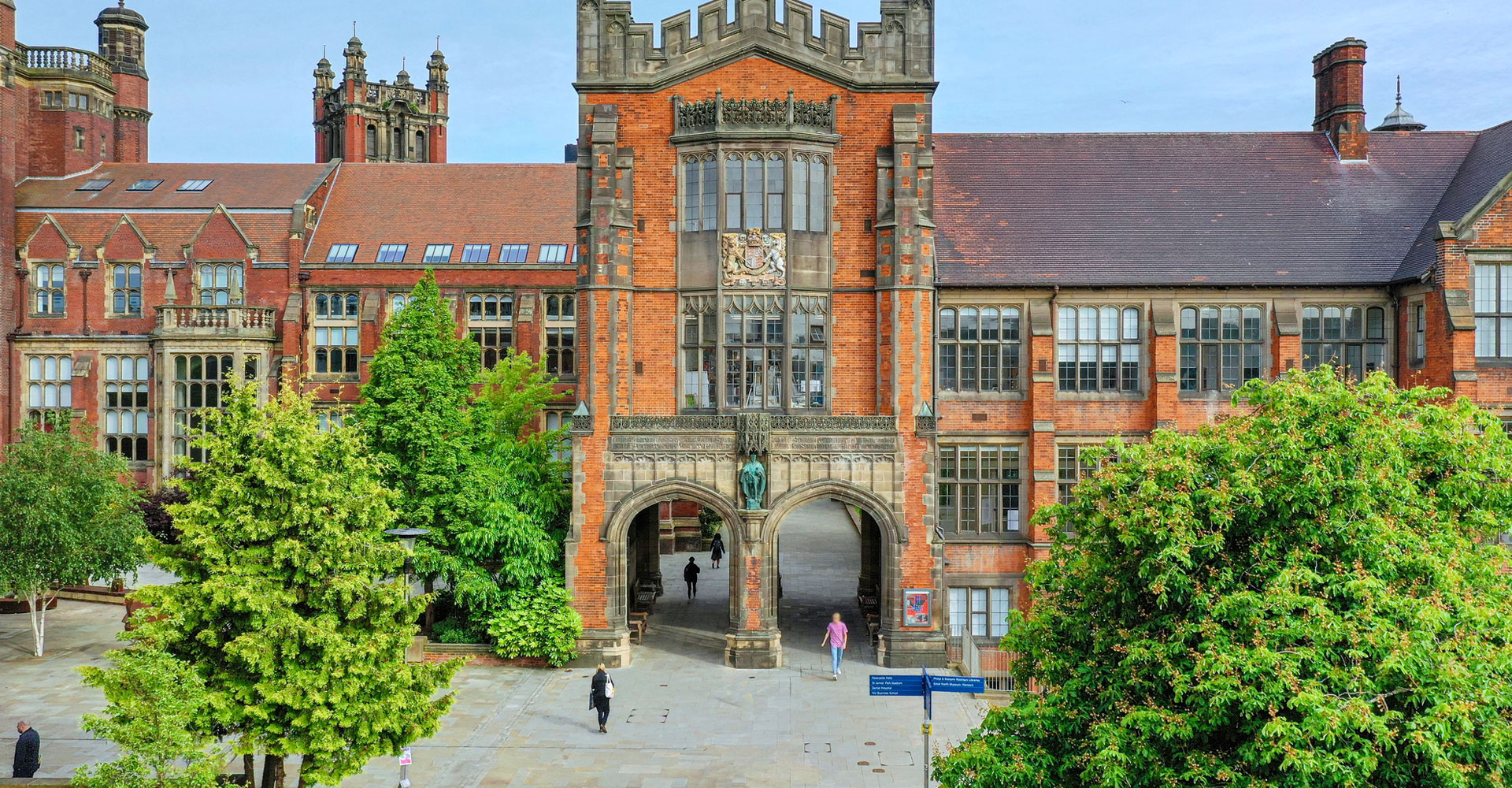

University in United Kingdom
Newcastle upon Tyne, England, United Kingdom
University profile
Newcastle University is a research-intensive university based in the city centre of Newcastle upon Tyne in North East England, and a member of the Russell Group of 24 research-intensive UK institutions. It traces its origins to a School of Medicine and Surgery founded in 1834 and became an independent university in 1963. It is an exempt charity regulated by the Office for Students, and is led by the Vice-Chancellor and President, Professor Chris Day, with Council as its governing body and Senate as the supreme authority on academic matters.
The University operates in three locations: the main city-centre campus in Newcastle, Newcastle University Medicine Malaysia (NUMed) in EduCity, Iskandar Puteri, Johor, and Newcastle University in Singapore. In 2025-26 it had 27,260 students, including 22,323 undergraduates and 4,937 postgraduates, and a community drawn from 145 countries.
Teaching and research are organised in three faculties:
The University's signature strengths are ageing and health, creative places, data and AI, and energy transitions. Off campus it runs two commercial farms used for research and teaching in food security and sustainable agriculture, and marine facilities including the Dove Marine Laboratory, the research vessel The Princess Royal and the Emerson Cavitation Tunnel. Newcastle Helix brings together academia, business and the public sector on a site in the city.
New first-year undergraduate and postgraduate taught students who meet the deadlines are guaranteed a room in University-owned or managed partnership accommodation, with ResLife teams in each student village. Newcastle Sport runs more than 60 student-led sports clubs, a 180-station gym and studios, and competes in British Universities and Colleges Sport (BUCS). International students are supported with visa advice, an airport meet and greet service and an international welcome, and the Newcastle University International Study Centre on campus offers foundation, International Year One, Pre-Master's and English language courses.
Full-time undergraduate fees for home students are £9,535 in 2025/26, £9,790 in 2026/27 and £10,050 in 2027/28, for new and continuing students. International tuition fees are set for each degree. EU, EEA and Swiss students with settled or pre-settled status normally pay the home rate. A 2% discount applies when annual fees are paid in full upfront. Tuition fees and costs
Means-tested cash bursaries awarded automatically to UK students income-assessed by Student Finance: £2,000 a year for household income up to £25,000, £1,250 for £25,001 to £35,000, and £750 for £35,001 to £40,000. Opportunity Scholarships
Three awards covering full tuition fees and living expenses for asylum seekers, their children and refugees ineligible for Student Finance who live in the UK and hold an offer. Priority goes to applicants from North East England. The closing date for 2026 entry is 4 April 2026. Sanctuary Scholarships
£7,000 a year off tuition for the length of the course, for international fee-paying students from listed countries, including Ghana, Nigeria, Kenya, India and all EU member states, studying at the Newcastle campus in 2027/28. Applicants must apply through UCAS by 13 January 2027 and are considered automatically. VC International Scholarships
Up to 50% off tuition fees for international fee-paying students holding an offer with a minimum of ABB at A level or equivalent. Applications go through the Apply to Newcastle Portal by 2 April 2027. VC Excellence Scholarships
25% of the international fee, awarded automatically to EU-domiciled students assessed as international for fee purposes. VC EU Scholarships
For 2027 entry, the postgraduate Vice-Chancellor's International Scholarship gives £8,000 off tuition, and the Vice-Chancellor's Excellence Scholarship up to 50% off (apply by 8 June 2027). The India, Pakistan and Nigeria Future Leaders Scholarships give £10,000 off tuition, awarded automatically. For the automatic awards, applicants must accept their offer and pay the tuition deposit by 2 August 2027. Global Scholarships
Vice-Chancellor's International Scholarships (Undergraduate) →
Vice-Chancellor's Excellence Scholarships (Undergraduate) →
Vice-Chancellor's Excellence Scholarships (Postgraduate Master's) →
Vice-Chancellor's International Scholarships (Postgraduate Master's) →
Browse the scholarships listed for Newcastle University and check each award’s eligibility.
View scholarships for Newcastle University →Undergraduate applications are made through UCAS (institution name NEWC, code N21), with up to five course choices, a personal statement and an academic reference. For 2027 entry, the deadline for Medicine and Dentistry is 15 October 2026 (18:00 UK time) and the equal consideration date for most other courses is 13 January 2027 (18:00 UK time). UCAS Extra opens on 25 February 2027, the final UCAS application deadline is 30 June 2027, and Clearing opens on 2 July 2027. After applying, applicants register on the Apply to Newcastle Portal to upload documents and track their application. Deferred entry is possible.
ABB at A level is typically the minimum for undergraduate entry, with higher or different requirements on some degrees; some also require specific subjects, work experience or a portfolio. Typical offers are expressed as three A level grades, and a fourth A level is not required. Newcastle also considers International A levels, Scottish qualifications, the International Baccalaureate, the Irish Leaving Certificate, Access qualifications, BTEC qualifications and Cambridge Pre-U.
Applicants predicted CCC or above may qualify for supported entry routes:
Most contextual offers are applied automatically from UCAS data; PARTNERS and Pathways to Newcastle have their own applications.
International and EU students also apply through UCAS. Country-specific equivalents of the typical requirements are given for each country. Students who do not meet the academic or English requirements can take the International Foundation (a guaranteed route to Year 1 on meeting progression requirements) or International Year One at the Newcastle University International Study Centre. Newcastle is also an NCUK partner and accepts the NCUK International Foundation Year.
Most undergraduate courses require IELTS (Academic or UKVI) 6.5 overall with at least 5.5 in each skill; some courses ask for more. Tests must be taken within three years of the course start. Accepted alternatives include Cambridge C1 Advanced or C2 Proficiency (176 overall, 160 in each skill) and Duolingo (typically 125 overall, no subskill below 100). Postgraduate requirements vary by course, and IELTS One Skill Retakes are accepted from 2025 entry. Pre-sessional English courses are available on campus or online.
Postgraduate applications are made through the Apply to Newcastle Portal, where applicants upload documents, accept offers and pay deposits. Academic and English requirements are set for each course. Research applicants can propose their own PhD (finding a supervisor and identifying funding), apply for a funded studentship, or apply for a research master's (MRes, MLitt, MPhil, LLM by Research). The Pre-Master's programme prepares international students for master's study.
International research applicants need a valid passport and a Confirmation of Acceptance for Studies (CAS) for a student visa, with passports valid for six months from the course start date. Applicants who need a visa must take one of the English tests accepted for visa purposes.
Study programmes offered at Newcastle University.
Experiences shared by students of Newcastle University.
Studied here? Share your experience to help other applicants.

Book a free consultation with our expert counsellors and take the first step towards your dream university.
Copyrights © 2026 StudyMapped. All rights reserved.

Enter your credentials to continue.
Join us and start your study abroad journey.


