

University in Canada
Sackville, New Brunswick, Canada
University profile
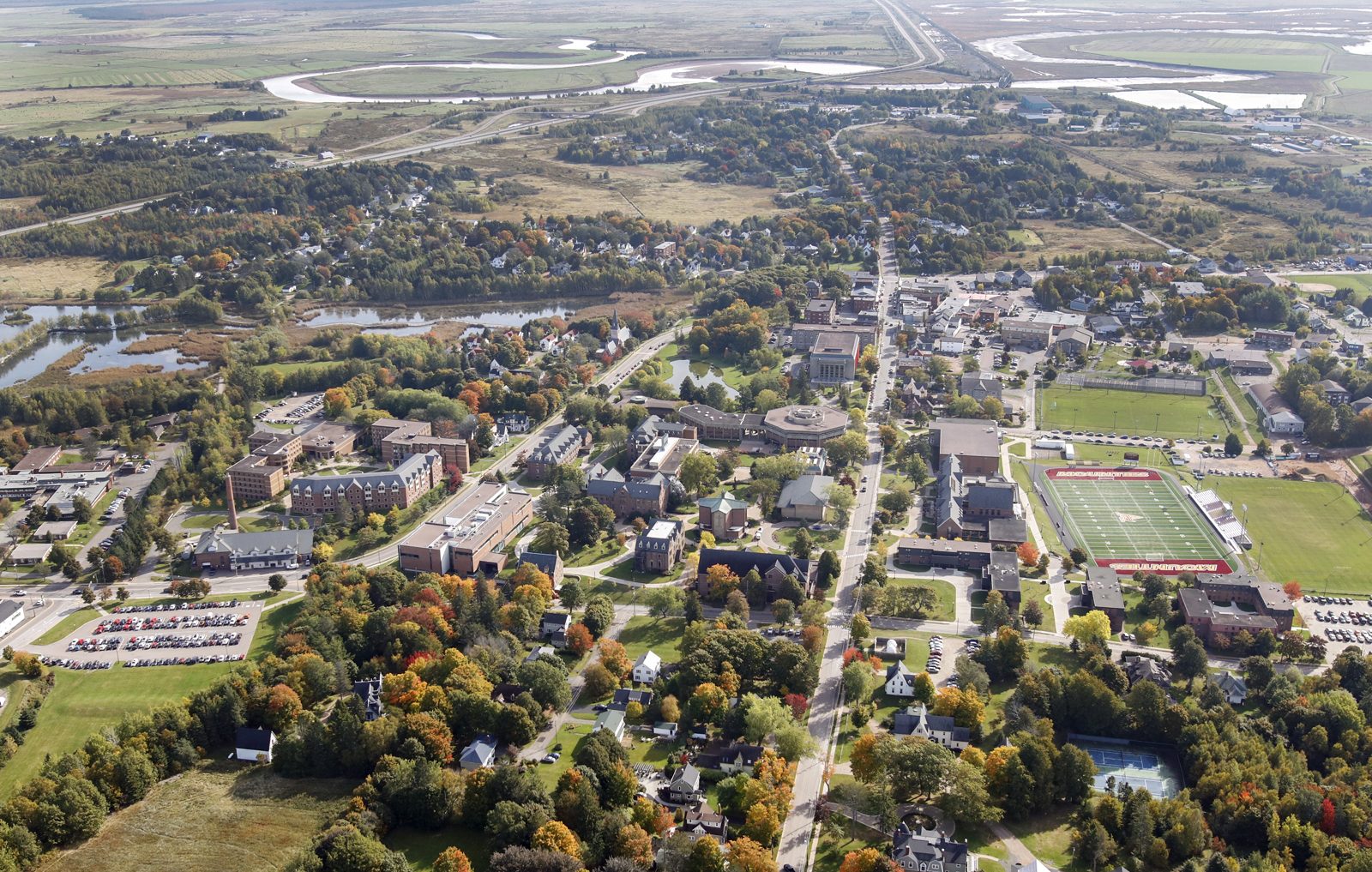
Mount Allison University is a primarily undergraduate liberal arts and sciences university in Sackville, New Brunswick, on a 72-acre campus beside the Tantramar marshes. It has more than 2,400 students and over 530 faculty and staff, a student-to-faculty ratio of 16:1 and an average first-year class size of 41. Students combine breadth across disciplines with advanced study in a chosen major and minor, and many graduates go on to graduate programs or professional schools such as law and medicine.
More than 50 programs lead to eight degrees: Bachelor of Arts, Bachelor of Science, Bachelor of Arts and Science, Bachelor of Commerce, Bachelor of Fine Arts, Bachelor of Music, Bachelor of Music Education, and a Master of Science. Academic departments sit in three faculties, each led by a dean.
Mount Allison is a residential campus: more than 85% of first-year students live on campus, nearly 80% of residence rooms are single or single ensuite, and the residences range in size from 11 to 190 residents. An unlimited meal plan is provided for residence students, and the residence leader-to-student ratio is 1:14. Student life includes more than 110 student-run clubs and societies, the Owens Art Gallery, and the Mounties varsity program with nine varsity sports and more than 240 varsity athletes. The Meighen Centre provides services for students with learning disabilities and accessibility needs, and the Wellness Centre offers non-emergency primary health services.
The International Centre supports international students, exchange and study abroad programs, and the Mount Allison Semester Studies in English (MASSIE) program. Applicants who meet academic requirements but not English proficiency requirements may be offered conditional admission through an English Summer Pathway Program or an approved English-language training partner. Mount Allison is a member of the Maple League of Universities with Acadia, Bishop's and St. Francis Xavier. In Maclean's 2026 University Rankings it was named the number one undergraduate university in Canada.
All entering students with a calculated admission average of 80% (or equivalent) or above are automatically considered for entrance scholarships of $4,000 to $20,000 ($1,000 to $5,000 a year), awarded for academic achievement, extracurricular involvement, leadership, community service and work or internship experience. The application for admission and scholarships must be received by 1 March; later applications are assessed case by case. Scholarships are credited in two equal instalments (September and January), based on 30 credits in the fall and winter terms, and are renewable with a 3.7 GPA on 30 credits. Scholarships are not available for January starts.
Major scholarships of up to $70,000 are considered through the same application; some need supplemental information. The Marjorie Young Bell Scholarship is $70,000 ($17,500 a year), offered to 8 outstanding high school graduates on academic ability, leadership, volunteer work, extracurriculars, work experience and citizenship; it requires one reference letter and an essay, and renews with a 3.5 GPA and a yearly activities report. Unsuccessful Bell finalists are offered the $20,000 President's Scholarship. The Leta G. Hill Scholarship is $48,000 ($12,000 a year) for one student who intends to study medicine, renewable with a 3.0 GPA and verified financial need.
Entrance bursaries of $1,500 to $3,000 and major bursaries of up to $20,000 support students with demonstrated financial need who are eligible for government student loans; the application is in the Self Service account once admitted, due 1 March, and students may reapply each year. Examples: the Joyce Foundation Purdy Crawford Bursary ($20,000, preference to New Brunswick students, 12 offered) and the Samuel and Cora Vallis Bursary ($20,000, international students with preference to Bermuda, 2 offered). Questions go to [email protected].
Official pages: Scholarships and awards; Financial aid.
Mount Allison Entrance Scholarships →
Browse the scholarships listed for Mount Allison University and check each award’s eligibility.
View scholarships for Mount Allison University →One online application covers admission and scholarships for high school students (still in high school, or with a diploma and no post-secondary credits and under 22), transfer students (diploma plus college or university coursework), and mature students (22 or older with a diploma and no post-secondary credits). Exchange, visiting, former (re-admission) and graduate students use separate applications. Applications open in October on a rolling basis for September entry, and January entry is also offered. Decisions consider academic record, leadership, commitment and potential for personal growth. Specific course prerequisites depend on the degree, the level of education completed and the applicant's province or country.
If English is not the applicant's first language, proof of proficiency may be required through one of these tests: TOEFL iBT 90 with no section below 20 (for tests taken on or after 21 January 2026: 4.5 overall, 4.5 Writing and 4.0 in all other categories); IELTS Academic 6.5 with no band below 6; PTE Academic 60 with no section below 51; CAEL (CE) 70 with no part below 60; Cambridge English (B2 First, C1 Advanced or C2 Proficiency) 176 with no band below 169; Duolingo English Test 110 with sub-scores of at least 125 Comprehension, 120 Literacy, 110 Conversation and 95 Production. Proficiency is also shown by at least three years of academic instruction at a recognized Canadian secondary institution, or at least 30 credit hours at a post-secondary institution where English is the main language of instruction.
Applicants who meet the academic requirements but not the English requirement may receive conditional admission, including the English Summer Pathway Program (June to August) or university-preparatory study at an approved partner (Canadian Language Learning College in Toronto, Ottawa and Halifax; Oxford International Halifax), after which no further TOEFL or IELTS is needed.
Early admission opens 1 October; general admission opens in February; the scholarship application deadline is 1 March (all supporting documents included); the offer is accepted by 1 May with a registration deposit (CAD 100 for Canadian citizens and permanent residents; international students receive instructions after an unconditional offer). Residence applications open 1 November, and a guaranteed room requires acceptance and a residence deposit by 1 March. Course registration for new students opens in June.
Applicants with an undergraduate degree seeking the Master of Science apply through the separate graduate application.
Tuition is CAD 11,350 for Canadian students and CAD 22,890 for international students. Residence with an unlimited meal plan is CAD 15,965, student fees CAD 1,930, and international student basic medical coverage CAD 785. Books and supplies are estimated at CAD 2,500, giving estimated yearly totals of CAD 31,745 (Canadian) and CAD 44,070 (international).
Main campus, Sackville, New Brunswick (72 acres on the Tantramar marshes): all faculties, the residences and student services.
MFC Training campus, Dieppe, New Brunswick: flight training for Aviation students, about a 25-minute drive from Sackville; students arrange their own transportation.
Study programmes offered at Mount Allison University.
Experiences shared by students of Mount Allison University.
Studied here? Share your experience to help other applicants.

Book a free consultation with our expert counsellors and take the first step towards your dream university.
Copyrights © 2026 StudyMapped. All rights reserved.

Enter your credentials to continue.
Join us and start your study abroad journey.


